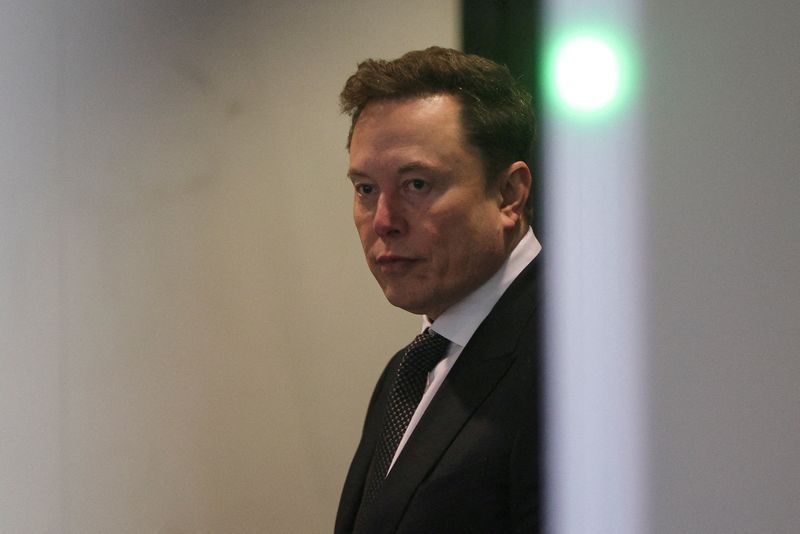
A federal judge in Washington, D.C. has given her formal approval to a settlement between the US Securities and Exchange Commission and Elon Musk, though not without articulating substantial reservations about the arrangement. U.S. District Judge Sparkle Sooknanan authorised the accord on Wednesday despite flagging what she described as significant misgivings and red flags embedded within the agreement's terms. Her decision illuminates the delicate balance courts must strike when evaluating regulatory settlements, a tension that carries implications far beyond the billionaire entrepreneur's immediate legal exposure.
The settlement centres on allegations that Musk failed to disclose his early accumulation of Twitter shares in a timely manner during March and April 2022. According to SEC filings, this disclosure delay stretched eleven days beyond the legally mandated window, a period during which Musk continued purchasing shares at lower prices before public disclosure would have driven valuations upward. The regulatory agency has calculated that this lag provided Musk with financial gains worth approximately $150 million. To resolve these claims, a trust established in Musk's name will pay $1.5 million to settle the SEC's contentions. Musk has maintained throughout that the delay occurred without deliberate intent, characterising it as an inadvertent oversight rather than calculated wrongdoing.
Judge Sooknanan's written decision reveals her fundamental discomfort with the settlement's architecture and the broader pattern it potentially establishes. She articulated the conceptual limits of her judicial role with striking clarity, noting that while a court reviewing a consent judgment cannot simply rubber-stamp regulatory agreements, neither does it function as a general ombudsman policing every executive branch decision. Rather, she suggested that questions about whether the SEC has adequately held Musk accountable for alleged violations ultimately belong to citizens exercising their democratic prerogatives through the electoral process. This framing, however diplomatically expressed, underscores her view that the settlement may fall short of public expectations.
A particularly troubling aspect of the judge's analysis concerns the SEC's apparent decision to abandon its historical practice of seeking disgorgement, the legal mechanism through which wrongdoers forfeit ill-gotten gains to compensate victims. Sooknanan questioned whether the regulator's assertion that it has not pursued disgorgement in analogous cases justified refraining from doing so in this instance. She pointedly suggested that even if historical precedent supported the SEC's approach, such precedent might itself warrant examination rather than acceptance. This critique hints at a deeper concern: whether longstanding regulatory practice has evolved in directions that undermine accountability, particularly for the wealthy and well-connected.
The structural peculiarity of settling through Musk's trust rather than with Musk himself compounds the judge's concerns. By routing the settlement through a trust vehicle, the arrangement arguably allows Musk to claim public exoneration while maintaining technical distance from the alleged violations. Sooknanan explicitly questioned this optics problem, suggesting that the SEC's choice of settlement mechanism may have enabled Musk to proclaim vindication even as he paid a penalty. For Malaysian observers monitoring global regulatory governance, this dynamic illustrates how technical legal architecture can obscure substantive accountability, a lesson relevant to domestic corporate governance frameworks.
The timing of the settlement's emergence also drew judicial scrutiny. The agreement was announced in May, following the departure of SEC enforcement chief Margaret Ryan in March, just six months into her tenure. According to public reports, Ryan had clashed with agency leadership over the direction of the enforcement program before departing. The proximity between Ryan's exit and the Musk settlement announcement raises questions, at least in the judge's mind, about whether enforcement priorities shifted following her departure. Sooknanan's decision explicitly wondered whether the Musk settlement represented a singular special arrangement or whether other alleged securities-law violators might expect comparable leniency from the SEC moving forward.
The judge's skepticism about potential preferential treatment carries particular significance given Musk's relationship with the Trump administration. Musk served as an adviser to Republican President Donald Trump, a detail the source explicitly notes. Sooknanan herself was appointed to the bench by former Democratic President Joe Biden. This ideological and institutional distance between judge and Musk appears to have informed her willingness to express public doubt about whether the settlement adequately discharged the government's enforcement obligations. Her questioning implicitly raises concerns about whether political proximity might influence regulatory outcomes in ways that undermine the equal application of law.
The SEC itself characterised the settlement differently in its formal court filings. Agency lawyers argued that no improper collusion had shaped the agreement and asserted that the $1.5 million penalty represented the largest penalty of its type in similar cases. They further contended that the public derived genuine benefit from an injunction effectively binding Musk when acting through the trust structure, describing this as a significant protective measure given that Musk apparently utilises trusts to manage substantial portions of his wealth. These arguments reflect the tension between the SEC's perspective on enforcement outcomes and the judiciary's apparent concern that regulatory settlements sometimes prioritise closure over accountability.
For Southeast Asian markets and investors, the Musk settlement warrants attention as a window into how American regulatory systems handle cases involving billionaire entrepreneurs and politically connected figures. Malaysia and the region have increasingly grappled with questions about ensuring robust corporate governance and regulatory enforcement even when prominent business figures are involved. The apparent reluctance of US regulators to pursue traditional accountability mechanisms like disgorgement, combined with the structural arrangements that enable questionable public relations outcomes, suggests that even advanced regulatory systems struggle with consistent application of enforcement standards. This dynamic may inform regional policymakers considering how to strengthen corporate accountability frameworks.
Musk's broader business empire extends across multiple domains with global significance. He completed the $44 billion acquisition of Twitter in October 2022 and subsequently rebranded the social media platform as X. The platform now operates as part of his rocket and satellite company SpaceX, while Musk simultaneously leads the electric-vehicle manufacturer Tesla. According to Forbes magazine, his net worth stands at $927.2 billion, making him the world's wealthiest person. These concurrent leadership roles across industries with significant technological and geopolitical implications underscore why questions about regulatory accountability in Musk's dealings carry weight extending far beyond narrow securities law concerns.
Sooknanan's decision to approve the settlement while simultaneously articulating serious reservations represents a pragmatic acknowledgement of judicial constraints balanced against a clear expression of concern. She effectively signalled that while she cannot and should not attempt to override executive branch decisions regarding enforcement strategy, courts retain a responsibility to flag instances where regulatory compromises appear to undermine public confidence in the fairness and consistency of law. This stance may embolden future judicial scrutiny of major corporate settlements, particularly those involving politically connected figures or departing from historical enforcement norms, a development that could influence how regulators approach similar cases going forward.

