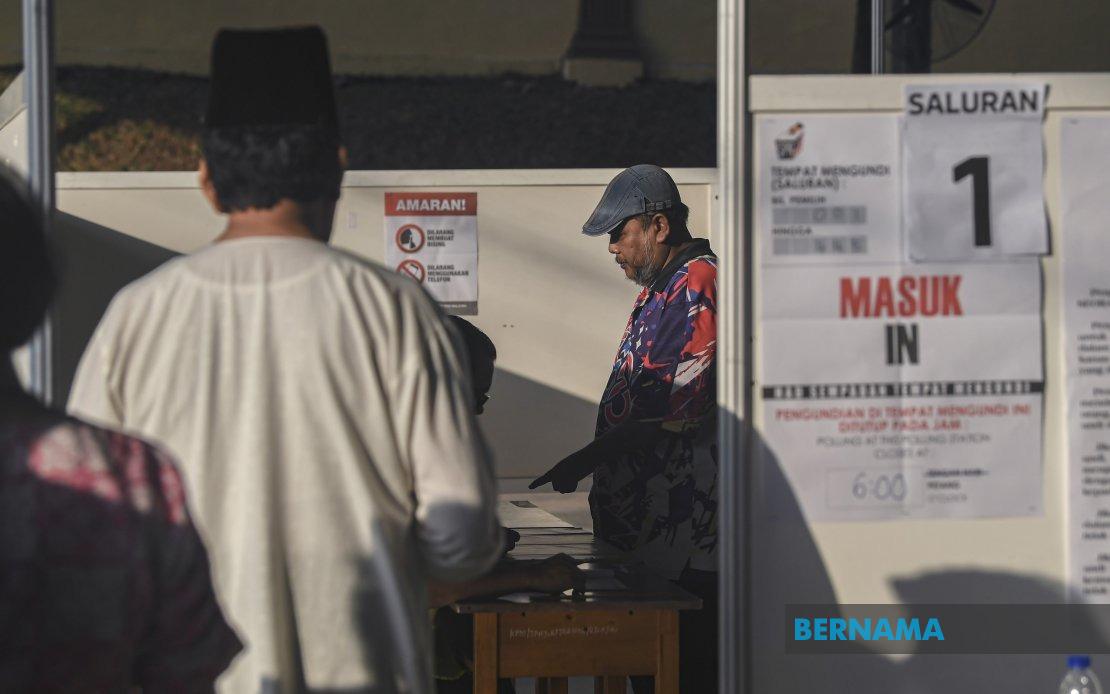
Johor's 16th state election unfolded on July 11 with prominent federal government figures fulfilling their civic duties as registered voters, underscoring the national significance of the southern state's electoral process. The participation of ministers and deputy ministers from various government portfolios demonstrated broad engagement with the democratic exercise, even as the federal government maintained administrative oversight during the polling day.
Datuk Seri Azalina Othman Said, who holds the ministerial position responsible for law and institutional reform within the Prime Minister's Department, was among the first to vote, arriving at Sekolah Kebangsaan Bandar Penawar in Pengerang at 8.15 am. Her early participation set the tone for the day's proceedings and highlighted the importance that senior government figures attached to the electoral exercise. As the minister overseeing institutional matters, her presence at the polls carried symbolic weight beyond the simple act of voting.
Defence Minister Datuk Seri Mohamed Khaled Nordin cast his ballot at 8.30 am at Sekolah Kebangsaan Rinting 1 in Masai, exercising his franchise in his home state. The appearance of the defence minister underscored continuity in the state's relationship with national security institutions, suggesting a seamless transition regardless of electoral outcomes. His participation reflected the military establishment's alignment with civilian democratic processes.
The Plantation and Commodities Minister Datuk Seri Dr Noraini Ahmad voted at 8.50 am at Sekolah Menengah Kebangsaan Dato' Onn in Batu Pahat. Her presence was particularly notable given the agricultural sector's deep roots in Johor's economy. The minister's early appearance at the polls demonstrated the government's investment in Johor's continued economic development, an issue that had likely featured prominently during the campaign period.
Deputy Works Minister Datuk Seri Dr Ahmad Maslan cast his vote at 8.40 am at Sekolah Kebangsaan Seri Bahagia in Benut, contributing to the infrastructure-minded representation at the polls. The deputy minister's participation illustrated the interconnection between federal development initiatives and state-level governance, particularly relevant in a state like Johor which serves as an economic bridge between Malaysia's developed western corridor and its broader development trajectory.
Deputy Communications Minister Teo Nie Ching voted at Sekolah Jenis Kebangsaan Cina (SJKC) Kulai Besar at 9.30 am, arriving just ten minutes before casting her ballot. Her choice of polling centre at a Chinese vernacular school reflected Malaysia's multicultural democratic character and the importance of maintaining representation across diverse communities in the electoral process. Her participation highlighted the inclusive nature of the voting exercise across different demographic groups.
The logistical scale of the election demonstrated Johor's significance within Malaysia's federal system. Authorities had established 1,076 polling centres equipped with 4,889 individual polling streams to facilitate voting across the state. These facilities opened simultaneously at 8 am, ensuring equitable access to the voting process and minimising queuing times for the 2.7 million registered voters eligible to participate. The infrastructure investment reflected meticulous electoral planning essential for managing a state-wide exercise of this magnitude.
The voting process continued throughout the day until 6 pm, providing a generous twelve-hour window for citizens to exercise their franchise. This extended timeframe accommodated working voters, rural populations requiring travel time, and others with scheduling constraints. The duration reflected electoral best practice aimed at maximising voter turnout and legitimacy across diverse demographic groups.
The 14-day campaign period that concluded at midnight the previous evening had generated substantial political discourse across Johor. The campaign would have featured debates on state-specific issues including economic development, infrastructure, education, and social services. The ministers and deputy ministers voting on July 11 would have observed these debates in their various capacities as federal officials responsible for related national policy areas.
Johor's state election carried implications extending beyond the southern state itself. As Malaysia's most populous state after Selangor, Johor's electoral outcome influences the broader political landscape. The state's economic importance—encompassing manufacturing, agriculture, services, and increasingly technology sectors—makes its governance critical to national prosperity. Ministers' participation in voting underscored the federal government's investment in the state's political direction.
The simultaneous participation of cabinet members across different geographic locations and polling centres reflected the dispersed nature of Johor's population and development. From Pengerang's industrial areas to Batu Pahat's agricultural heartland to Masai's manufacturing zones, the voting pattern traced Johor's diverse economic geography. Federal ministers with portfolio responsibilities in relevant areas cast their votes at locations reflecting these regional economic concentrations.
The election represented a periodic reset of Johor's state government following the electoral cycle. Voters would determine representatives to the state assembly, who would subsequently form a government responsible for state-level administration. This constitutional process operated independently of federal government control, though federal-state coordination remained essential for projects spanning both levels of governance, particularly infrastructure development and economic initiatives.

