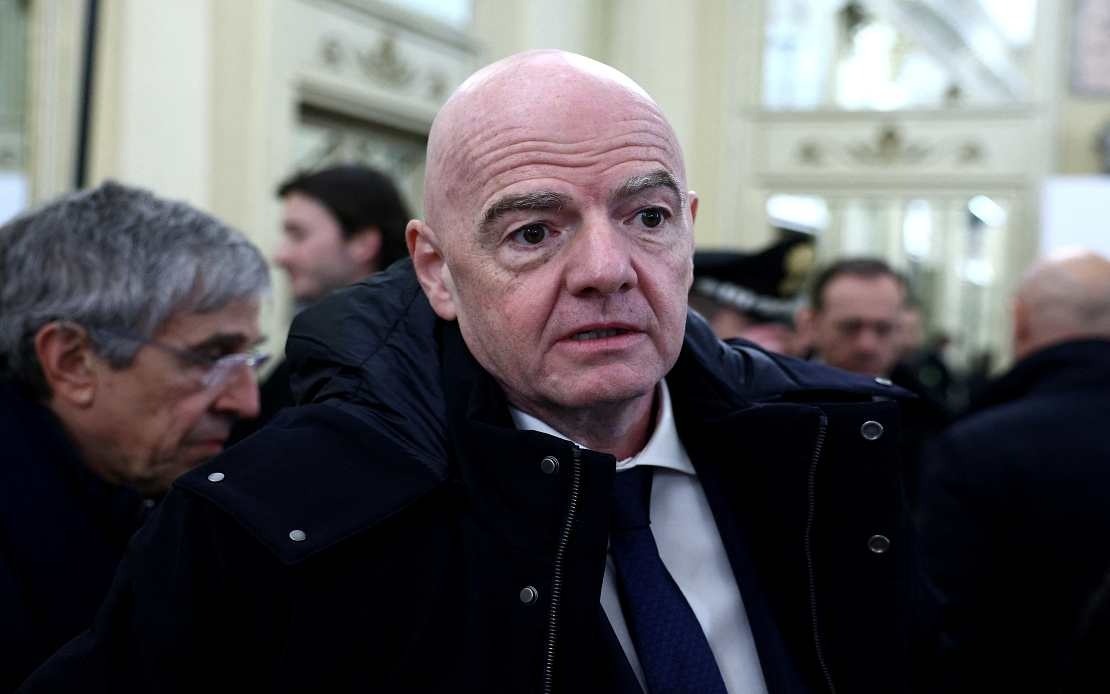
A human rights watchdog has escalated allegations against FIFA President Gianni Infantino to the International Olympic Committee, claiming he has repeatedly violated rules requiring political neutrality among IOC members. The complaint, submitted by FairSquare, centres on Infantino's conduct in high-profile matters involving world football's governance and his interactions with international political figures, raising fresh questions about the independence of FIFA's decision-making processes.
Infantino, who joined the IOC as a member in 2020, stands accused of breaching the Olympic Charter and the IOC's ethics code on at least five distinct occasions, according to FairSquare's filing. The group alleges an additional two serious breaches supported by what it describes as prima facie evidence. These allegations paint a picture of systematic compromises in political neutrality spanning multiple incidents and policy areas within FIFA's operations. The complaint represents an attempt to hold the sports leader accountable through an independent international body rather than relying solely on FIFA's internal mechanisms.
Central to FairSquare's case is the handling of a disciplinary decision involving a striker banned for one match by FIFA. The ban was subsequently suspended by FIFA's disciplinary committee, clearing the way for the player to participate in a World Cup knockout fixture against Belgium. This reversal came shortly after a telephone conversation between the player's nation's president and Infantino, though FIFA has not publicly disclosed its reasoning for the disciplinary decision or the suspension of the penalty. The lack of transparency surrounding the reversal has fuelled speculation about external political influence on what should be independent sporting rulings.
FIFA has maintained that its disciplinary committees operate with complete autonomy and are insulated from executive interference. Infantino himself has emphasised that FIFA's governance structures separate decision-making authority across independent bodies. However, the proximity between the presidential communication and the favourable disciplinary outcome has drawn scrutiny from multiple stakeholders concerned about the integrity of FIFA's governance framework. The apparent contradiction between FIFA's stated independence and the sequence of events has become difficult to reconcile in the public record.
This is not FairSquare's first intervention in the matter. In December, the organisation filed a similar complaint directly with FIFA's ethics committee, attempting to trigger an internal investigation into potential breaches of FIFA's own regulations. That initial move yielded limited visible action, prompting FairSquare to escalate the matter to the IOC level. The shift in approach suggests frustration with the pace and scope of FIFA's internal processes, and reflects a broader concern that FIFA may be unwilling or unable to police its own leadership adequately.
Support for FairSquare's position has emerged from established political institutions across Europe. The Norwegian football federation formally requested that FIFA's ethics committee examine FairSquare's allegations, lending weight to the complaints from a national sporting body. More significantly, fifty members of the European Parliament jointly wrote to FIFA's ethics committee on June 29, demanding serious consideration of FairSquare's complaint. This political pressure from European lawmakers underscores that concerns about FIFA's governance extend beyond human rights advocates to encompass elected representatives accountable to European citizens.
The complaint strategy reflects a growing recognition that multiple accountability mechanisms may be necessary to address governance failures at FIFA. By bringing the matter before the IOC, FairSquare has chosen a forum with different leverage and authority from FIFA's internal structures. The IOC, as the ultimate parent body overseeing sports governance worldwide, has the capacity to investigate conduct by member officials and impose sanctions if breaches are substantiated. This vertical escalation may compel more rigorous scrutiny than FIFA's committees have provided thus far.
For Malaysian observers, this dispute carries implications for how international sporting organisations manage conflicts between political pressure and institutional independence. Malaysia maintains engagement with FIFA across multiple levels, from grassroots development to participation in qualifying competitions. The credibility of FIFA's decision-making processes directly affects Malaysian football, particularly when national teams compete against other nations. If political influence can sway significant disciplinary and eligibility decisions, it undermines the competitive integrity that all nations, large and small, depend upon.
The broader context reflects ongoing tension within international sports governance regarding how organisations balance engagement with sovereign states against the need to maintain institutional independence. FIFA generates enormous revenue and wields considerable influence globally, yet faces persistent accusations that its decision-making lacks transparency and is susceptible to political manipulation. Cases such as this one fuel scepticism about whether reform is genuinely possible from within FIFA's existing structures, or whether external pressure and oversight remain necessary.
The coming response from the IOC will signal whether complaints about FIFA leadership can generate meaningful investigation and accountability, or whether deference to FIFA's autonomy will ultimately limit external scrutiny. For international sports to maintain legitimacy, especially in developing nations where resources for independent governance bodies are limited, the mechanisms for holding sports administrators accountable must function visibly and impartially. The Infantino case has become a test of whether such mechanisms exist in practice.

