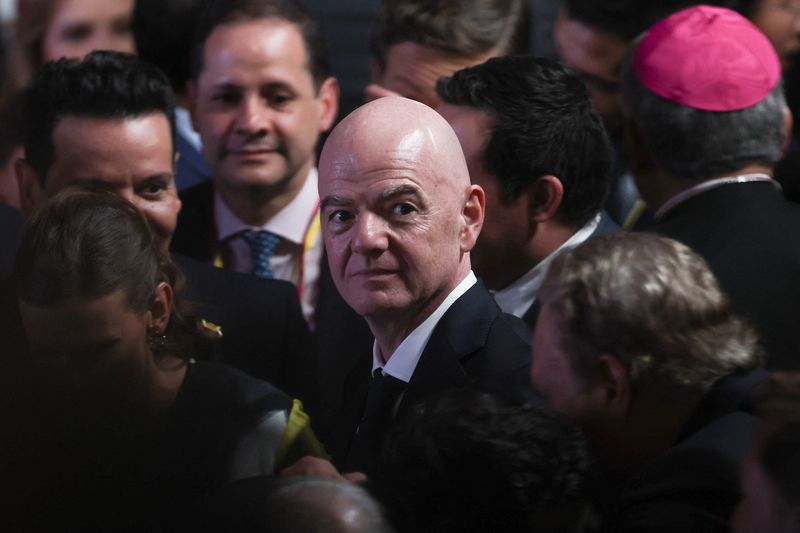
FIFA has mounted a spirited defence of President Gianni Infantino, issuing a statement warning against what the governing body describes as a "concerted and ongoing effort" to challenge his position through means that circumvent established procedures. The warning reflects mounting tensions within world football's leadership structure, with the crisis intensifying after Infantino's ambitious plan to generate approximately $4.2 billion through the sale of commercial rights to the World Cup and allied tournaments collapsed following widespread institutional backlash.
The failed proposal has exposed fundamental divisions within global football's administrative layers, triggering sharp criticism from European authorities, national football associations, and senior FIFA functionaries who questioned both the viability and governance implications of the scheme. The fallout prompted calls for Infantino's immediate resignation and necessitated an emergency leadership convocation in Morocco this week, where the organisation's governing council nevertheless reaffirmed its backing for the embattled president. FIFA's latest statement suggests the leadership recognises the gravity of the challenge and is taking a combative stance against its critics rather than retreating into silence.
The governance crisis appears partly rooted in recent investigative reporting by The Daily Telegraph concerning financial transfers UEFA made to a former staffer during Infantino's tenure as the European confederation's general secretary—allegations the FIFA president categorically denies and which FIFA itself has dismissed as baseless. This reportage formed the backdrop to a broader campaign questioning Infantino's stewardship, though FIFA has declined to publicly identify which groups or individuals it believes are orchestrating pressure against him or specify the precise allegations it considers unfounded.
FIFA's statement represents a direct challenge to its critics, asserting that opposition figures lack sufficient support among member associations to succeed through legitimate democratic channels and therefore resort to "allegation, insinuation or misinformation." The organisation characterised recent media coverage as containing "unsubstantiated assertions and demonstrably false claims" and signalled its determination to contest inaccurate reporting "directly and vigorously." This combative posture underscores the severity of the institutional rupture and FIFA's calculation that vigorous denial rather than conciliatory engagement best serves its strategic interests.
A critical dimension of the leadership struggle involves the procedural mechanisms by which FIFA's presidency operates. The organisation has drawn a clear line stating it will neither support nor countenance any election process that deviates from its established statutes and democratic governance architecture. This stance carries particular weight given Infantino's scheduled bid for a fourth consecutive term during the FIFA Congress scheduled for March in Morocco. The absence of a crystallised alternative candidate has thus far limited the immediate threat to his position, though the institutional fractures revealed by the commercial rights controversy threaten to complicate his re-election campaign.
The regional dimensions of the leadership crisis reveal a fractured global football community deeply divided along geographic and institutional lines. UEFA, European football's governing confederation, has explicitly withdrawn confidence in Infantino's leadership, positioning itself as the centre of institutional opposition to his presidency. Norway's football federation president, Lise Klaveness, escalated this challenge by publicly calling for Infantino's resignation, arguing that he has forfeited the institutional legitimacy essential for governing a sprawling, geographically diverse organisation like FIFA. These European voices represent the most forthright public challenge to his authority among elite football bodies.
Despite European opposition, Infantino maintains formidable support elsewhere within FIFA's membership base comprising 211 national associations. The Confederation of African Football unanimously backed his leadership in a public show of solidarity just days after the crisis meeting in Morocco, signalling that Africa's football governing structure remains committed to the incumbent president. South America's CONMEBOL confederation similarly resisted any effort to remove Infantino that bypassed a full membership vote, effectively defending procedural orthodoxy and the current leadership. This geographic stratification of support and opposition suggests Infantino retains decisive backing among the Global South's football authorities.
Mexico's football federation stance further illustrates the complex regional dynamics shaping the broader leadership contest. Despite its own regional confederation CONCACAF having called for comprehensive institutional reckoning with Infantino's presidency, the Mexican federation explicitly backed the president and vowed not to recognise any alternative process for challenging his authority that operated outside FIFA's formal institutional framework. This apparent contradiction between regional confederation and national body reflects both internal disagreements and pragmatic calculations about institutional legitimacy and procedural correctness within football's governance structure.
The divergence between European football authorities and those from Africa and the Americas potentially reflects competing visions regarding FIFA's governance direction and priorities. European confederations have historically emphasised procedural transparency and institutional accountability, viewing Infantino's tenure as marked by insufficient adherence to these principles. Conversely, confederations representing the Global South have frequently maintained that FIFA's current leadership has prioritised their interests and enhanced their continental representation within world football's administrative hierarchy. These competing narratives will likely shape both Infantino's March re-election campaign and the broader trajectory of FIFA governance reform discussions.
The commercial rights proposal that triggered the present crisis carries significant implications for Southeast Asian football interests, particularly regarding tournament staging and media rights negotiations affecting the region. The failed initiative suggested FIFA intended to monetise the commercial potential of tournaments by selling stakes in their broadcasting and sponsorship rights—arrangements that directly impact regional football federations' revenue streams and competitive opportunities. How this governance crisis resolves will substantially determine FIFA's future approach to such commercial matters and the extent to which regional voices like those from Southeast Asia obtain meaningful influence over decisions affecting their tournament participation and economic interests.
Infantino's re-election prospects remain uncertain despite his current numerical advantage among member associations. The March FIFA Congress will occur amid lingering reputational damage from the failed commercial proposal and sustained pressure from influential European confederations. However, the procedural protections FIFA has erected around its presidency and the geographic distribution of support across the Global South afford the incumbent president meaningful institutional advantages. The coming months will test whether the European opposition can coalesce around an alternative candidate or whether Infantino's defenders successfully convince the membership that procedural regularity and demonstrated support from the majority of member associations justify his continued tenure.

