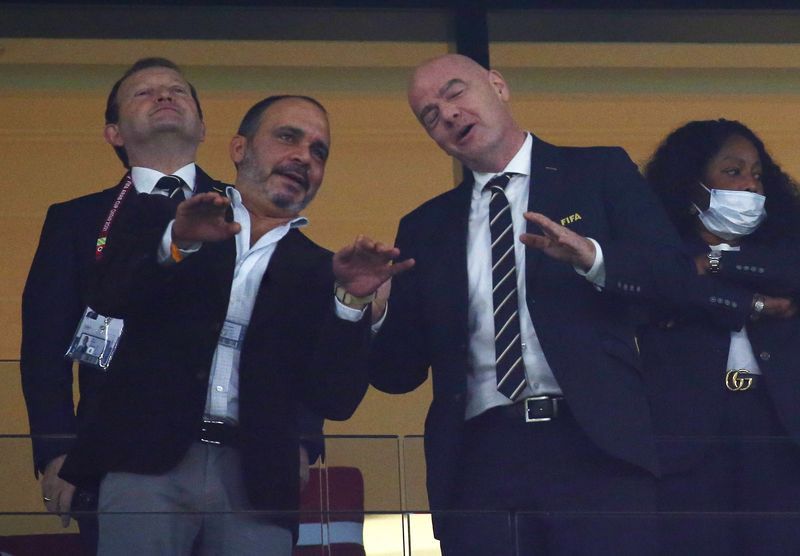
Jordan's players and coaching staff have finally received their long-overdue prize money for competing in the 2025 Arab Cup, according to an announcement by Jordan Football Association President Prince Ali bin Hussein on Thursday. The timing of the payment is significant, arriving just two days after the prominent football administrator publicly levelled accusations of blackmail against FIFA and its leadership, effectively calling out the world governing body's conduct in front of global audiences and fellow federation heads.
Prince Ali stated that the funds, which should have been transferred in December after Jordan reached the tournament final in Qatar, were delivered on the morning of his statement. He expressed gratitude to FIFA's administration for finally honouring its financial obligations, but the tone of his remarks made clear that the satisfaction was tempered by frustration over the prolonged delay and the circumstances surrounding both the withholding and eventual release of the money.
The core allegation emerging from this dispute centres on how FIFA allegedly leveraged financial assistance to national associations in exchange for political support. According to Prince Ali's account, FIFA officials verbally communicated during the World Cup that supporting FIFA President Gianni Infantino "would go a long way to helping our FA out." This statement takes on particular weight given the context of recent FIFA politics, where Infantino has faced mounting pressure from confederations and member associations following his controversial proposal to sell a stake in World Cup commercial rights—a plan he subsequently abandoned amid widespread criticism.
The background to this controversy reveals significant tensions within global football governance. Infantino's proposal to monetise World Cup rights had generated substantial opposition from national associations and continental confederations, who viewed it as a threat to their own revenue streams and independence. When the FIFA president retreated from this position, he emerged weakened politically, setting the stage for the kind of allegations that Prince Ali has now publicly articulated.
For Malaysian and Southeast Asian readers, this dispute carries implications beyond Jordan's immediate situation. It illustrates how financial resources controlled by FIFA can become intertwined with questions of governance, accountability, and institutional integrity within international football. Member associations across Asia, including Malaysia's own FA, depend on FIFA funding for various competitions and development programmes, making the question of how such funds are allocated and potentially conditioned a matter of regional concern.
Prince Ali's characterisation of the delayed payment as symptomatic of broader problems within FIFA's leadership structure is noteworthy. He explicitly connected the eight-month delay to what he described as difficulties that typically emerge around FIFA presidential elections, suggesting a pattern of using financial mechanisms as political tools. This framing attempts to shift the conversation from a simple administrative oversight to a systemic governance issue that affects how FIFA operates during periods of political change.
The Jordanian leader has made his position unambiguous regarding his support for Infantino. Despite receiving the overdue prize money, Prince Ali stated clearly that neither he nor his federation would endorse the FIFA president or vote for him in upcoming electoral proceedings. This declaration carries weight as it comes from a respected figure within Asian football, having previously served as AFC vice president, and signals that dissatisfaction with FIFA's leadership extends across continental lines.
FIFA's formal response to these allegations has been notably absent. The world governing body did not comment when asked about Prince Ali's claims of blackmail or the use of financial incentives as political leverage. Instead, FIFA issued an apology to member associations for mistakes made regarding its abandoned World Cup commercialisation proposal, and its leadership reaffirmed support for Infantino following a crisis meeting held in Morocco on Wednesday. This response pattern—acknowledging procedural errors while avoiding engagement with specific allegations—may itself raise questions about how FIFA addresses concerns raised by major federation leaders.
The broader political context is crucial for understanding this episode. FIFA's presidential elections have historically been accompanied by controversies regarding how resources are allocated and how voting commitments are secured. The organisation's recent turbulence over the World Cup proposal suggests an institution struggling with legitimacy and member confidence, even as it attempts to project stability through public statements of support for its incumbent leadership.
For Asian football administrators and observers, this situation underscores the importance of transparency and clear governance structures within FIFA. The eight-month delay in paying prize money to a national association that reached a major tournament final is difficult to justify on administrative grounds alone, lending credibility to broader questions about institutional efficiency and equity in how FIFA distributes its resources.
Prince Ali's decision to speak publicly about these concerns represents a significant moment in recent FIFA politics. Unlike previous instances where such allegations might have been handled through private channels, the Jordanian federation chief has chosen to make his position public, effectively challenging FIFA to address not just the specific matter of prize money but the broader questions about governance and the use of financial leverage in football politics. Whether this public stance encourages other federation leaders to voice similar concerns or whether FIFA's response shapes the trajectory of the presidential election remains to be seen.

