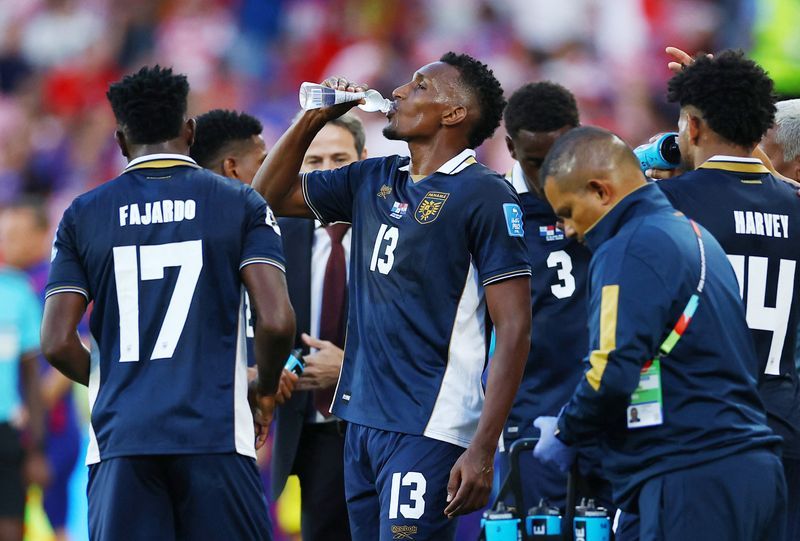
FIFA president Gianni Infantino has moved to quell mounting criticism of the mandatory hydration breaks introduced at the World Cup, insisting that the stoppages reflect the sport's commitment to player welfare rather than commercial opportunism. The three-minute pauses, which interrupt matches at the 22nd and 67th minute marks, have become a flashpoint for debate since their introduction, with the governing body facing accusations that the breaks were designed primarily to create additional advertising slots for broadcasters rather than address genuine health concerns.
The controversy surrounding the hydration breaks reflects deeper anxieties about how modern commercial pressures are reshaping football's traditional rhythms. When the breaks were implemented at the North American tournament, they immediately generated criticism from prominent figures across the sport. Broadcasters seized upon the stoppages as premium advertising time, leading viewers to conclude that commercial considerations had driven the decision. This perception has proven difficult to shake, particularly given football's already crowded calendar of commercials and sponsorship activations that punctuate matches worldwide.
Infantino directly addressed the financial question in his defence of the measure, stating unambiguously that FIFA receives no additional revenue from the breaks since all broadcast agreements had been finalised well before their introduction. The FIFA president framed the decision as purely protective rather than profit-driven, emphasizing that the organisation had no financial incentive to disrupt the flow of matches. This claim aims to separate sporting necessity from commercial exploitation, though it does little to change the viewer experience of watching advertisements during the pauses.
Beyond the commercial dimension lies a more subtle concern about how the breaks alter football as a competitive discipline. Several high-profile managers have objected that the stoppages fundamentally change the tactical and physical nature of matches. England's Thomas Tuchel characterised the breaks as interrupting and transforming the essential identity of football, while Uruguay's Marcelo Bielsa argued that fragmenting the match into shorter segments strips away one of the sport's defining characteristics: the relentless flow of ninety continuous minutes punctuated only by the halftime interval. These critiques suggest that even if commercial motives are absent, the breaks still reshape the game itself.
Yet some voices in the sport have shown greater sympathy for the rationale underpinning the breaks. Spain's Luis de la Fuente and Netherlands captain Virgil van Dijk have acknowledged that extreme heat poses genuine risks to player health and safety, even if they harbour reservations about applying the rule universally. Their nuanced position reflects the legitimate dilemma facing tournament organisers: how to balance player welfare in dangerous conditions against preserving the sport's traditional structure. In venues with air conditioning or in cooler climates, they suggest, the breaks become unnecessary.
Infantino countered this flexibility argument by pointing to the compressed nature of World Cup competition. Over a thirty-nine-day tournament, teams may play as many as eight matches, creating extraordinary physical demands that accumulate across the tournament. From this perspective, the hydration breaks serve not merely as immediate relief from heat stress but as strategic recovery moments that become increasingly valuable as the competition progresses and fatigue deepens. The breaks allow coaching staff to deliver tactical adjustments and instructions during the stoppage, an advantage that becomes more significant as matches become tighter in elimination rounds.
The FIFA president's most compelling argument addresses competitive equity, suggesting that permitting hydration breaks only in hot conditions would create unfair advantages for teams facing heat while disadvantaging others in cooler venues. By applying the rule uniformly across all matches, regardless of temperature, FIFA argues it ensures that every team operates under identical conditions. This principle of uniform application seeks to prevent scenarios where a coach in a sweltering stadium gains tactical opportunities through the break that a coach in a temperate climate cannot access, thereby creating competitive inequality based on geography rather than merit.
Infantino maintains that the breaks have not diminished match intensity or player performance levels, suggesting that athletes have successfully adapted to the pauses without losing competitive sharpness. This assertion counters concerns that the stoppages might fragment momentum or allow teams to reset psychologically in ways that benefit defensive approaches. The data from matches played under this system, according to FIFA's position, demonstrates that teams continue to play at the highest intensity throughout games despite the interruptions.
The hydration break controversy illustrates broader tensions in modern sport between tradition and adaptation. As climate change and tournament scheduling demands intensify, football's governing bodies face mounting pressure to protect player health while maintaining the sport's essential character. Solutions that satisfy all stakeholders remain elusive, particularly when innovations can simultaneously serve multiple interests—health, commerce, and tactical flexibility—making it difficult for critics to distinguish between stated rationales and underlying motives. For Malaysian and Southeast Asian football fans accustomed to watching matches in tropical climates, the hydration break question carries particular relevance, as future tournaments in the region may well require similar protections against environmental stress.