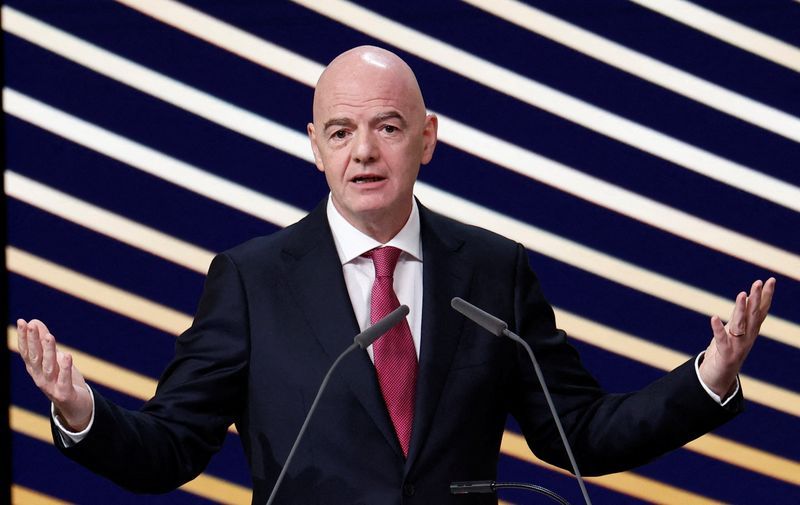
Gianni Infantino's grip on the FIFA presidency has weakened considerably following his controversial proposal to privatise portions of the World Cup, a scheme that prompted major football confederations to abandon their support for his re-election. The Swiss executive now confronts a challenging path to securing a third term, with national football bodies from Serbia, Sweden and Wales withdrawing backing after the initiative collapsed. The membership vote is scheduled for Morocco on March 18, 2027, giving rival candidates nearly three years to build coalitions and articulate alternative visions for global football governance.
The emerging field of potential successors reflects the fractured state of international football politics and deeper anxieties about FIFA's direction under Infantino's leadership. These contenders represent different geographic regions, management philosophies and approaches to balancing commercial interests with football's traditional values. Each has demonstrated either explicit opposition to Infantino's recent initiatives or the stature and connections necessary to mount a serious campaign. Their potential candidacies signal that the global football establishment is preparing contingencies should Infantino prove unable to rebuild consensus among the confederations that elect FIFA's president.
Victor Montagliani, the Canadian businessman who leads CONCACAF, the confederation governing football in North America, Central America and the Caribbean, has indicated willingness to challenge Infantino. Montagliani's base encompasses the region hosting the 2026 World Cup, the tournament's first staging in the Americas since 1994. CONCACAF's measured response to the privatisation proposal—rejecting it without joining UEFA's boycott call—positions Montagliani as a potentially more moderate alternative capable of building bridges across regional divides. His North American roots could appeal to federations concerned about Infantino's relationship with American political figures, particularly following controversy over disciplinary decisions involving U.S. players.
European football's figurehead, Slovenian Aleksander Ceferin, emerged as Infantino's most formidable critic following his high-profile boycott of last month's World Cup final. UEFA, which governs football across Europe's wealthy and influential nations, became the most vocal institutional opponent of the privatisation scheme. Ceferin's willingness to confront Infantino publicly and withdraw from major FIFA events demonstrates both his political courage and his confederation's willingness to challenge the incumbent. However, his European base could complicate building support among confederations in Africa, Asia and South America, potentially limiting his appeal to a geographically divided FIFA membership.
Sheikh Salman bin Ibrahim Al Khalifa, the Bahraini football administrator serving as AFC president and FIFA Council vice president, represents Asia's interests in the succession race. The AFC, governing football across the world's most populous continent, has substantial voting power within FIFA structures. Salman's earlier opposition to World Cup expansion to 64 teams and his confederation's criticism of FIFA's decision-making processes suggest he could mobilise Asian and allied votes. His Middle Eastern background adds another dimension to the geographic diversity of candidates, potentially appealing to confederations seeking representation from regions with growing football investment and influence.
Qatari executive Nasser Al-Khelaifi, president of Paris Saint-Germain and a prominent figure in global football administration, has attracted backing from European football officials positioning him as an alternative to both Infantino and other challengers. Al-Khelaifi's experience navigating European club football while maintaining strong Middle Eastern connections provides a unique political positioning. European federation leaders have reportedly begun coordinating around his candidacy as a potential compromise figure capable of healing regional divides. His financial acumen and experience managing prestigious sporting institutions could appeal to federations concerned about FIFA's financial governance and commercial strategy.
Norwegian Football Federation President Lise Klaveness stands as one of the most prominent women positioned to challenge for the FIFA presidency. Her consistent and vocal opposition to Infantino's privatisation proposal, combined with her federation's willingness to pursue ethics complaints against FIFA leadership, demonstrates principled opposition to the incumbent. Klaveness has become the public face of football's progressive movement, advocating for integrity in governance and democratic decision-making processes. Her gender and her federation's strong advocacy on governance issues could attract support from confederations prioritising reform and transparency, though her relatively limited international football bureaucracy experience may disadvantage her compared to rivals with broader administrative portfolios.
The fracturing of support for Infantino reflects deeper anxieties throughout global football about the direction of FIFA governance and the balance between commercial imperatives and football's traditional values. The failed privatisation proposal exposed tensions between FIFA's centralised executive leadership and the confederations that comprise its membership. Multiple regional football bodies simultaneously questioning the incumbent's leadership creates unprecedented instability at FIFA's apex, suggesting the next election will represent a genuine contest rather than the coronation that Infantino's previous re-elections resembled. This competitive dynamic introduces unpredictability into football governance at precisely the moment when FIFA faces substantial challenges regarding corruption allegations, governance reforms and tournament expansion.
For Malaysian readers and Southeast Asian football communities, this succession contest carries significant implications for FIFA's future direction and ASEAN's influence within global football governance. The AFC's representation through Salman bin Ibrahim Al Khalifa positions Asia as a potentially decisive voting bloc in a contested election. The choices made by Asian confederations regarding their preferred candidate could determine FIFA's presidential selection and shape football governance for the subsequent four-year term. Malaysia's Football Association, as part of the AFC, will participate in these discussions and potentially influence broader Asian federation strategy. The outcome of the 2027 succession race will likely determine whether FIFA returns to a consensus-based approach to governance or whether regional divisions persist in shaping institutional decision-making.

