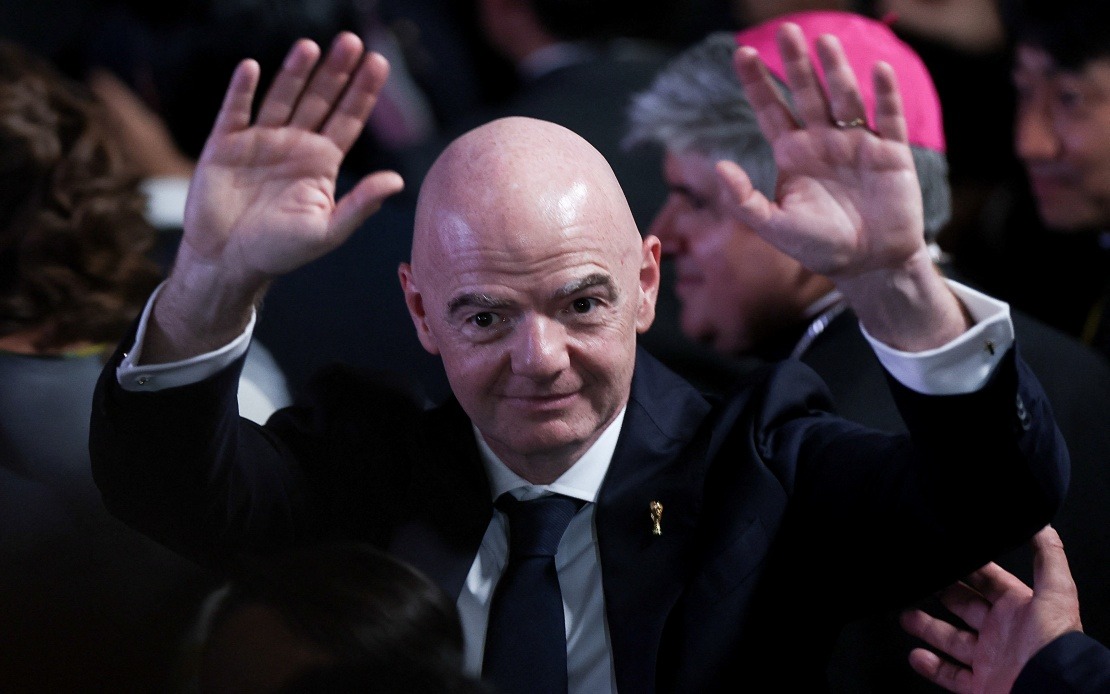
In a sharp rebuttal issued from Istanbul on Saturday, FIFA has moved to shield its president Gianni Infantino from what the organisation characterises as a coordinated campaign of misinformation and illegitimate challenges to his authority. The statement represents an escalation in the internal tensions that have long simmered within world football's governing body, with the organisation now publicly dismissing what it calls unnamed efforts to circumvent its established democratic frameworks in pursuit of removing the Swiss administrator.
At the core of FIFA's defence is an assertion that any presidential election must strictly adhere to the organisation's constitutional statutes and established governance procedures. The body's leadership has explicitly warned that it will not countenance or facilitate any alternative electoral process, signalling that attempts to engineer a challenge outside formal channels will be firmly blocked. This hard-line position underscores the degree to which FIFA sees the current criticism as fundamentally illegitimate rather than a legitimate expression of concerns about Infantino's tenure.
Infantino's position, while under pressure, remains buttressed by significant regional support that FIFA has highlighted in its statement. Both the South American Football Confederation (CONMEBOL) and the Confederation of African Football (CAF) have recently thrown their weight behind the current FIFA leadership, suggesting that opposition to Infantino remains patchy across the global football landscape. These endorsements are strategically important for Infantino, as they demonstrate that major continental blocs still view his presidency as acceptable or preferable to the uncertainty of a contested transition.
For Malaysian football observers and Southeast Asian stakeholders, the implications of this internal FIFA dispute carry practical significance. The region's football federation operates within FIFA's framework and benefits from its development programmes, with resources and opportunities allocated through structures that the current FIFA administration oversees. Any destabilisation of FIFA's leadership could create uncertainty about funding priorities, tournament schedules, and the distribution of commercial revenues that flow through the global football system.
FIFA's statement articulates a broader argument that Infantino deserves credit for his stewardship across three decades in European and international football administration. The organisation contends that his tenure has expanded the reach of the game, particularly in markets and regions previously underserved by international football governance. Whether this claim withstands scrutiny remains contested, but it represents FIFA's core narrative in defending his continued leadership to member associations and the broader public.
The governing body has attempted to distinguish between legitimate oversight and what it perceives as bad-faith attacks designed to damage the organisation through character assassination rather than substantive policy debate. FIFA's language suggests frustration that critics are employing allegations and insinuations as weapons rather than engaging with verifiable facts about its administration. This framing attempts to delegitimise opposition by painting it as dishonest rather than principled disagreement over direction and priorities.
The reference to repetition and amplification of claims points to FIFA's assessment that critics are relying on a strategy of saturation, hoping that sustained noise around alleged problems will create momentum regardless of evidential support. The organisation's insistence that scrutiny must be anchored in demonstrable fact rather than speculation reflects a common institutional defence strategy when facing diffuse and persistent criticism from multiple quarters. However, such defences can also appear evasive to observers sceptical of the institution's transparency and accountability.
Infantino's pursuit of a fourth term represents a significant development in global football politics, as most international sports organisations operate with term limits or face stronger conventions against extended tenures. His continuation would mark an unusually long period of continuous executive leadership within FIFA, raising questions about institutional renewal, fresh perspectives, and the prevention of power consolidation. These structural questions animate much of the critique, even if FIFA's statement treats them as peripheral to the real issue of procedural legitimacy.
The timing of this statement, issued during the football calendar's busy season, suggests FIFA intends to move quickly past this controversy and establish the ground rules for any succession process. By publicly cementing support from major confederations and asserting the inviolability of its constitutional process, FIFA is signalling to wavering member associations that challenges to the current arrangement will be treated as illegitimate departures from proper procedure. This approach may succeed in suppressing overt rebellion, though it risks driving discontent underground rather than addressing its roots.
For regional stakeholders in Southeast Asia and beyond, the outcome of FIFA's internal politics matters because it will determine the character of global football governance in the coming years. Infantino's defenders argue that stability and continuity serve the game's expansion and commercial development, while critics contend that his tenure has been marked by governance questions that warrant examination. The resolution of this tension will shape FIFA's priorities and may affect how development resources flow to different regions and federations across the football world.

