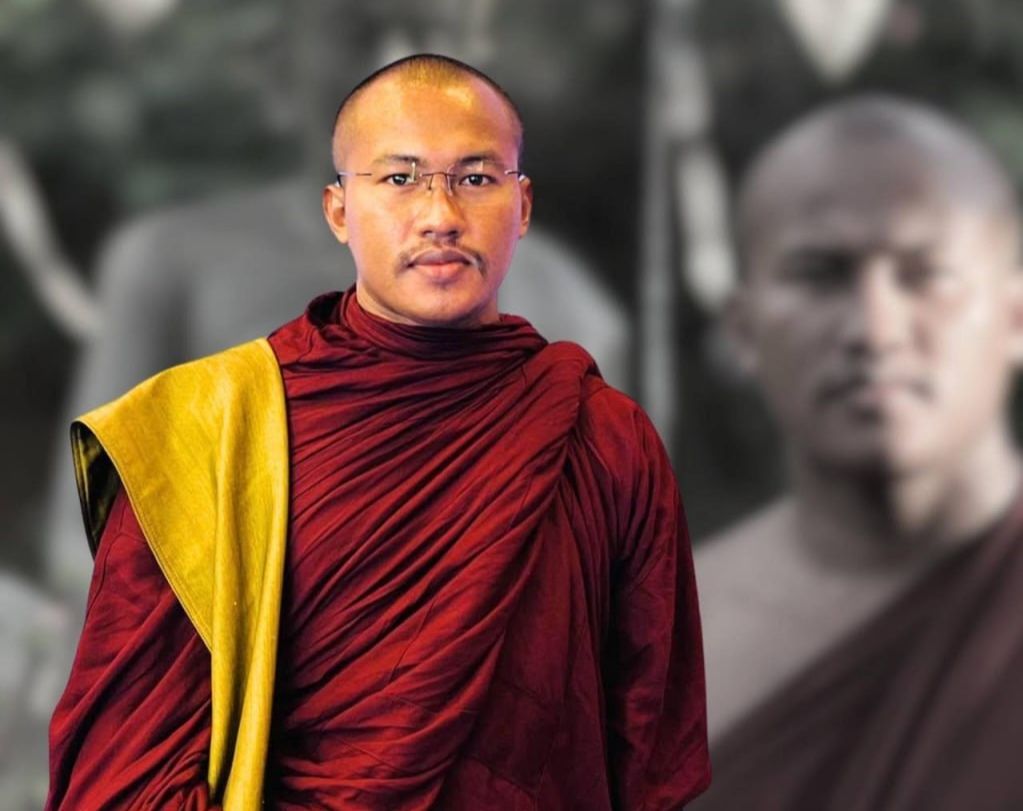
A coalition of 50 civil society organisations, labour unions and community groups across Cambodia has issued a forceful joint statement demanding the immediate release of Chea Vuthy, a 27-year-old former monk and citizen journalist sentenced to 18 months in prison for remarks he posted in a private online chat group. The conviction, handed down by Phnom Penh Municipal Court on August 19, has sparked grave concern among rights advocates who view the case as emblematic of tightening restrictions on free expression in the Kingdom.
Vuthy's crime was posting a comment in a private Messenger group of approximately 20 people in August 2025, in which he addressed the treatment of civilians displaced by fighting along the Cambodia-Thailand border. He acknowledged making the comment within the private group but maintained he had never shared it publicly. The court nonetheless convicted him under Articles 494 and 495 of Cambodia's Criminal Code on charges of incitement, imposing an additional fine of two million riel—equivalent to roughly $500. The Messenger comment constituted the sole evidence presented to support the prosecution.
The distinction between private and public speech lies at the heart of the outcry surrounding this case. The joint statement, coordinated by the Cambodian League for the Promotion and Defense of Human Rights (LICADHO) and released on August 20, articulates a central argument: comments circulating within a confined group of 20 individuals cannot reasonably constitute conduct warranting criminal prosecution, much less a prison sentence of such length. This reasoning reflects international standards governing freedom of expression, which recognise that restrictions must be necessary and proportionate to their stated aim. The organisations contend that applying criminal penalties to ephemeral private communications fundamentally misconstrues both the nature of the communication and the legitimate scope of state authority.
Vuthy's arrest and prosecution must be understood within a widening pattern of enforcement action targeting speech about the Cambodia-Thailand border dispute. His case follows convictions of other individuals prosecuted for similar online commentary. In May, a chef received an identical 18-month sentence for social media posts related to the border conflict. A month later, a deputy school director was sentenced to two years imprisonment for comparable remarks. These parallel prosecutions reveal a systematic approach to criminalising public discourse on this sensitive geopolitical issue, raising concerns that authorities are using broadly construed incitement laws as instruments to suppress discussion rather than to protect genuine public interests.
Vuthy's background as a citizen journalist with a track record covering environmental degradation, deforestation and human rights violations adds another dimension to the case's significance for press freedom advocates. Before his arrest in April at Wat Por Veal pagoda in Battambang province—executed by plainclothes provincial police—he had established himself as a voice documenting conditions often overlooked by mainstream media. His forced defrocking and subsequent detention at Phnom Penh's Police Judicial Prison (PJ) appear designed not merely to punish speech but to silence an emerging journalist whose reporting challenged official narratives. The arrest itself, conducted by plainclothes officers, deviates from standard procedures and suggests an extra-legal dimension to the prosecution.
The coalition demanding his release includes Cambodia's most prominent human rights and media organisations. LICADHO, the Cambodian Center for Human Rights (CCHR), Cambodian Human Rights and Development Association (ADHOC), the Cambodian Center for Independent Media (CCIM), and the Cambodian Journalists Alliance Association (CamboJA) feature among the signatories, alongside labour organisations such as the Center for Alliance of Labor and Human Rights (CENTRAL) and grassroots groups like the Prey Lang Community Network. This breadth of endorsement signals that the case transcends parochial concerns, touching fundamental questions about Cambodia's commitment to rule of law and international human rights standards.
Legal experts question whether Vuthy's private remarks meet the threshold for incitement under international law. His attorney, Em Chantha, argues that the evidence falls short of demonstrating any legally cognizable offence and has signalled an intention to appeal. The threshold for incitement under Article 19 of the International Covenant on Civil and Political Rights (ICCPR)—to which Cambodia is a signatory—requires not only intent but also a direct, immediate likelihood of producing imminent lawless action. A comment in a private group of 20 people, by definition, lacks the requisite public character and scale to meet this demanding standard. Prosecuting under such circumstances inverts the logic of international human rights law, which presumes that restrictions on expression must be clearly justified and narrowly tailored.
Cambodia's own constitutional framework ostensibly protects freedom of expression as a fundamental right. Yet Vuthy's conviction exemplifies how criminal provisions can be weaponised to circumvent constitutional protections, particularly when applied to marginalised speakers or sensitive topics. The case also undermines Cambodia's credibility regarding human rights commitments made during its fourth Universal Periodic Review at the UN Human Rights Council. Nations that receive international scrutiny for freedom of expression violations and then prosecute new cases on similar grounds signal an unwillingness to reform practices identified by the international community.
The government's response has emphasised judicial independence while offering no substantive engagement with the civil society organisations' legal arguments. Ministry of Information spokesperson Tep Asnarith stated that the executive branch does not interfere with judicial proceedings and that courts exercise independent authority. He acknowledged Vuthy's right to appeal and legal representation while urging civil society groups to approach such cases with balance and accuracy—language that implicitly dismisses the detailed legal analysis provided by Cambodia's most respected rights organisations. This deflection avoids grappling with the proportionality question at the case's core.
For Malaysia and other Southeast Asian nations, Vuthy's conviction offers a cautionary example of how national security justifications and border sensitivities can dilute freedom of expression protections. The Cambodia-Thailand border has generated genuine friction and occasional military confrontation, creating legitimate national security concerns. Yet those concerns cannot justify prosecuting private speech in intimate groups, a principle with applicability across the region. As Malaysia manages its own border sensitivities and navigates tensions with neighbouring states, the Vuthy case illuminates how ostensibly reasonable security rationales can metastasise into systematic suppression of ordinary discourse. The proportionality principle—ensuring that restrictions match their stated aims—serves as a counterweight to mission creep in security law enforcement.
Vuthy's detention at the Police Judicial Prison pending appeal means he remains incarcerated despite maintaining his innocence and despite credible arguments that his conviction violates Cambodia's own constitutional commitments and international obligations. The rejection of his bail request in June by the Phnom Penh Appeal Court suggests that courts may be reluctant to second-guess prosecutorial decisions. Should his appeal fail, his case will stand as an instance where Cambodia's legal system punished a young journalist for discussing a matter of genuine public concern—the humanitarian impact of border conflict—in a fundamentally private setting. This outcome would demonstrate that Cambodia's stated commitment to freedom of expression remains conditional on avoiding sensitive topics, particularly those touching state security narratives, a formula incompatible with genuine protection of human rights.

