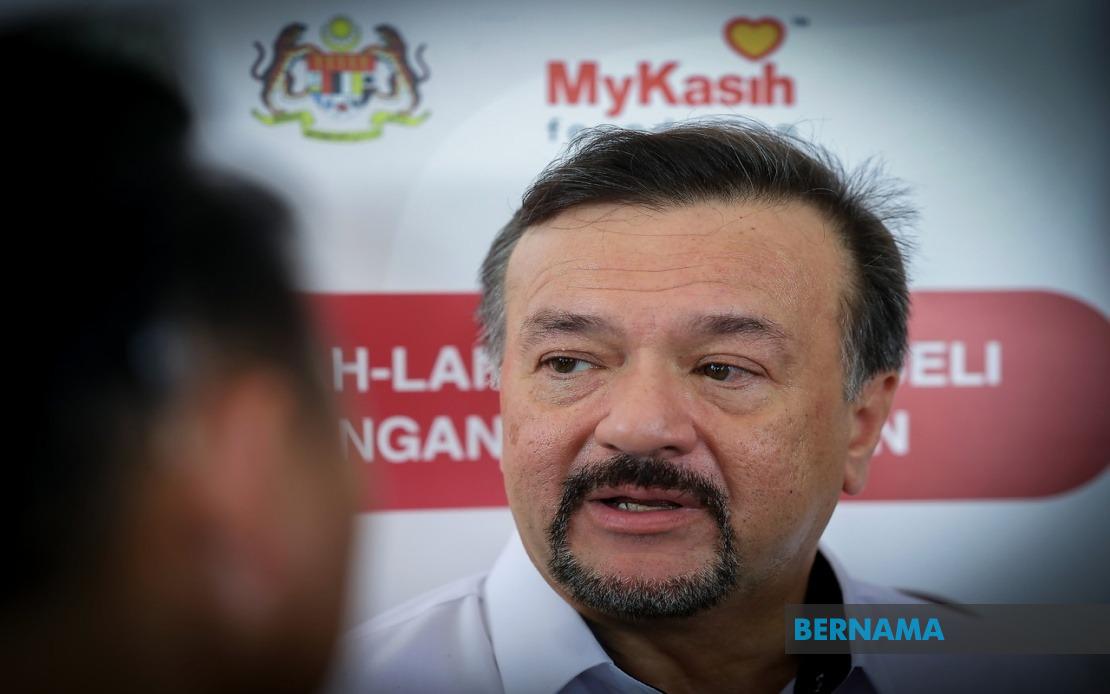
The Malaysian government has signalled flexibility in managing the BUDI MADANI Diesel programme, with Finance Minister II Datuk Seri Amir Hamzah Azizan confirming that the Ministry of Finance will entertain proposals aimed at optimising the initiative's effectiveness. Speaking in Kuching on June 24, Amir Hamzah explained that any adjustments—including potential quota modifications—would hinge on empirical usage information rather than speculation or political pressure, reflecting a data-driven approach to subsidy management.
The minister's remarks emerge as stakeholders evaluate the fledgling diesel subsidy scheme, which represents Malaysia's latest effort to target fuel assistance more precisely. The BUDI Diesel programme marks a significant policy shift from universal subsidies, attempting instead to direct support to those most dependent on fuel consumption. This calibration reflects broader economic pressures, as the government attempts to balance fiscal sustainability with the welfare of ordinary Malaysians increasingly exposed to volatile global energy markets.
Amir Hamzah drew parallels with the RON95 petrol subsidy rollout to illustrate the government's pragmatic stance. When that programme launched, he noted, critics contended that consumption quotas were set too conservatively. However, five months of data—covering January through May of this year—demonstrated that fewer than one per cent of users exceeded the 200-litre monthly threshold. This evidence contradicted initial concerns about undersupply, validating the government's cautious initial design and underscoring the value of evidence-based policy adjustment.
The minister further referenced experience with targeted subsidies in the e-hailing sector, a programme that initially drew similar complaints about insufficient quotas. Rather than making wholesale changes immediately, the government examined actual fuel consumption records submitted by ride-sharing platforms. When data revealed that certain drivers genuinely required higher allocations to operate efficiently, the scheme was restructured to accommodate two quota tiers—600 litres and 800 litres monthly—allocated according to individual usage patterns. This iterative approach prevented wasteful over-allocation whilst ensuring drivers dependent on higher fuel volumes received adequate support.
The flexibility Amir Hamzah articulated carries particular weight for Malaysian businesses and consumers already navigating inflationary pressures. The diesel subsidy directly affects trucking operators, agricultural producers, and small-scale manufacturers reliant on road transport—sectors crucial to Malaysia's economic resilience. A poorly calibrated quota system risks either bleeding government finances through excessive outlays or creating supply-side constraints that inflate costs elsewhere in the economy. The minister's openness to refinement thus addresses legitimate anxieties about whether initial parameters adequately serve genuine demand.
Works Minister Datuk Seri Alexander Nanta Linggi's attendance at the briefing signalled whole-of-government engagement with implementation challenges. Transport and logistics, his portfolio's concern, depend fundamentally on fuel cost management. His presence underscored that subsidy design involves multiple stakeholders beyond Finance, reflecting the intricate interplay between fiscal policy, sectoral needs, and administrative capacity. This coordination hints at a structured evaluation process rather than ad-hoc decision-making.
The government's commitment to real-time monitoring and adjustment contrasts with historical Malaysian subsidy management, where entrenched programmes often continued regardless of actual take-up rates or cost-benefit outcomes. By anchoring decisions to usage metrics, policymakers create accountability mechanisms and reduce scope for political capture or bureaucratic inertia. Quarterly or semi-annual reviews based on consumption data would provide natural decision points for modest calibrations, preventing either sudden shocks to beneficiaries or prolonged misalignment between programme design and reality.
For Malaysian business operators and households, the minister's message offers modest reassurance that voices raised about quota adequacy will not be dismissed outright. The government has demonstrated, through the e-hailing example, genuine willingness to accommodate sectoral feedback when supported by operational data. This creates incentives for stakeholders to maintain rigorous records of fuel usage patterns and participate transparently in programme evaluation. Industry associations representing truckers, farmers, and manufacturers will likely compile aggregate data to present to policymakers, informing evidence-based requests for quota adjustments.
The broader context involves regional peers adopting similar targeted subsidy models as universal fuel support becomes fiscally unmanageable. Indonesia's cooking oil and fuel subsidy restrictions, and Thailand's recent energy price measures, illustrate how energy-dependent economies across Southeast Asia face parallel pressures. Malaysia's methodical approach to BUDI Diesel—accepting proposals, demanding evidence, iterating design—may offer a template for more sustainable subsidy governance regionally. Nations wrestling with comparable fiscal constraints could benefit from Malaysia's emphasis on data collection and outcome-based programme refinement rather than ideologically rigid entitlements.
However, sustaining such evidence-based governance requires institutional capacity often strained in developing economies. Data collection systems must be robust enough to detect genuine consumption patterns whilst resistant to gaming or misreporting. The mechanisms for stakeholder input must remain accessible to smaller operators unable to employ government relations professionals. And political economy pressures—constituencies demanding expanded quotas, officials reluctant to disappoint voters—could gradually erode the government's adherence to purely empirical decision criteria. Maintaining this discipline over years will test institutional resolve.
The June 24 statement ultimately reflects a government attempting to chart pragmatic middle ground: avoiding the fiscal drain of uncapped subsidies whilst respecting the economic realities facing fuel-dependent sectors. By committing to regular review cycles grounded in usage data, Amir Hamzah has invited stakeholders into a structured dialogue rather than leaving them petitioning reactively. Whether this approach proves sustainable depends on execution: whether data systems function reliably, whether adjustments follow promptly from evidence, and whether political pressure can be resisted when inconvenient truths emerge. For now, the Finance Ministry's open posture represents progress from subsidy regimes that viewed adjustments as defeats to be resisted rather than natural refinements warranted by experience.