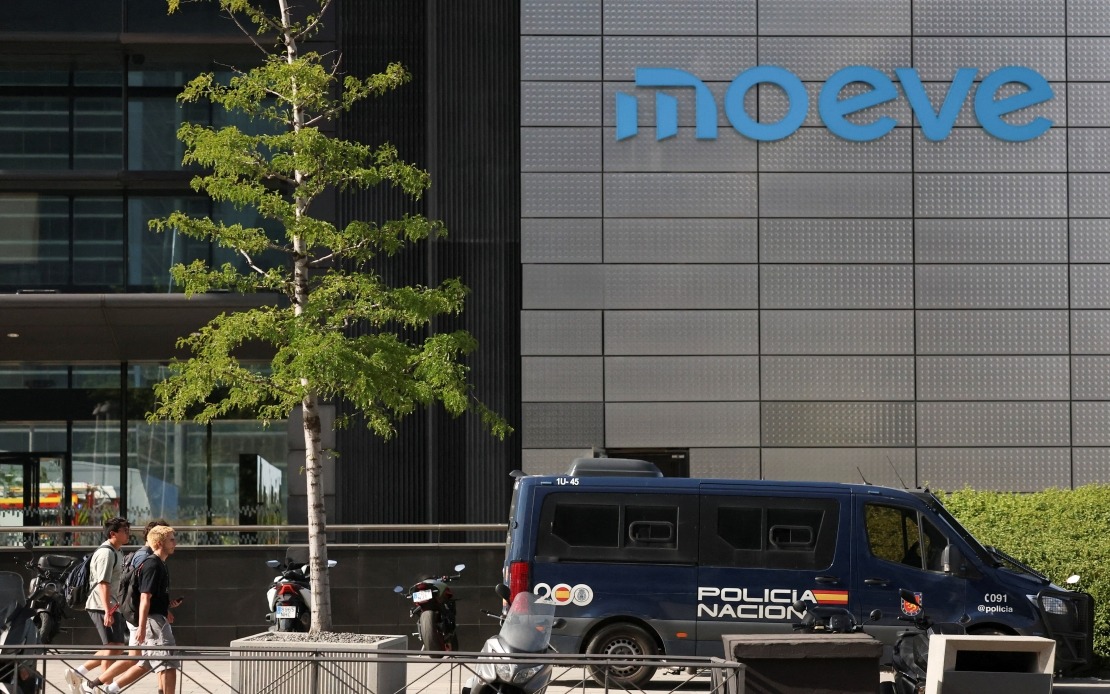
Madrid's skyline was marked by dramatic plumes of smoke on Tuesday afternoon when fire swept through Torre Moeve, Spain's second-highest skyscraper, following an internal explosion around 5.00 pm local time. The incident drew immediate response from city authorities and firefighting units, who swiftly contained the blaze while evacuating the entire structure as a preventive measure. The visible smoke rising from the downtown tower could be observed across considerable distances throughout the Spanish capital, underscoring the scale of the emergency unfolding in one of the country's most recognizable landmarks.
According to Spain's National Police, the explosion that triggered the fire originated within the building itself, though the precise cause remains under investigation. The Spanish government delegation in Madrid identified the 25th floor as the origin point, indicating that the blaze started within technical facilities located at that level. This detail suggests the fire may have stemmed from mechanical or electrical systems rather than any external threat, a factor that likely informed the decision to evacuate rather than engage in prolonged emergency protocols.
Emergency response to the Torre Moeve incident demonstrated coordinated Madrid City Council firefighting procedures. Once crews arrived and assessed the situation, they successfully worked to contain and extinguish the flames within a timeframe that prevented the fire from spreading to adjacent floors or compromising structural integrity. The declaration that the fire had been completely extinguished came relatively quickly, followed by systematic interior inspections to ensure no secondary hazards remained and to determine the full extent of damage caused by both the initial explosion and subsequent flames.
The human cost of the incident remained remarkably low given the circumstances. Three individuals received medical attention at the scene: two workers treated for mild smoke inhalation and one bystander experiencing an anxiety attack triggered by the emergency situation. Significantly, all three were discharged without requiring hospitalization, indicating that while the fire itself was substantial, the blast and smoke did not produce severe injuries. This outcome reflected both the effectiveness of evacuation procedures and the rapid response that prevented prolonged exposure to hazardous conditions.
Torre Moeve holds considerable significance within Madrid's architectural and economic landscape as Spain's second-tallest building. High-rise incidents in major European cities carry particular weight given the density of occupancy, complexity of evacuation routes, and potential for widespread disruption. The successful management of this emergency without fatalities or serious harm speaks to the preparedness of Madrid's emergency services and the building's safety infrastructure, elements that become increasingly critical as urban centers develop taller, more complex structures.
For Malaysian and Southeast Asian observers, this incident offers instructive context regarding high-rise safety management and emergency response in developed European cities. The region's own expanding skylines, particularly in Kuala Lumpur, Singapore, Jakarta, and Bangkok, share similar technical vulnerabilities and operational challenges. The coordinated response demonstrated by Madrid authorities—rapid evacuation, professional containment, systematic inspection—establishes benchmarks against which regional emergency preparedness can be evaluated and improved.
The incident also highlights the ongoing relevance of fire safety in modern commercial towers. Technical rooms housing electrical systems, HVAC infrastructure, and mechanical equipment represent potential ignition points in any tall building globally. The fact that Torre Moeve's fire originated in such a location underscores the importance of regular maintenance protocols, robust fire suppression systems in high-risk areas, and staff training in emergency procedures. Building operators across Southeast Asia may find value in reviewing similar technical space safety measures as a precautionary step.
Investigations into the precise cause of the explosion will likely continue over coming days and weeks. Understanding whether the incident resulted from equipment malfunction, maintenance error, electrical fault, or other mechanical failure carries implications for building safety standards not only in Madrid but potentially across Spain and beyond. If investigation reveals a previously unidentified vulnerability common to certain building systems or technical installations, regulatory agencies might issue updated guidance affecting facility management practices more broadly.
The rapid containment and successful evacuation of Torre Moeve, coupled with the absence of serious injury, may temper immediate concern about the incident but should not diminish awareness of risks inherent in high-rise occupancy. Emergency response effectiveness depends on continuous investment in training, equipment, maintenance, and systematic safety protocols. For residents and workers in Southeast Asia's growing number of supertall structures, such international incidents serve as reminders of the importance of understanding emergency procedures and maintaining vigilance regarding fire safety measures within their own buildings.