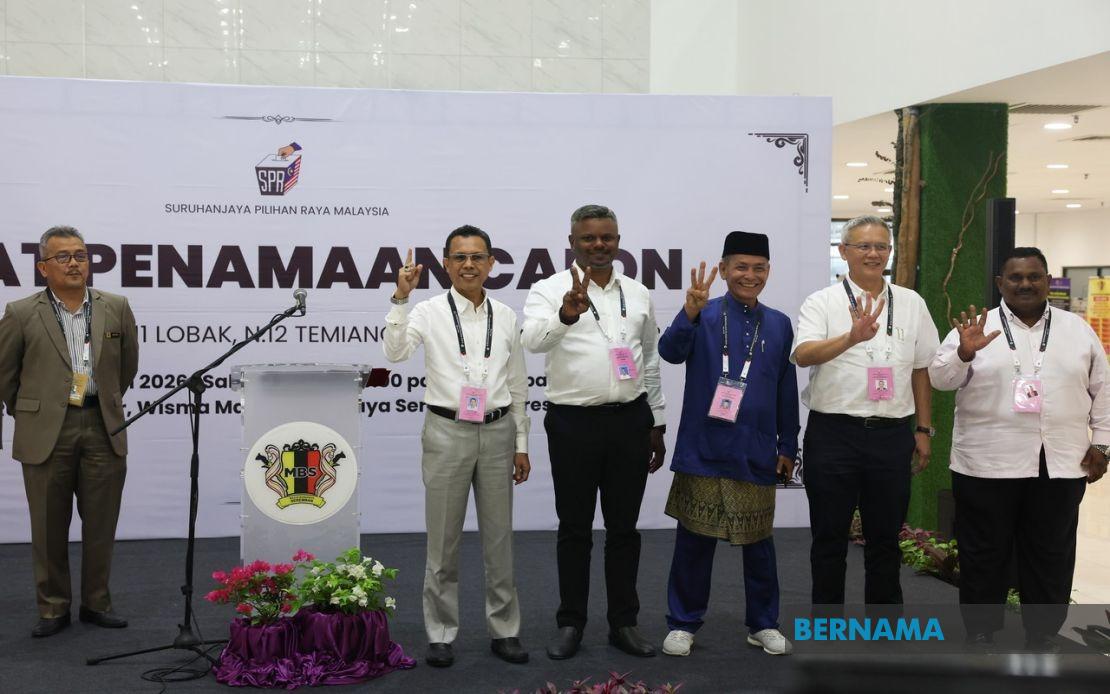
The Nilai state assembly seat has emerged as one of the most contested battlegrounds in the forthcoming 16th Negeri Sembilan state election, with incumbent J. Arul Kumar bracing for a bruising five-way contest. The DAP National vice chairman's bid for re-election faces unprecedented fragmentation, reflecting deepening political divisions across the state's electoral landscape and challenging traditional coalition arithmetic. The expanded candidate field signals potential vulnerability for Pakatan Harapan in what was once considered a safer constituency, raising questions about the coalition's ability to consolidate anti-establishment support.
Arul Kumar confronts challengers spanning the political spectrum following the nomination process in Seremban. Zamani Ibrahim represents Berjasa, a smaller party attempting to carve electoral space. Datuk Lai Chien Kong carries Barisan Nasional's colours in the contest, representing the established coalition still testing its appeal in the state. Datuk V. Saravana Kumar campaigns for Bersatu, the ruling party at federal level seeking to expand its footing in Negeri Sembilan. Independent candidate Omar Mohd Isa completes the crowded field, potentially fragmenting votes further across community lines. This configuration creates complex strategic calculations for voters assessing which candidate might command sufficient support to govern the seat.
The announcement of the final candidate roster came from election returning officer Datuk Masri Baharuddin at Wisma Bandaraya Seremban immediately following the nomination deadline. The compressed timeline between nomination and polling day gives candidates limited opportunity to mobilise supporters, particularly in constituencies featuring multiple contestants where winning margins could prove razor-thin. Electoral Commission scheduling places early voting on July 28 and polling day on August 1, compressing campaigning into a fortnight during which candidates must reach voters across diverse demographic groups.
Elsewhere in Negeri Sembilan, the Sikamat state seat presents a three-cornered battle where Pakatan Harapan relies on Nor Azman Mohamad, who serves as political secretary to the Menteri Besar, to maintain the coalition's presence. Nor Azman confronts Datuk Razali Abu Samah from Perikatan Nasional and Datuk Tun Faisal Ismail Aziz representing Bersatu. An independent candidate, Bujang Abu, withdrew from the race immediately before the nomination deadline, a last-minute decision that potentially impacts the constituency's competitive dynamics by removing a potential vote splitter. This withdrawal suggests behind-the-scenes negotiations seeking to narrow the field and prevent vote-splitting among opposition candidates.
The Lenggeng constituency features Pakatan Harapan's Zarinna Abu Zarin seeking to unseat incumbent Datuk Mohd Asna Amin from Barisan Nasional, with Bersatu's Zool Amali Hussin completing the three-way race. This configuration mirrors patterns observed across multiple constituencies, where Bersatu's participation disrupts traditional two-coalition contests between Pakatan Harapan and Barisan Nasional, potentially benefiting whichever bloc can more effectively consolidate support. The presence of three serious contenders across multiple constituencies complicates voter preference calculations and reduces predictability of electoral outcomes.
Lobak presents a notably different scenario, configured as a direct two-candidate showdown between incumbent Chew Seh Yong from Pakatan Harapan and Perikatan Nasional challenger Dr P. Kumar. This binary contest offers voters clearer alternatives and potentially higher stakes, as either candidate could plausibly secure victory without requiring coalition coordination. The simplified contest may produce higher turnout as voters perceive greater personal agency over outcomes compared to multi-cornered races where strategic voting calculations become more complex.
Temiang emerges as another three-cornered battleground featuring Pakatan Harapan's Ho Weng Wah, a political secretary to the Transport Minister, against Datuk Leaw Kok Chan representing Barisan Nasional and Fazly Hamid from Bersatu. Ho Weng Wah's role as political secretary provides him with government machinery access and proximity to federal resources, potential advantages offset by anti-incumbency sentiment or voter frustration with national governance. The three-way configuration again reflects Bersatu's consistent presence across Negeri Sembilan constituencies, suggesting the party pursued systematic candidate recruitment rather than selective intervention.
Ampangan presents a parallel three-way contest where Yayasan Negeri Sembilan director Muhammad Nazri Kassim campaigns for Pakatan Harapan against Perikatan Nasional's Datuk Dr Mohamad Rafie Malek and Bersatu's Noor'azah Harun. Muhammad Nazri's background in state-affiliated institutional leadership may provide credibility with voters seeking candidates with proven administrative experience, though association with state apparatus could invite anti-establishment sentiment. This constituency, like Temiang and Sikamat, features Bersatu participation, indicating the federal ruling party adopted an across-the-board nomination strategy aimed at maximising electoral leverage in Negeri Sembilan rather than focusing resources on winnable contests.
The fragmentation visible across multiple constituencies, particularly through Bersatu's omnipresence and independent candidates' participation, reflects broader realignments within Malaysian politics following recent federal developments. Traditional coalitional calculations based on Pakatan Harapan versus Barisan Nasional binaries increasingly face disruption from parties seeking to chart independent electoral courses or capture specific demographic constituencies. For Malaysian and regional observers, the Negeri Sembilan contest signals how coalition politics may evolve, whether Bersatu consolidates itself as a viable third force or whether post-election dynamics restore traditional configurations.
The 36-seat Negeri Sembilan state assembly was dissolved on June 5, setting the stage for what emerges as a crucial test of voter preferences amid unsettled national political circumstances. The compressed campaign period and multiple contested constituencies create significant uncertainty around final outcomes, departing from previous elections where coalition strongholds produced more predictable results. Regional governments' electoral performance carries implications beyond state boundaries, influencing national coalition stability and individual leaders' standing within party hierarchies. The Negeri Sembilan election thus merits close observation from political analysts tracking Malaysia's evolving electoral dynamics and whether traditional structures can accommodate emerging political forces effectively.

