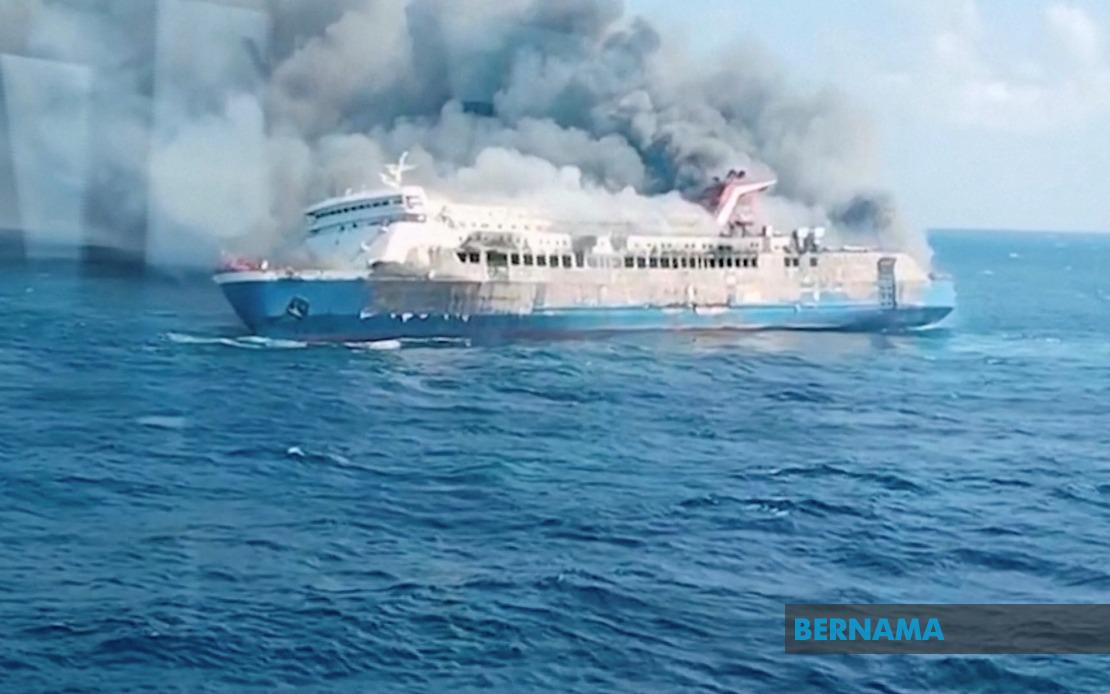
A major maritime tragedy unfolded off the coast of Madura in Indonesia's East Java region on August 2 when the passenger ferry KMP Mutiara Santosa 2 was consumed by fire while en route from Surabaya to the distant port of Makassar in South Sulawesi. The incident has claimed at least five lives, with search and rescue teams racing against time to locate 41 passengers and crew members who remain unaccounted for in the aftermath of the disaster.
The vessel, which had 232 passengers and 39 crew members aboard when the fire erupted, became a scene of chaos and desperation as flames swept through the ship's structure. Officials from the Surabaya Search and Rescue Office received the first distress call at 8.24 am local time, triggering an immediate and coordinated response from multiple agencies deployed across the northern waters of Madura. By early afternoon, rescue operations had managed to bring 225 people safely to shore, a remarkable achievement given the scale of the emergency and the rapid spread of the blaze.
Nanang Sigit, Chief of the Surabaya Search and Rescue Office, provided initial details of the rescue efforts, explaining that the majority of the ferry's structure fell victim to the relentless flames. As fire consumed vast sections of the vessel, terrified passengers gathered desperately on the bridge and in the forward sections of the ship, awaiting rescue helicopters and support vessels that converged on the scene. The concentration of survivors in these sections may have assisted rescue teams in locating and evacuating people more efficiently during the critical early hours of the emergency.
Among the dramatic scenes captured during the incident were reports of passengers jumping overboard into the sea as a desperate attempt to escape the advancing flames. These individuals, displaying remarkable survival instincts despite the perilous circumstances, were fortunate enough to be spotted and retrieved by passing vessels in the vicinity. Their rescue from the water highlights the crucial role played by merchant ships and fishing boats that happened to be operating in the area at the time of the emergency.
The scale of the search and rescue operation deployed to locate the missing individuals reflects the seriousness with which Indonesian authorities are treating this catastrophe. Search teams have mobilized numerous assets and personnel across the waters off Madura, conducting systematic sweeps and coordinated searches in the hope of locating survivors or, tragically, the bodies of those who perished. The operation remains ongoing as darkness falls and conditions at sea potentially worsen, adding urgency to efforts to find the remaining 41 individuals.
Investigators have begun preliminary inquiries into what caused the catastrophic fire, though no definitive conclusions have yet been reached. The initial circumstances remain murky, with authorities yet to determine whether the blaze originated from an engine room malfunction, an electrical fault, cargo-related issues, or some other source entirely. Understanding the cause will be critical not only for this investigation but for enhancing maritime safety protocols across Indonesia's vital shipping networks.
This incident strikes at the heart of Southeast Asia's reliance on maritime transport and raises uncomfortable questions about vessel maintenance, crew training, and emergency response systems aboard ferries operating in the region. Indonesia, with its vast archipelago and dispersed population, depends heavily on sea transport for connectivity and commerce. The KMP Mutiara Santosa 2 represents one of countless vessels crisscrossing these waters daily, carrying both passengers and cargo on routes that are essential to regional economic life.
For Malaysian observers, this tragedy serves as a sobering reminder of the maritime risks inherent in Southeast Asian shipping. Malaysia shares similar geographical characteristics and relies on comparable ferry operations, meaning lessons learned from this incident carry direct relevance to local maritime safety. The speed with which fires can spread on enclosed vessels and the challenges of conducting rescue operations in open water underscore the critical importance of rigorous safety standards, regular inspections, and well-trained crews across all regional shipping operators.
The incident also highlights vulnerabilities in emergency response systems when vessels operate far from major ports or established shipping lanes. While the Surabaya Search and Rescue Office responded promptly upon notification, the geographical distance from rescue facilities and the challenges of operating at sea during daylight hours demonstrate ongoing capacity constraints that many regional authorities face. Improving maritime safety across Southeast Asia requires sustained investment in search and rescue infrastructure and better coordination between neighboring countries' maritime authorities.

