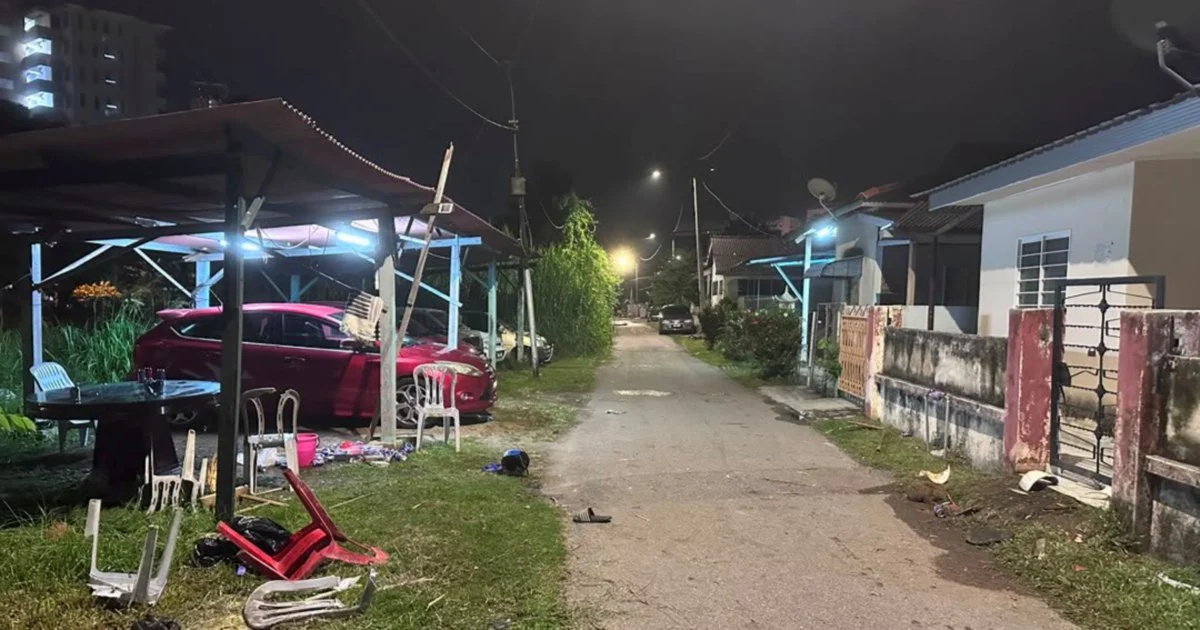
Police in Melaka have arrested five individuals in connection with a brutal early-morning assault that has left one victim hospitalised in critical condition with a fractured skull. The incident unfolded near a temple on Jalan Pengkalan in Kampung Pengkalan Rama Pantai, a coastal residential area, when two men were set upon by a group of attackers. The violence erupted while the victims were attempting to recover a motorcycle, an incident that has shocked the local community and raised fresh concerns about street violence in the state.
Police officials confirmed that the injured men were initially attacked by unknown assailants before reinforcements arrived at the scene. The victim suffering the fractured skull now remains in critical condition at a medical facility, where medical staff are monitoring his neurological status closely. The seriousness of the head injury has prompted authorities to treat the case with urgency, escalating it to grievous hurt and potentially more severe criminal charges depending on the victim's progress.
The location of the assault, near a temple in a residential neighbourhood, underscores growing anxieties among Melaka residents about personal safety in areas that might otherwise seem secure. Temples typically serve as community anchors and are generally perceived as protected spaces, making this incident particularly alarming for local residents and worshippers who frequent the premises. The temple area has now become a focus for police investigations as officers seek to understand what precipitated the violence.
Investigators have moved swiftly to apprehend suspects following the attack. The arrest of five individuals suggests that police have made significant progress in identifying those responsible, though formal charges have yet to be confirmed. The coordinated nature of the assault—involving multiple attackers—indicates a planned or organised element to the violence rather than a spontaneous confrontation, a distinction that carries implications for the severity of eventual charges.
Detectives are now focusing on establishing the motive behind the assault. The fact that the attack occurred while the victims were retrieving a motorcycle raises questions about whether the incident stemmed from a property dispute, territorial conflict, or personal animosity between the involved parties. Such contextual details are crucial for prosecutors building their case and may illuminate patterns of crime in the area that authorities need to address systematically.
The incident reflects broader challenges Malaysian law enforcement faces in combating street violence and gang-related activities. Melaka, despite its position as a major tourist destination and business hub, has grappled with periodic spikes in violent crime. The state's position as a transit point between Kuala Lumpur and Johor can sometimes expose it to organised criminal elements passing through or establishing footholds in the region.
For Southeast Asian observers, such incidents underscore the persistent struggle many nations in the region face in maintaining public order amid economic pressures and social tensions. Malaysia's police response—swift identification and arrest of multiple suspects—demonstrates institutional capacity, yet the underlying causes of such violence require deeper examination through community engagement and crime prevention strategies.
The second victim, while injured, escaped the most severe trauma. However, the psychological impact of witnessing such brutality should not be underestimated, and social support services may be warranted to help both victims process the trauma of the attack and cooperate with ongoing investigations.
Police have urged the public to come forward with any information regarding the assault or the circumstances leading to it. Community tip-offs have historically proven invaluable in resolving such cases, particularly when the initial attack occurs in populated areas where residents may have witnessed critical details. Officers are reviewing CCTV footage from nearby properties and the temple premises, which may provide crucial evidence about the attackers' identities and movements.
The arrests represent a significant development in the investigation, yet the case underscores systemic questions about prevention. Authorities in Melaka and across Malaysia face mounting pressure to address the root causes of street violence through community policing initiatives, youth engagement programmes, and targeted intervention in high-risk areas.
As the victim fights for recovery in hospital, the case serves as a sobering reminder of the consequences of unchecked violence. The judicial process will ultimately determine accountability, but the incident has already catalysed discussions among residents and civic leaders about neighbourhood safety, lighting in public spaces, and coordinated security measures that might prevent similar tragedies.

