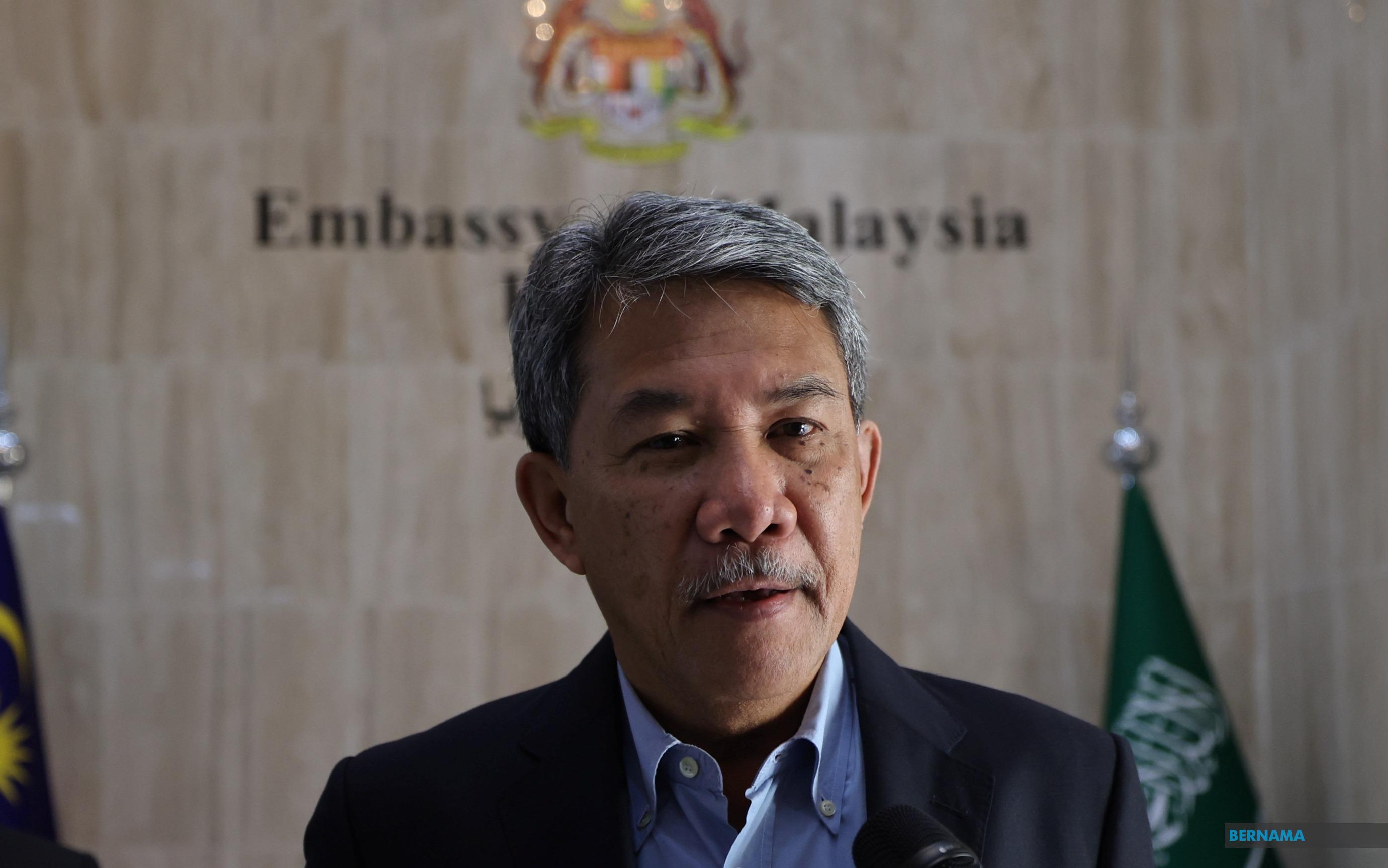
Foreign Minister Datuk Seri Mohamad Hasan touched down in Jeddah on August 26 to spearhead Malaysia's participation in an urgent extraordinary session of the Organisation of Islamic Cooperation's Council of Foreign Ministers. The diplomat landed at King Abdulaziz International Airport in the evening, where he was received by Malaysian Ambassador to Saudi Arabia Datuk Syed Bakri Syed Abdul Rahman, signalling the importance Kuala Lumpur attaches to the forthcoming discussions.
The one-day convening represents a significant moment for the OIC to coordinate a unified Muslim world response to escalating tensions in the Middle East. Malaysia's involvement underscores its established role as a vocal advocate for Palestinian rights within multilateral forums and among Islamic nations. The agenda encompasses multiple dimensions of the Israeli-Palestinian conflict, with particular emphasis on documenting recent developments affecting Gaza and the West Bank, while also examining the continued construction of settlements deemed unlawful under international law.
Malaysia's diplomatic presence at such gatherings carries particular weight given the country's historical commitment to Palestinian self-determination. By dispatching Mohamad as head of delegation, the government signals that this matter ranks among its foreign policy priorities rather than as a routine attendance obligation. The ambassador's remarks beforehand clarified that Malaysia views the meeting as an essential platform to reaffirm its principled stance against what it characterises as Israeli aggression in Palestinian territories.
During the session, Mohamad will deliver a formal National Statement to the assembled foreign ministers, a prepared address that will articulate Malaysia's foundational position on the dispute. The statement will reiterate the country's steadfast backing for what Malaysian officials describe as the Palestinian people's legitimate struggle for freedom and self-governance. Importantly, Kuala Lumpur will specifically reference the pre-1967 borders as the baseline framework for any future Palestinian state, aligning itself with the internationally recognised Two-State Solution framework that has underpinned decades of peace negotiations.
The Malaysian delegation's participation reflects broader regional dynamics within the Muslim world. The OIC, comprising 57 member states spanning Africa, Asia, and the Middle East, frequently convenes extraordinary sessions when crises demand immediate collective attention. Malaysia's consistent participation in such forums has established it as a serious stakeholder in discussions affecting Muslim-majority regions, distinguishing it from nations that offer only rhetorical support.
Beyond the formal agenda on Palestine, Mohamad's visit encompasses bilateral diplomacy with counterparts from other delegations. These ancillary meetings represent opportunities to explore collaborative frameworks in commerce, investment, and trade. For Malaysia, deepening economic ties with OIC members—particularly Gulf states—complements its diplomatic positioning on political questions. This dual-track approach, combining principled advocacy on contentious issues with pragmatic engagement on mutual interests, characterises sophisticated diplomatic practice.
The extraordinary session itself reflects accumulated pressures and recent escalations that have prompted OIC members to move beyond regular annual meetings. Crises in Gaza and contested settlement expansion periodically galvanise the organisation into emergency sessions, each one documenting the international community's concern even when concrete policy outcomes remain limited. Malaysia's presence ensures that Southeast Asian perspectives inform these discussions, preventing them from becoming exclusively Middle Eastern or Arab affairs.
For Malaysian readers, the significance extends beyond international posturing. Malaysia's foreign policy traditionally positions itself as a bridge between the Islamic world and other regions, and consistent advocacy on Palestinian issues demonstrates commitment to that role. The country has historically maintained that defending Palestinian rights represents a moral obligation for Muslim nations rather than mere regional controversy.
The meeting also occurs within a context where diplomatic initiatives and peace proposals have repeatedly stalled, making forums like this one essential for maintaining pressure on the international agenda. While such extraordinary sessions rarely produce breakthrough agreements, they generate formal statements, coordinated positions, and renewed commitments that shape multilateral discourse and influence how bilateral relationships develop.
Moving forward, Malaysia's messaging from this gathering will likely emphasise the urgency of international action and the necessity of holding all parties accountable to humanitarian and legal standards. The National Statement will probably call for renewed diplomatic efforts, protection of civilians, and adherence to international humanitarian law—standard components of Malaysian rhetoric on this issue.
The visit underscores that despite Malaysia's geographic distance from the Middle East, its political and religious identity compels active engagement in affairs affecting the Muslim world. This participation pattern has become expected of Malaysian foreign policy, and citizens view such activism as reflecting the country's values and commitments. The Foreign Minister's presence therefore carries symbolic importance beyond the immediate bilateral and multilateral meetings scheduled during his time in Jeddah.

