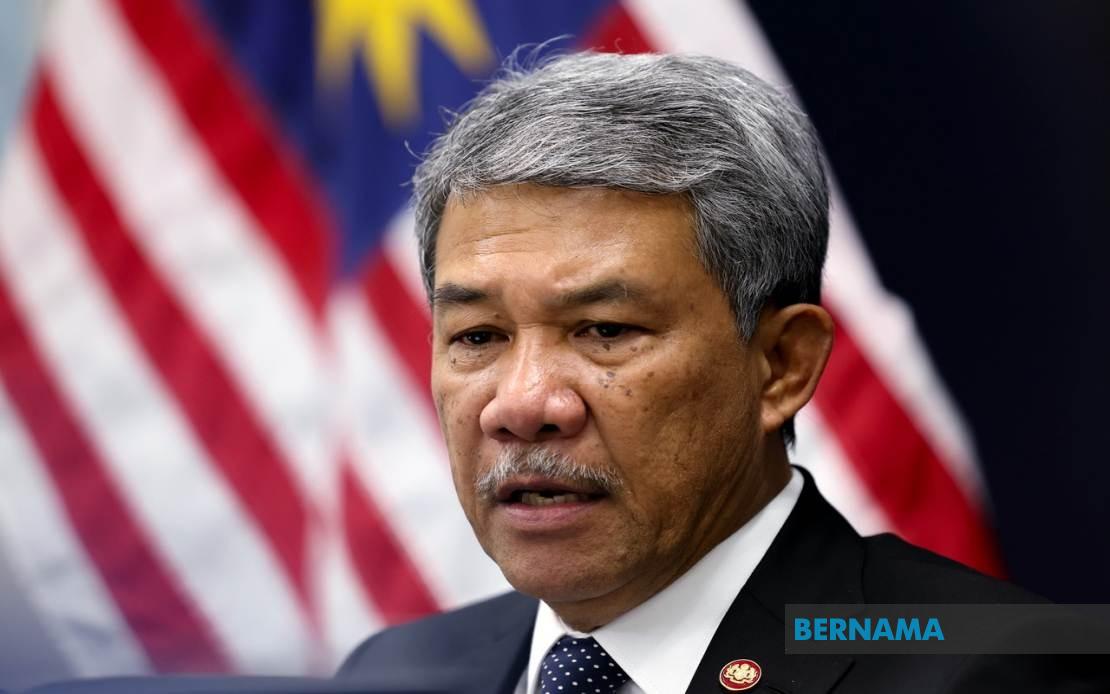
Foreign Minister Datuk Seri Mohamad Hasan touched down in Manila on Sunday to spearhead Malaysia's participation in a critical series of regional diplomatic engagements centred on the 59th ASEAN Foreign Ministers' Meeting. Mohamad's arrival at Ninoy Aquino International Airport at 4.15 pm local time marked the beginning of an intensive schedule that will run through Thursday, during which regional stability and humanitarian concerns are expected to dominate the agenda. The Philippines' Department of Foreign Affairs extended an official welcome through Assistant Secretary and Chief of Protocol Ariel Rodelas Peñaranda, while Malaysian Ambassador to the Philippines Datuk Abdul Malik Melvin Castelino Anthony attended the reception, underscoring the significance of Malaysia's role in these multilateral discussions.
The 59th AMM and its accompanying meetings are being conducted under the Philippines' ASEAN Chairmanship for 2026, operating under the thematic banner "Navigating Our Future, Together". This overarching framework reflects the pressing need for ASEAN nations to chart a collective course through an increasingly complex geopolitical landscape. The immediate focus on the West Asia crisis represents a shift in ASEAN's traditional emphasis, signalling how regional and global security challenges have become increasingly intertwined. For Malaysia, which maintains significant economic and strategic interests throughout the Middle East, the opportunity to help shape ASEAN's collective response to these developments carries particular weight.
A substantial portion of Mohamad's engagement will centre on the Five-Point Consensus regarding Myanmar, where ASEAN has struggled to generate tangible progress on humanitarian access and political resolution. During extended informal consultations on the implementation mechanism, foreign ministers will review recommendations stemming from the most recent ASEAN Leaders' Review and Decision on the consensus framework. This discussion reflects mounting frustration within the bloc over Myanmar's deteriorating situation, where conflict and humanitarian suffering have reached alarming proportions. Malaysia's participation in crafting strategies to enhance ASEAN's leverage and effectiveness on this persistent regional challenge will be closely watched, particularly given the bloc's historical emphasis on non-interference and consensus-based decision making.
Beyond Myanmar, Mohamad's schedule encompasses participation in the ASEAN foreign ministers' interface meeting with the ASEAN Intergovernmental Commission on Human Rights, a forum that addresses the sometimes-tension between regional strategic interests and human rights advocacy. He will also attend the Southeast Asia Nuclear Weapon-Free Zone Commission meeting, which carries particular significance for Malaysia and its neighbours given the strategic importance of maintaining the region's established non-nuclear status amid great power competition. These engagements underscore ASEAN's multifaceted approach to regional security, extending from conventional geopolitical concerns to institutional mechanisms for managing non-traditional security threats.
The minister's calendar includes participation in the 27th ASEAN Plus Three Foreign Ministers' Meeting, bringing together ASEAN members alongside China, Japan, and South Korea. This gathering provides a platform for discussing regional economic cooperation and addressing shared challenges within the broader East Asian context. The 33rd ASEAN Regional Forum and the 16th East Asia Summit Foreign Ministers' Meeting represent the wider circles of ASEAN's engagement architecture, encompassing dialogue partners ranging from major powers to middle-income democracies. These successive meetings create an ecosystem of regional diplomacy where bilateral interests can be pursued alongside collective problem-solving.
A notable addition to Mohamad's programme is the fifth Conference on Cooperation among East Asian Countries for Palestinian Development, reflecting the region's growing engagement with Middle Eastern issues beyond traditional trade and energy relationships. This gathering demonstrates how Southeast Asian nations, including Malaysia with its substantial Muslim population and historical advocacy for Palestinian causes, are attempting to translate regional sentiment into concrete development cooperation. The conference also signals how ASEAN members view their diplomatic capacity as extending beyond intra-regional matters to address global concerns aligned with their values and interests.
On Wednesday, Mohamad will assume a prominent leadership role in co-chairing the ASEAN Post Ministerial Conference with Chinese Foreign Minister Wang Yi. This responsibility flows from Malaysia's designation as country coordinator for ASEAN-China Dialogue Relations for the 2024-2027 period, a responsibility that carries both prestige and considerable responsibility given the complexity of managing ASEAN's relationship with its largest trading partner. The PMC framework provides a structured venue for ASEAN to engage collectively with major external powers, allowing the bloc to present a united front whilst accommodating divergent national interests among member states.
The week's diplomatic calendar also incorporates separate Post Ministerial Conferences with all of ASEAN's principal dialogue partners: Australia, Canada, China, the European Union, India, Japan, New Zealand, the Republic of Korea, the Russian Federation, the United Kingdom, and the United States. This comprehensive engagement schedule reflects the centrality of Southeast Asia to contemporary geopolitical competition, as major powers vie to maintain influence and partnership with the region's ten nations. For Malaysia specifically, these interactions provide opportunities to reinforce bilateral relationships whilst contributing to ASEAN's effort to maintain strategic autonomy amid great power competition.
Aside from the formal multilateral programme, Mohamad is anticipated to conduct bilateral consultations with several counterparts, providing discrete venues for discussing bilateral concerns outside the constraints of consensus-based multilateral processes. These private meetings often prove as consequential as the formal sessions, enabling candid discussions on sensitive matters ranging from bilateral disputes to common security threats. For Malaysia, which maintains complex diplomatic relationships throughout the region and beyond, these opportunities to communicate directly with key partners carry strategic importance in advancing national interests whilst maintaining regional stability.
The timing of these meetings, held during a period of heightened regional tension and global uncertainty, underscores the renewed importance of ASEAN's diplomatic infrastructure. As major powers intensify their engagement with Southeast Asia and as regional conflicts in Myanmar and elsewhere demand attention, ASEAN's collective voice and coordinated responses become increasingly valuable. Malaysia's active participation, particularly in its coordinating role with China, positions the country at the centre of regional diplomatic efforts to manage competing pressures and maintain the rules-based order that has underpinned Southeast Asian stability and prosperity. The outcomes of these meetings will likely influence regional dynamics well beyond Manila.

