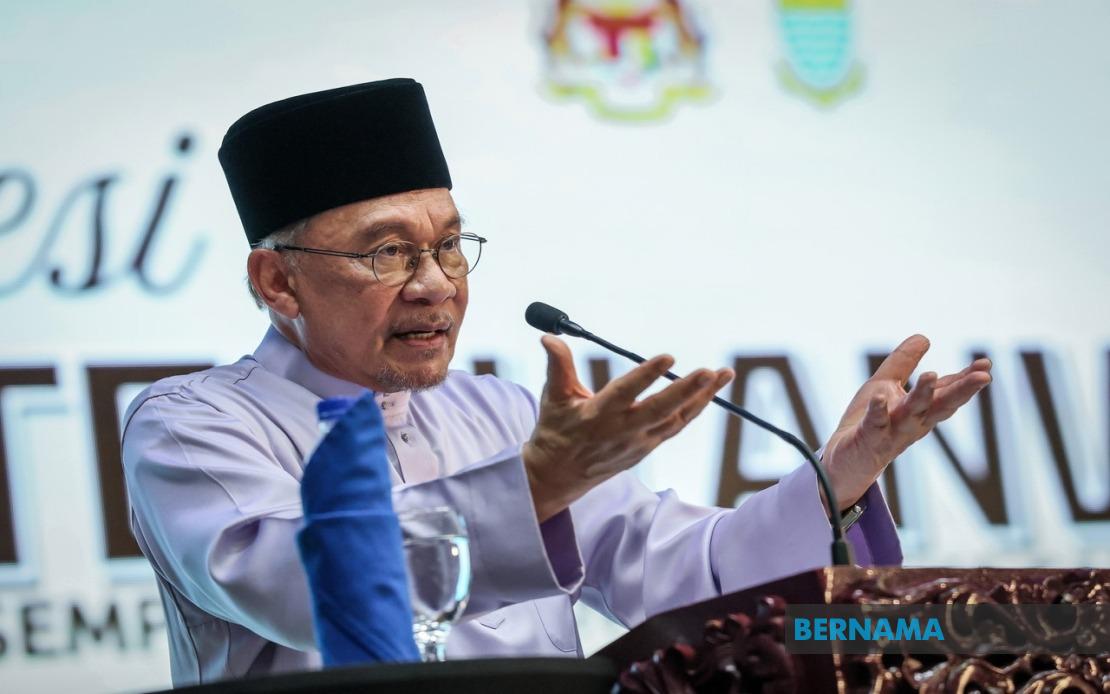
Prime Minister Datuk Seri Anwar Ibrahim has announced that the government will introduce a dedicated allowance scheme for Form Six students when Budget 2027 is presented to parliament in October, addressing what has long been an inequity in Malaysia's education funding framework. The commitment was made during a dialogue session at the Tuanku Bainun Teacher Education Institute in Bukit Mertajam, where Anwar, who also serves as Finance Minister, engaged with students and education stakeholders as part of the Ambang Merdeka Sahabat MADANI programme.
The decision reflects growing recognition that Form Six students—those pursuing pre-university qualifications—occupy a peculiar gap in Malaysia's existing student assistance architecture. Unlike their counterparts in primary school and secondary forms one through five, who receive monthly allowances, and university students who benefit from various financial aid schemes, Form Six learners have until now received no comparable government support. This structural oversight has persisted despite the acknowledged importance of pre-university education as a critical transition point in students' academic trajectories and despite many Form Six attendees coming from economically disadvantaged backgrounds who would materially benefit from such assistance.
Anwar's recognition of this disparity came after direct engagement with pre-university students who raised the matter during recent consultations. Speaking candidly about the situation, he noted the logical inconsistency of providing allowances across multiple education tiers while leaving Form Six—a rigorous two-year programme that prepares students for tertiary study—unsupported. The Prime Minister framed the commitment as part of the government's broader MADANI framework, which emphasises inclusive development and addressing gaps in social protection.
Education Minister Datuk Seri Fadhlina Sidek, present at the event, confirmed that the allowance proposal had emerged as one of twelve resolutions formally adopted at the MADANI Pre-University Congress held in Klang earlier that day. The congress, bringing together student representatives and education officials, reflected ongoing consultation with young Malaysians about their needs and concerns. Fadhlina indicated that the Education Ministry had endorsed all twelve resolutions and committed to studying implementation pathways, signalling serious governmental intent rather than mere gesture politics.
However, Anwar was transparent about practical constraints affecting the initiative. He acknowledged that the exact quantum of the allowance has not yet been determined and will ultimately depend on the government's fiscal position when Budget 2027 is finalised. This measured approach reflects the reality of budgetary pressures facing Malaysian public finances, where competing demands for infrastructure, health, defence, and debt servicing constrain new spending commitments. Nevertheless, the explicit commitment to allocate funds signals strong political priority for education support.
The timing of this announcement carries particular significance for Malaysian education policy. Form Six represents a critical juncture where students decide their academic and career trajectories, often choosing between continuing classical education or pursuing technical and vocational pathways. Financial constraints have historically influenced these decisions disproportionately for lower-income families. By introducing allowances at this level, the government aims to ensure that economic circumstances do not prevent capable students from pursuing pre-university education.
The move also reflects broader regional trends in Southeast Asia toward expanding educational safety nets. Several neighbouring countries have progressively extended student assistance schemes to encompass pre-university levels, recognising that demographic and economic changes have made secondary and post-secondary education increasingly essential for workforce competitiveness. Malaysia's introduction of Form Six allowances would align the country with comparable commitments being made elsewhere in the region.
From a practical standpoint, implementation will require coordination between the Ministry of Education and relevant federal and state authorities, as Form Six provision in Malaysia operates through both public and private institutions. The government will need to establish clear eligibility criteria, payment mechanisms, and disbursement procedures. Questions remain about whether the allowance will be means-tested, whether it will apply to all Form Six students or prioritise those from low-income households, and how it will integrate with existing scholarship and loan schemes.
The announcement also underscores the government's receptiveness to structured feedback from student communities. By formalising the pre-university congress and demonstrating responsiveness to its resolutions, the administration signals that youth engagement in policy formation is taken seriously. This approach contrasts with historical patterns where student concerns were sometimes dismissed or deprioritised in favour of competing interests.
Economically, the initiative could have modest multiplier effects in communities with significant student populations. Allowance payments inject spending capacity into local economies where Form Six students reside, potentially supporting retail and service sectors while reducing financial pressure on student households. For families currently managing multiple dependents in education simultaneously, even modest allowances can materially ease household budgeting constraints.
Education advocates have long argued that removing financial barriers to Form Six entry would improve completion rates and post-secondary outcomes, particularly for rural and low-income cohorts who currently show lower progression rates to pre-university programmes compared with their urban and affluent peers. The allowance scheme represents practical acknowledgment of these equity concerns, though its effectiveness will depend on the level of funding allocated and the breadth of student populations it reaches.
Looking ahead, the success of this initiative will be measured not merely by its announcement but by the allocation amount revealed in October and the subsequent effectiveness of implementation. Education sector observers will scrutinise whether the allowance proves sufficient to materially influence enrolment patterns and whether it equitably reaches students most in need of support. The scheme's design and resourcing will signal the government's genuine commitment to democratising access to pre-university education across Malaysia's socioeconomic spectrum.

