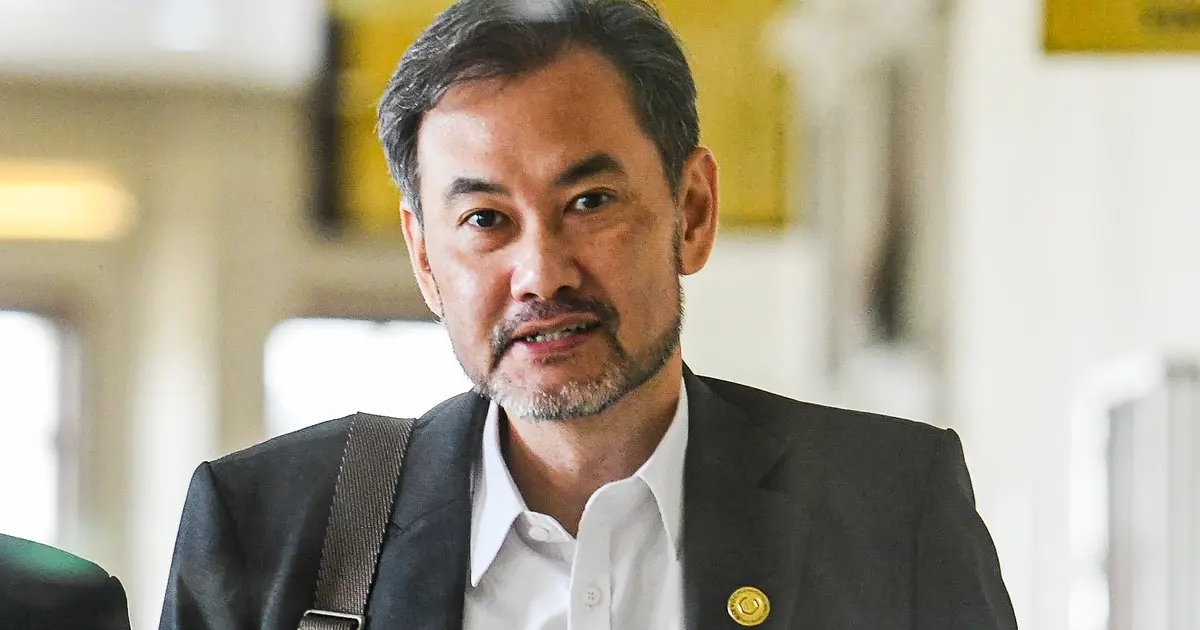
Shahrol Azral Ibrahim Halmi, the former chief executive of the now-defunct 1Malaysia Development Berhad, has pushed back against suggestions that his treatment of fugitive financier Jho Low accorded him standing comparable to that of then-Prime Minister Najib Razak. The assertion comes amid ongoing scrutiny of the sprawling financial scandal that engulfed the state investment vehicle and shook Malaysian governance during the 2010s.
In his defence, Shahrol acknowledged that he maintained communication with Prime Minister Najib Razak through unconventional pathways, with Jho Low serving as one such intermediary. This admission itself underscores how the opaque and informal decision-making structures within 1MDB enabled extraordinary influence to concentrate in the hands of peripheral actors. Rather than operating through established institutional channels and transparent protocols, the fund's leadership appeared to have relied on backchannel communications to transmit directives from the highest levels of government.
The distinction Shahrol draws between merely using someone as a communication conduit and treating them as equivalent to the prime minister himself may prove important legally, yet it glosses over deeper questions about governance and accountability. The fact that a state fund's chief executive required intermediaries to communicate with the sitting prime minister—rather than direct, documented channels—raises fundamental concerns about the separation of powers and the institutional integrity that Malaysia's system of governance demands.
Jho Low, the Malaysian-born financier who has become the public face of the 1MDB scandal, accumulated extraordinary access and influence over the fund despite holding no official position. His involvement as a communication bridge between the fund's leadership and the head of government illustrates how personal networks and informal authority structures can supersede institutional frameworks. This pattern of governance would later be identified as central to how billions of ringgit vanished from 1MDB's coffers.
The revelations about communication patterns form part of a broader narrative of how 1MDB operated during its existence from 2009 onwards. Rather than functioning as a transparent state investment vehicle subject to standard oversight, the fund became a vehicle through which resources could be directed according to political will, mediated through informal networks that made accountability nearly impossible. Shahrol's role as chief executive placed him at the intersection of these power dynamics, negotiating between the fund's ostensible independence and the political imperatives channelled through figures like Jho Low.
For Malaysian observers, the case underscores how institutional architecture alone cannot guarantee sound governance; rather, the individuals occupying leadership positions and their willingness to operate within established rules fundamentally shape outcomes. Shahrol's acknowledgement that alternative communication channels existed and were used suggests a deliberate circumvention of normal procedures, whether consciously motivated by nefarious intent or simply by the convenience of informal relationships.
The broader context matters significantly for understanding the scandal's implications. Between its establishment and eventual wind-down, 1MDB accumulated debts exceeding RM42 billion, with much of the missing capital traced to structures involving Jho Low and associated entities. These losses emerged only gradually, as parliamentary inquiries and later investigations by enforcement agencies began unpicking the fund's actual operations. By that time, the damage to Malaysia's fiscal position and international reputation had already crystallised.
Singapore, the United States, Switzerland, and other jurisdictions have pursued parallel investigations into 1MDB-related asset flows, indicating how far-reaching the scandal's international dimensions extended. These concurrent inquiries have recovered substantial sums and pursued criminal cases against various individuals, providing external pressure and validation to Malaysian efforts to unravel what transpired. Jho Low himself remains a fugitive, believed to have fled Malaysia before enforcement actions could be mounted against him.
The informal communication mechanisms that Shahrol describes—while he insists they did not elevate Jho Low to prime ministerial equivalent status—reveal a governance failure that transcended any single individual's ambitions. When state institutions become vehicles for personalised decision-making, when accountability gets obscured behind layers of informal intermediaries, and when the sitting prime minister is perceived as accessible primarily through backchannel operators rather than institutional procedures, systemic dysfunction becomes embedded.
For Southeast Asian observers monitoring governance challenges across the region, Malaysia's 1MDB experience stands as an instructive case study in how institutional design can be subverted through personalised power networks. Subsequent Malaysian governments have sought to strengthen oversight mechanisms and enforce greater transparency within state investment vehicles, yet the underlying vulnerabilities that enabled 1MDB's misadventures remain partially embedded in how power operates across the region's political systems.
Sharol's testimony adds incremental detail to the historical record of 1MDB, yet his distinction between serving as a communication channel and treating Jho Low as a peer to the prime minister may represent more of a semantic quibble than a substantive exoneration. The fundamental reality remains that state institutions functioned in ways that allowed extraordinary influence to concentrate outside formal structures, creating conditions under which accountability became practically impossible. Understanding how that concentration of informal power occurred remains essential not only for Malaysia's historical record but for other Southeast Asian democracies navigating similar governance challenges.

