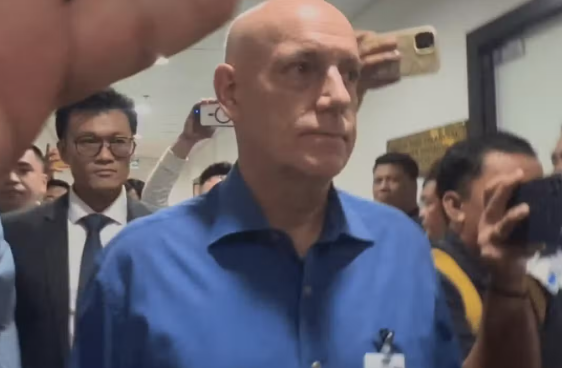
Tab Baldwin, the former head coach of Ateneo de Manila University's men's basketball programme, has made his long-awaited appearance before the National Bureau of Investigation on Tuesday, June 23, ending days of absence from scheduled questioning in relation to an ongoing investigation into the deaths of two student-athletes. Baldwin arrived at the NBI Homicide Division shortly before 2pm accompanied by legal representative Karl David, with authorities indicating that the questioning would extend beyond the initial submission time.
The appearance marks a significant development in a case that has gripped Philippine sports and academic circles. The investigation centres on the deaths of Rene Baterbonia and Divine Adili, who tragically drowned during a university basketball team activity conducted in Dipaculao, Aurora, earlier this month. Both the National Bureau of Investigation and the Philippine National Police's Criminal Investigation and Detection Group have launched parallel probes into the circumstances surrounding the incident, reflecting the gravity and complexity of the situation.
Baldwin's attendance comes after a series of postponements that have drawn scrutiny. He initially failed to appear on June 16, with his legal team citing health concerns and submitting a statement that the coach was "not in good condition" at that time. A second scheduled appearance on June 19 was also missed, though Baldwin did present himself to the PNP-CIDG on the same day, raising questions about the coordination between the two investigating bodies and the coach's availability for different agencies.
The coordination between multiple investigative agencies adds layers of complexity to this case. NBI Director Melvin Matibag has indicated that investigators plan to cross-reference Baldwin's statements provided to the NBI with his earlier testimony given to the CIDG, a process designed to identify any inconsistencies or contradictions that might shed light on what occurred during the fatal team activity. Such comparative analysis is standard in investigations involving multiple agencies, particularly when witness accounts are crucial to establishing the sequence of events and any potential negligence.
For Malaysian observers and regional observers of Philippine sports governance, this case underscores ongoing concerns about duty of care and institutional responsibility during athletic activities. Universities across Southeast Asia frequently organise team-building exercises and training camps that take students away from campus, and the protocols governing such activities—including safety measures, supervision ratios, and emergency preparedness—remain areas of significant variance across the region. The incident has prompted broader reflection on whether educational institutions adequately prioritise student welfare over performance metrics in competitive sports programmes.
The investigative timeline is particularly notable given the tight schedule authorities are working under. The NBI has publicly stated its intention to complete its investigation this week, suggesting that key interviews and evidence collection are nearing completion. This compressed timeline places considerable pressure on investigators to gather sufficient information to draw preliminary conclusions about whether the deaths resulted from accident, negligence, or other culpable circumstances.
Tab Baldwin's profile in Philippine basketball carries additional weight in this matter. As a respected coaching figure with significant experience in the sport, his account of what transpired during the team activity will be central to investigators' understanding of supervision levels, safety protocols that were or were not implemented, and any decisions that may have contributed to the tragedy. His testimony could reveal whether standard safety procedures were followed, whether appropriate warnings were issued, and whether rescue equipment or trained personnel were available at the scene.
The involvement of legal counsel throughout Baldwin's interactions with investigators reflects the seriousness with which both he and authorities are treating the matter. Karl David's presence during the NBI questioning ensures that the coach's rights are protected while also potentially signalling anticipation of more formal charges or findings that could emerge from the investigation. In the Philippine legal context, such representation becomes increasingly important as investigations transition from fact-gathering phases toward potential liability determinations.
The broader institutional context at Ateneo de Manila University is also relevant. As one of the Philippines' most prestigious educational institutions with a strong athletic programme, the university faces potential reputational and legal consequences depending on investigative findings. Other universities across the region will be watching closely to understand how accountability mechanisms function in such tragic circumstances and what institutional reforms might be recommended or mandated.
The parallel investigations by the NBI and PNP-CIDG, while thorough, also highlight structural questions about investigative coordination in the Philippines. Having multiple agencies pursue the same case simultaneously can sometimes lead to duplication of effort or inconsistent approaches, though it also provides a built-in verification mechanism. For the families of Baterbonia and Adili, such thoroughness may provide greater assurance that no critical details are overlooked.
As Baldwin's questioning proceeds, the focus will likely extend beyond his personal actions to encompass broader questions about institutional protocols, training standards for coaches and support staff, and whether facilities and equipment met acceptable safety standards. These wider considerations will ultimately inform not just the criminal or administrative findings in this specific case, but potentially influence how other Philippine universities and regional institutions structure their athletic programmes and manage student safety risks.