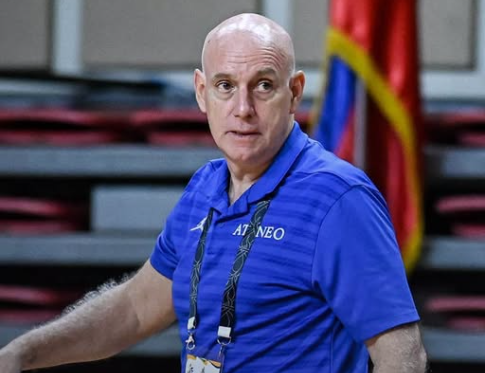
The Philippine National Police's Criminal Investigation and Detection Group has recommended that charges be filed against former Ateneo de Manila University men's basketball coach Thomas Anthony 'Tab' Baldwin and 10 other team personnel for violating the nation's Anti-Hazing Act. The recommendation stems from a fatal beach training incident last June 8 in Dipaculao, Aurora, where basketball players Rene Baterbonia and Divine Adili drowned during what was ostensibly a team-building exercise.
Beyond Baldwin, the police investigation identified 10 additional individuals from the coaching and support staff who face potential charges. These include strength and conditioning coaches Grant Dearns and Ceasar Vicent Javellana Elumba, assistant coaches Dean Caesar B. Castaño, Sandro Nicholas Romero Soriano, and Reynaldo Jacinto. The student managers Paolo Manuel Maceda Adevoso and Andrew Lorenzo 'Drew' Bondoc Salud were also named, along with physical therapist John Eric Quiambao Rueca and utility personnel Aris Ramos Pronce and Joel 'Boy' Palmiano Rapa. According to officials, all 11 personnel were present at the Aurora facility during the fateful activity.
The legal basis for the charges centres on Republic Act No. 11053, the Anti-Hazing Act, which casts a wider net than many Filipinos may traditionally understand. Officials emphasised that the law's definition extends well beyond conventional hazing rituals to encompass forced physical conditioning and exposure to harsh environmental conditions. Investigators determined that the training activity, which combined multiple stressors on a single day, crossed the threshold into prohibited hazing under this definition. The interpretation represents a shift in how Philippine authorities evaluate team activities that involve physical stress combined with elements of selection or exclusion.
The sequence of events that morning proved significant to the investigation's conclusion. Players were roused at 4am and immediately subjected to a four-kilometre run. This was followed by competitive physical games with punitive consequences for losing participants. The progression continued throughout the morning, intensifying as the day advanced. Around 2 to 2:30pm, the group moved to the open sea for a water-based training activity. Critically, the tide schedule for June 8 peaked at 2:27pm, placing the most hazardous conditions precisely when the swimmers entered the water. The cumulative fatigue from hours of intense exertion, combined with the physiological stress of the preceding activities, meant the players faced the seawater exercise in a dangerously compromised state.
The environmental hazards during that window were substantial. The open-sea training area presented rip currents, powerful waves, and unpredictable variations in seabed depth — conditions that would challenge even well-rested athletes. The timing created a perfect storm of risk factors: exhausted players, peak tidal conditions, and inherent coastal hazards converging simultaneously. When Baterbonia and Adili entered the water, they did so as depleted individuals in objectively treacherous circumstances.
Another dimension of the investigation focused on the underlying purpose of the Aurora exercise. Officials revealed that 20 basketball players attended the activity, yet only 17 would ultimately be selected for Ateneo's University Athletics Association of the Philippines roster. The training exercise functioned, in effect, as a screening mechanism to determine which players would make the final cut. This selection purpose is crucial because under the Anti-Hazing Act, hazing is defined as any act causing physical or psychological harm that serves as a prerequisite for membership or continued participation in an organisation or group. By this standard, the Aurora activity was not merely a training session but a qualifying trial that exposed participants to hazardous conditions.
Investigators also noted a significant detail: no weights were recovered from either victim's body following the drowning. This finding undermines any suggestion that the deaths resulted from extreme conditioning practices involving weighted equipment. Instead, it reinforces the assessment that the primary causes were the combination of exhaustion, environmental conditions, and the timing of the sea activity relative to tidal patterns.
Baldwin released a public apology through a nearly nine-minute video posted on Ateneo's social media platforms following the drowning. His statement acknowledged responsibility for the loss of life under his authority. However, the police investigation determined that the coaching staff's collective failure to exercise safety oversight — with all 11 team personnel present yet none intervening, questioning, or halting the activity despite mounting risk factors — constituted a violation of law rather than merely a tragic accident.
For Malaysian and broader Southeast Asian readers, this case carries important implications regarding the governance of university sports programmes. The Philippine investigation demonstrates how authorities are increasingly scrutinising team-building and training methodologies, particularly when such activities combine physical stress with elements of selection or evaluation. The application of hazing law to a legitimate-seeming training exercise signals that institutional oversight and safety protocols must be embedded into athletic culture, not treated as ancillary considerations. As universities across the region prioritise competitive sports programming, the need for clear safety guidelines, independent oversight mechanisms, and a culture where coaching staff feel empowered to prioritise athlete welfare over programme intensity becomes increasingly apparent.
The Department of Justice will now evaluate the police recommendations for formal prosecution. The case represents one of the more significant challenges to traditional athletic practice in Philippine university sports, potentially reshaping how institutions conduct team training and selection processes across the country.

