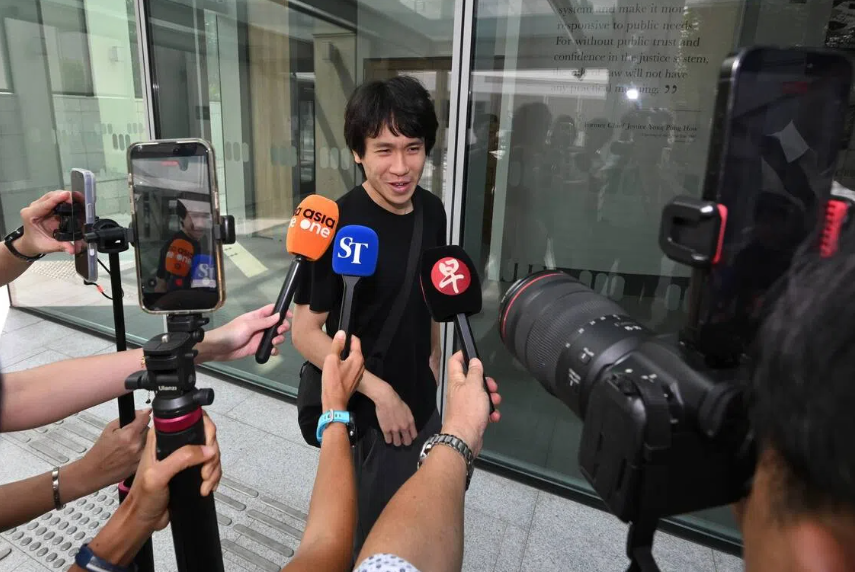
Singapore's former child actor Amos Yee, 27, returned to the District Court on August 26 to face four fresh charges that now bring his legal troubles to a total of seven counts, marking an escalation in the long-running case against the controversial online personality.
The charges span multiple categories of concern to Singapore's authorities, reflecting what prosecutors view as a pattern of conduct threatening public order and child safety. Beyond the four new charges presented this month, Yee continues to face three additional charges under the Enlistment Act relating to national service obligations. The accumulated legal exposure places him in serious jeopardy, with potential sentences stretching years in prison if he is convicted on multiple counts.
At the heart of the matter are allegations that Yee deliberately promoted racial disharmony through online content published in April. According to court documents, his blog posts from April 7 and April 11 asserted that Malays and Indians face systemic discrimination at the hands of the Chinese majority in Singapore and explicitly urged these communities to mobilise protest action against the Government. Such assertions strike at a foundational principle of Singapore's multicultural society, where racial and religious harmony is legally protected and considered essential to national stability. A video uploaded on May 27 contained similar messaging about discrimination allegedly faced by the Malay and Muslim communities.
Equallyalarming to prosecutors are charges related to content from 2021 in which Yee purportedly advocated for decriminalising paedophilia and granting children consent rights in sexual contexts. The Protection from Harassment Act charges reference at least three videos promoting these positions, with Yee allegedly calling for the abolition of laws criminalising child sexual abuse material. A subsequent blog post on June 30 reiterated these arguments. Such statements, which appear designed to challenge fundamental norms protecting children from exploitation, have drawn the ire of Singapore's law enforcement and provoked formal charges that could result in substantial fines.
The legal consequences for conviction are severe. Anyone found guilty of knowingly promoting racial disharmony faces imprisonment of up to three years, a fine, or both. Each charge under the Protection from Harassment Act carries a maximum fine of S$5,000. For those familiar with Southeast Asian legal systems, these penalties underscore how seriously governments in the region treat speech deemed threatening to social cohesion or child welfare.
Yee's bail conditions imposed on August 26 reflect the authorities' concerns about his continued online activity. He was released on S$15,000 bail with strict prohibitions against posting material about his views on paedophilia or anything capable of inciting racial tensions. These restrictions essentially seek to silence him on two fronts until trial, a measure indicating judicial determination to prevent further alleged harm. His case will proceed to a pre-trial conference on September 18, when legal arguments about the charges' merits will likely commence.
The Singapore Police Force indicated in an August 25 statement that it had received numerous reports about Yee's blog posts between April and July this year, suggesting that members of the public actively reported the content to authorities rather than limiting complaint to online platforms. This community reporting mechanism has become standard practice in Singapore's ecosystem of content moderation, where both official censors and citizen vigilance work to enforce community standards.
Digital platforms have already begun moving to restrict Yee's reach. The social media platform X removed his video after police issued a disabling direction under the Online Criminal Harms Act on August 18, demonstrating the regulatory power that governments wield over international platforms operating in their jurisdiction. Police also served stop communication directions requiring removal of the offending blog posts themselves, essentially formalising the takedown process.
The Enlistment Act charges add another dimension to Yee's legal troubles. He is accused of failing to report for national service pre-enlistment medical screening and departing Singapore without valid exit permits. The alleged periods of unauthorised absence stretch across two intervals: December 13, 2015, through April 19, 2016, and December 15, 2016, through March 19, 2026—a notation that appears to contain a typographical error in source material but indicates his most recent period abroad. Violations of Singapore's mandatory conscription rules carry penalties up to S$10,000, three years imprisonment, or both.
For Malaysian and regional observers, the Yee case illuminates how Singapore's legal framework addresses speech that authorities view as destabilising. Unlike some democracies that prioritise speech freedom even when it provokes discomfort, Singapore has chosen a more restrictive model calibrated toward protecting social harmony. The charges against Yee—spanning racial incitement, child protection, and national service—represent the full spectrum of offences that Singapore deems worthy of criminal prosecution. Whether his defences will succeed or whether he will serve time remains an open question, but the case underscores the legal risks that online personalities in the city-state face when testing the boundaries of acceptable expression.

