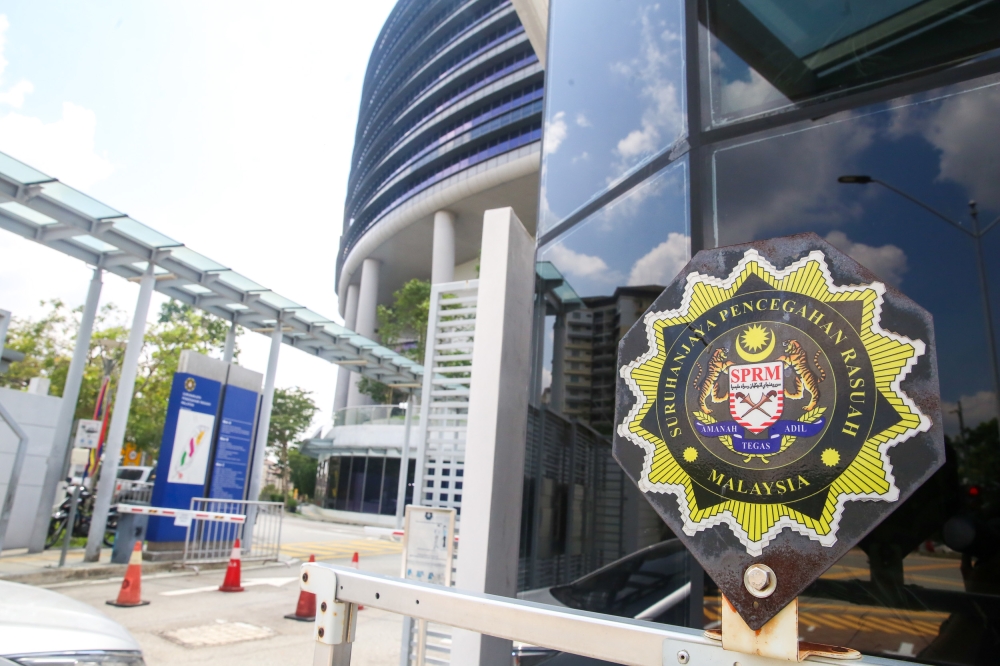
A former government employee has been placed under four-day remand by the Kuala Lumpur office of the Malaysian Anti-Corruption Commission on suspicion of orchestrating a systematic scheme to divert welfare assistance payments. The suspect, who remains unnamed pending further investigation procedures, allegedly exploited the personal information of 11 individuals to lodge claims for government aid, subsequently channelling the funds into personal bank accounts. Investigators believe the fraudulent transactions netted approximately RM300,000 over an unspecified period, raising serious questions about vulnerability in Malaysia's benefit distribution systems.
The detention order was issued following formal arrest procedures at the MACC headquarters in Kuala Lumpur yesterday. The four-day remand period will allow investigators to conduct comprehensive questioning and gather additional evidence before determining whether charges will be preferred. Such remand orders in corruption-related matters typically precede decisions on whether to seek further extensions or proceed directly to court prosecution. The case represents a significant breach of public trust, given the suspect's background in civil service where familiarity with administrative procedures could have facilitated the scheme.
Welfare fraud cases involving government employees carry particular gravity in Malaysia's enforcement landscape. When individuals entrusted with administering public resources weaponise their access and knowledge against the very systems they helped manage, it undermines public confidence in social assistance programmes. This incident demonstrates how insider knowledge of application processes, approval workflows, and payment mechanisms can be weaponised to circumvent controls designed to prevent exactly such abuses. The scale of the alleged operation—involving multiple beneficiary identities—suggests considerable sophistication rather than opportunistic individual wrongdoing.
The involvement of 11 distinct individuals' details raises questions about whether the victims were aware their personal information was being misused, or whether the suspect possessed their data through legitimate access during civil service duties. In many cases of identity-based fraud perpetrated by government workers, the victim population only discovers the misuse months or years later when they receive official notifications or attempt to claim benefits themselves. This creates cascading complications for genuine welfare recipients and administrative burden for government agencies attempting to unravel fraudulent claims.
Welfare assistance programmes have become increasingly important across Southeast Asia, particularly given economic volatility and pandemic aftereffects. Malaysia's various aid schemes—designed to support vulnerable populations during financial hardship—depend on public trust and administrative integrity to function equitably. When corruption undermines these systems, it not only results in direct financial losses but also erodes confidence among legitimate beneficiaries who may become hesitant to apply for benefits they qualify for, fearing bureaucratic complications or disqualification. The reputational damage extends beyond individual victims to affect programme participation rates broadly.
The MACC's investigation will likely focus on establishing the complete timeline of fraudulent transactions, identifying all affected individuals, and determining whether the suspect acted independently or as part of a broader network. Digital forensics of banking records, application documents, and communication channels will be crucial in reconstructing how claims were processed and approved. Investigators will also examine whether supervisory controls were bypassed or whether system vulnerabilities allowed claims to proceed without appropriate verification layers that should typically catch such discrepancies.
Civil service misconduct investigations in Malaysia increasingly involve collaboration between MACC and other agencies including the Public Service Commission and relevant ministry departments. Such coordination helps establish whether systemic vulnerabilities enabled the fraud or whether the suspect possessed unusual authority levels that bypassed normal approval procedures. The outcome may trigger broader audits of welfare processing systems, particularly at offices where this individual was previously stationed, to identify whether similar schemes operated undetected.
The case also highlights the importance of robust internal controls within government agencies administering benefit programmes. While Malaysia has invested significantly in digital transformation and centralised systems for welfare administration, human elements remain critical chokepoints. Employees with access to beneficiary databases, application processing systems, or approval authority represent ongoing vulnerability if background checks, rotation policies, or supervisory oversight prove insufficient. Regular training on fraud awareness and ethical obligations remains essential but requires adequate funding and institutional commitment.
For Malaysian citizens and residents, this case serves as a reminder of the ongoing risk that assistance programmes face from internal threats. While the vast majority of civil servants maintain professional integrity, individual bad actors can manipulate systems for personal gain. The detection and prosecution of such cases ultimately protects programme viability by demonstrating that enforcement mechanisms function and that wrongdoing carries consequences. Public reporting of such investigations, despite anonymity requirements during proceedings, signals the government's commitment to accountability in public resource management.
The investigation's progression through remand, potential bail hearings, and eventual court proceedings will be monitored closely by anti-corruption advocates and public administration observers. The eventual sentence—should the suspect be convicted—will signal appropriate severity for welfare fraud involving multiple victims and substantial sums. Sentencing precedent in such cases influences both deterrence effects and the broader calculus of risk that potential offenders consider when contemplating similar schemes. Given the scale of alleged misappropriation and breach of fiduciary duty inherent in civil service status, authorities are likely to pursue substantial penalties if prosecution succeeds.

