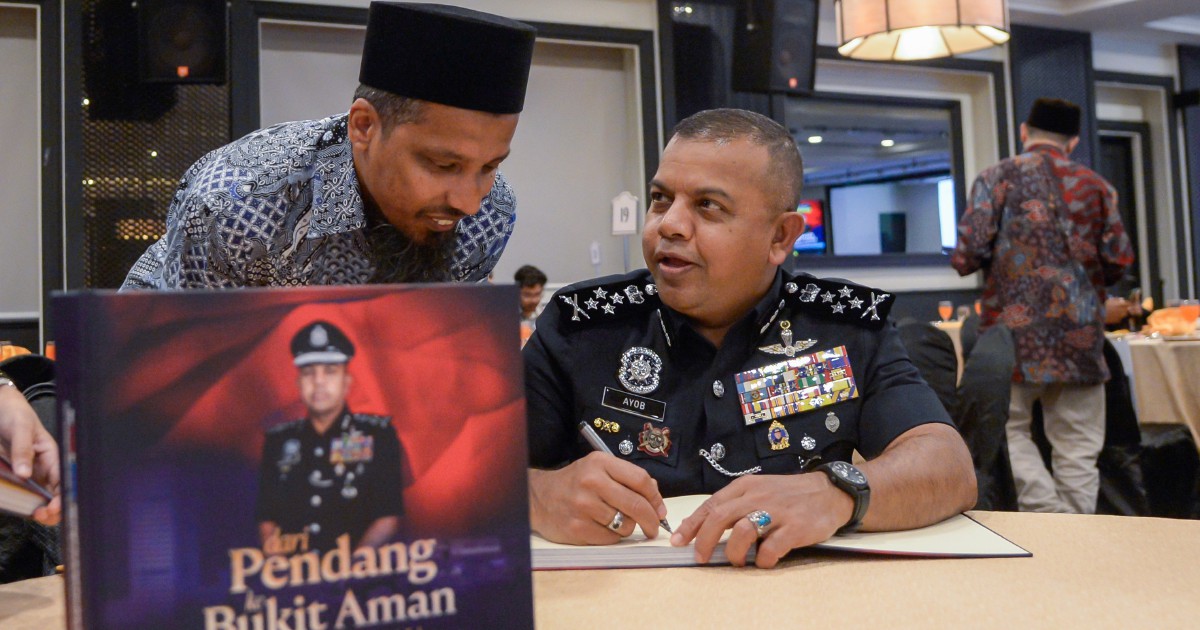
The investigation into what became known as the "Gang Nicky" operation stands as a watershed moment in Malaysian law enforcement history, according to Tan Sri Ayob Khan Mydin Pitchay, who held the position of deputy Inspector-General of Police during a period of intense policing challenges. Speaking reflectively on the high-profile case, Ayob Khan described the inquiry as among the most demanding and consequential investigations ever undertaken at Bukit Aman, the headquarters of the Royal Malaysia Police, signalling the gravity with which authorities viewed the criminal enterprise involved.
The Nicky Liow case represented far more than a routine criminal investigation. The network's operations and the investigative response they triggered fundamentally shaped how Malaysia's premier law enforcement agency prioritised resources and coordinated across jurisdictions. Ayob Khan's characterisation as "one of Bukit Aman's biggest cases" reflects the scale of the criminal activities under scrutiny and the complexity of dismantling what authorities perceived as a sophisticated and far-reaching criminal enterprise. The investigation demanded sustained commitment from multiple police divisions and required coordination between different operational units, straining institutional capacity even within an organisation accustomed to managing high-stakes inquiries.
The resources channelled into pursuing leads, conducting surveillance, and building prosecutable cases against gang members demonstrated institutional priorities during that operational period. Law enforcement agencies typically reserve such intensive investigative commitment for cases involving major organised crime syndicates, serious violent offences, or criminal networks with ramifications extending beyond immediate jurisdictional boundaries. The fact that senior police leadership would later characterise the investigation in such emphatic terms underscores how authorities assessed the threat posed by the gang's activities to public order and community safety across affected areas.
For Malaysian readers familiar with organised crime developments in the region, the Gang Nicky case serves as an instructive example of how local criminal enterprises operate, adapt to enforcement pressures, and maintain operational networks despite police intervention. The investigation's significance extends beyond the immediate arrest and prosecution phase, as it likely informed subsequent policing strategies and operational doctrines adopted by Malaysia's police force. Understanding how senior leadership reflected on such cases provides insight into institutional learning and the evolution of law enforcement approaches to organised crime challenges.
The timeline and progression of the investigation would have involved numerous operational phases, from initial intelligence gathering through to evidence collection and case preparation for prosecution. Each phase presented distinct investigative challenges requiring different skill sets and resources. Ayob Khan's recollection suggests that overcoming these obstacles demanded sustained focus and substantial commitment from the police hierarchy, with implications for other ongoing cases that might have competed for investigative resources during the same period.
Beyond the immediate criminal dimension, the case carried implications for Malaysia's regional standing and the broader Southeast Asian law enforcement landscape. Criminal networks operating across borders frequently become subjects of international police cooperation agreements and regional information sharing protocols. The Gang Nicky investigation likely triggered exchanges of intelligence with regional counterparts, contributing to broader understandings of transnational organised crime patterns affecting multiple jurisdictions across the Association of Southeast Asian Nations.
The handling of high-profile criminal investigations also shapes public perception of police effectiveness and institutional competence. When senior officers publicly acknowledge the significance of particular cases, they signal to the public that law enforcement takes serious organised crime threats seriously and possesses the operational capability to pursue complex investigations to conclusion. Ayob Khan's reflective comments thus serve a dual purpose: documenting investigative history while implicitly affirming police institutional strength and resolve.
The investigation's classification as exceptional also reflects the operational constraints and resource limitations that Malaysian police institutions navigate continuously. Not every criminal case receives equivalent investigative intensity or resource commitment, necessitating institutional prioritisation decisions. That Bukit Aman dedicated exceptional resources to the Gang Nicky inquiry suggests that authorities identified particular characteristics of the criminal enterprise that elevated it above routine organised crime matters. These characteristics might have included territorial reach, criminal sophistication, estimated victim impact, or connections to other ongoing criminal investigations.
Reflections from senior retired police officers like Ayob Khan contribute valuable institutional memory regarding law enforcement decision-making processes, investigative methodologies, and the operational realities facing Malaysia's police force. Such recollections, shared through media interviews and public discourse, help the broader community understand the institutional challenges that law enforcement agencies navigate while pursuing serious criminal investigations. They also provide context for understanding how individual cases fit within larger organisational priorities and strategic law enforcement concerns.
The case's legacy likely extends into contemporary police training, case study materials, and institutional discussions about investigation best practices. Younger officers entering the force may encounter Gang Nicky materials in training curricula, learning from both successes and potential lessons from how the investigation proceeded. This knowledge transfer across generations of officers ensures that significant cases contribute to ongoing institutional development and refinement of policing methodologies. Ayob Khan's public assessment of the investigation's significance thus preserves institutional learning while acknowledging the dedicated service of officers involved in pursuing justice across what authorities determined to be one of Malaysia's most substantial organised crime challenges.

