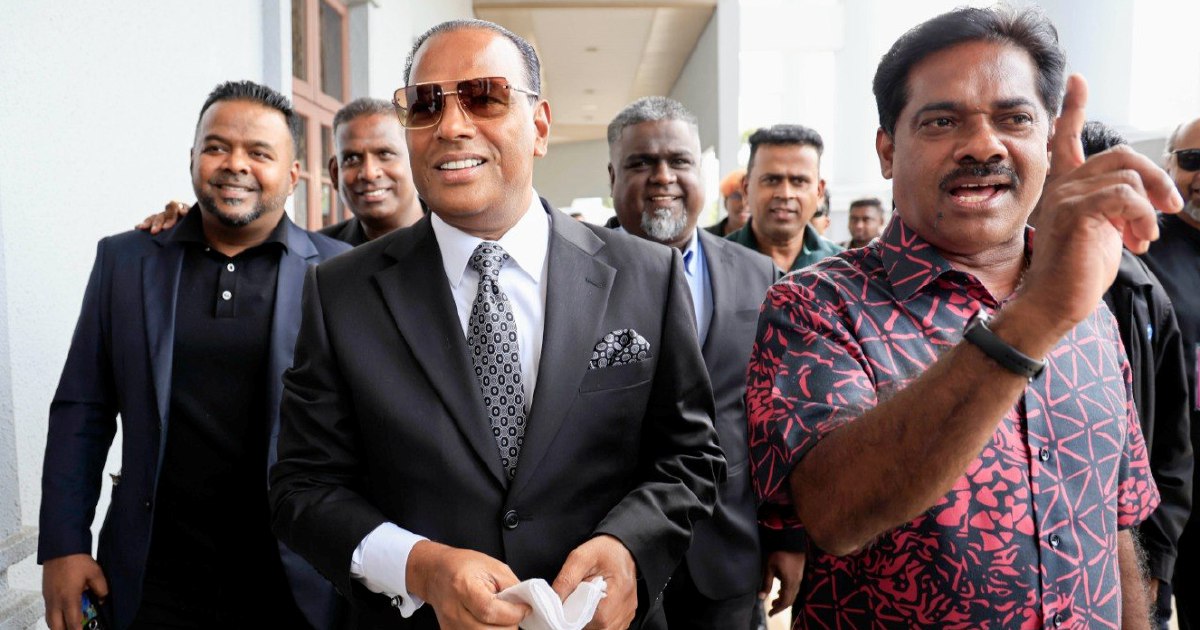
Datuk Seri M. Saravanan, who previously served as Malaysia's Human Resources minister, has categorically rejected three corruption charges alleging he accepted RM1.097 million in bribes, branding the accusations as unfounded and declaring them to constitute what he termed a "wild accusation". His forceful dismissal of the charges represents an early and combative stance as the former politician faces serious allegations in a landscape where high-profile corruption cases have become increasingly scrutinised by both the public and judicial authorities.
The former minister's response underscores the contentious nature of corruption allegations in Malaysian politics, where accusations against prominent figures often attract considerable public attention and debate. Saravanan's characterisation of the charges as wild and baseless suggests he intends to mount a vigorous defence, signalling his intention to challenge the prosecution's case through whatever legal avenues are available to him. This rhetorical approach is not uncommon among accused officials, who frequently employ emphatic denials to shape public perception whilst their cases proceed through the courts.
The specific allegation involves three separate charges of accepting bribes totalling RM1.097 million, a substantial sum that underscores the scale of the corruption investigation. Such high-value bribery allegations typically indicate a complex pattern of wrongdoing or multiple transactions, each of which must be established independently by prosecution authorities. The precision of the amount cited suggests a detailed investigation has already been conducted, with transactions documented and evidence gathered before charges were formally filed against Saravanan.
Corruption cases involving senior government officials carry significant implications for Malaysia's ongoing efforts to strengthen governance and institutional integrity. The country has witnessed heightened anti-corruption enforcement in recent years, with various high-profile figures facing investigation and prosecution. These cases serve as important barometers of the Malaysian judicial system's willingness to hold powerful individuals accountable, regardless of their former positions or political standing.
For the Human Resources ministry and the broader government apparatus, allegations against a former minister in that portfolio may raise questions about oversight mechanisms and the systems in place to prevent misconduct. The HR ministry carries particular responsibility for establishing codes of conduct and ethical standards across the civil service, making any allegations against its former leadership symbolically significant beyond the individual case itself.
Saravanan's public defiance of the charges may reflect confidence in his legal team's ability to undermine the prosecution's evidence, or alternatively, represent a strategic communication effort aimed at maintaining public credibility and political standing. Former ministers accused of corruption often utilise media platforms and public statements to present their version of events, recognising that perception in the court of public opinion can influence broader political narratives even as legal proceedings unfold.
The broader context of anti-corruption efforts in Malaysia has evolved considerably in recent years, with enhanced legislation, stronger enforcement mechanisms, and greater public demand for accountability. The MACC (Malaysian Anti-Corruption Commission) and other investigative bodies have demonstrated increased willingness to pursue cases against senior figures, representing a shift from historical patterns where political considerations sometimes shielded powerful individuals from investigation.
For Southeast Asian observers, Malaysia's handling of corruption cases involving former ministers provides insights into the region's governance trajectory. Countries throughout Southeast Asia continue grappling with how to balance political stability with accountability, and the outcomes of high-profile cases often influence reform efforts and public confidence in institutions across the region.
The legal process ahead will determine whether Saravanan's assertion that the charges are baseless will be vindicated or contradicted by evidence presented in court. His defence strategy, the strength of prosecution evidence, and the judiciary's treatment of the case will collectively shape not only his personal fate but also contribute to the broader narrative surrounding corruption and accountability in Malaysian public life.
As the case progresses through Malaysia's legal system, attention will focus on how thoroughly the court examines the evidence underpinning the bribery allegations and whether Saravanan's categorical denials can withstand scrutiny. The outcome carries implications extending beyond the individual case, potentially influencing public discourse on corruption, governmental ethics, and the effectiveness of Malaysia's anti-corruption infrastructure in addressing misconduct at the highest levels of government.

