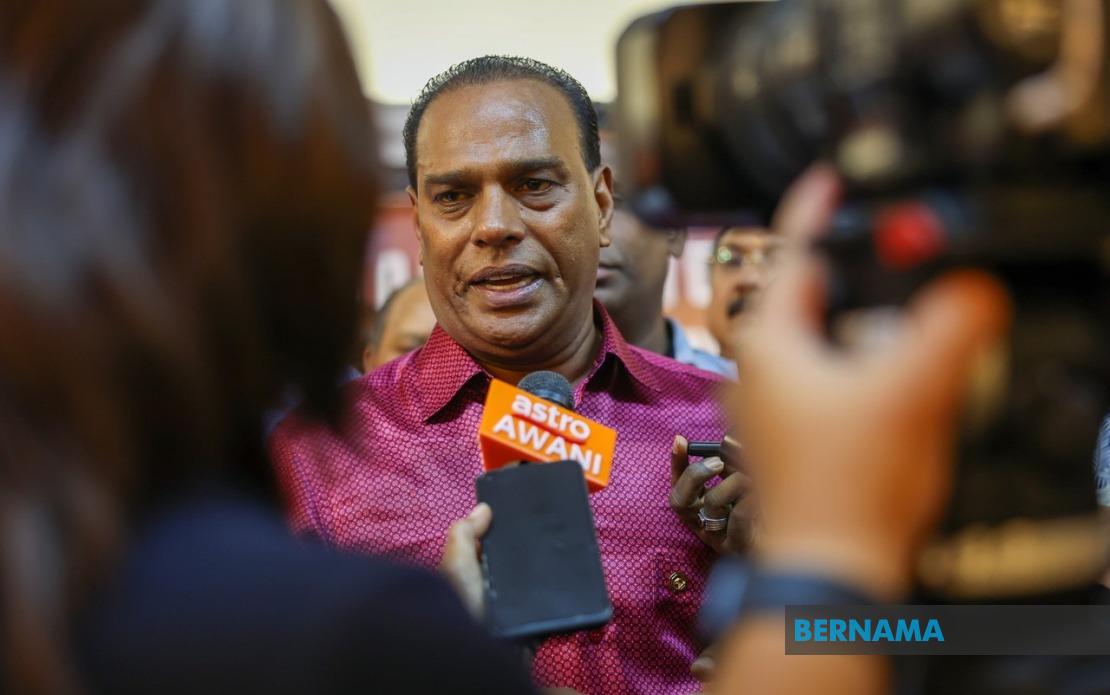
Former Human Resources Minister Datuk Seri M. Saravanan confirmed on Tuesday that he will appear before the Sessions Court in Kuala Lumpur on Wednesday to face charges connected to allegations surrounding the hiring of foreign workers during the COVID-19 pandemic in 2022. The Tapah MP and deputy president of the Malaysian Indian Congress disclosed the development through a video statement released to journalists, indicating his readiness to confront the legal proceedings despite the circumstances surrounding the case.
The charges against Saravanan relate to claims originating from a third-party statement that implicated him in the controversial foreign worker recruitment matter. According to his account, the individual who initially made the allegation has since passed away, occurring approximately two months before the court appearance was scheduled. Despite this development, Saravanan emphasized that he maintains his commitment to defending himself vigorously and pursuing the matter through proper legal channels.
A significant aspect of Saravanan's defence rests on his assertion that he never established direct contact with the individual making the accusations, either through telephone conversations or text messaging. He stressed the absence of any communication link between himself and the witness, suggesting that the allegations may lack a substantive foundation rooted in genuine interaction or wrongdoing. This denial forms a crucial component of his strategy to counter the accusations levied against him.
The situation took another turn when the individual involved initially submitted a Statutory Declaration withdrawing the allegations against Saravanan. This retraction by the original complainant introduced complexity to the case, raising questions about the evidentiary basis for proceeding with formal charges. Nevertheless, the Malaysian Anti-Corruption Commission proceeded with the investigation and formal charges, indicating the authority's determination to pursue the matter regardless of the complainant's recantation.
Saravanan disclosed that his legal representatives plan to submit an application to the court requesting an expedited trial process without unnecessary delays. This move suggests his team's confidence in the strength of his defence and their desire to resolve the matter swiftly rather than allowing it to languish in the judicial system. Expedited proceedings could serve to clear his name more quickly if the evidence supports his innocence, or alternatively, resolve the matter's outcome definitively.
The charges fall under Section 16 of the Malaysian Anti-Corruption Commission Act 2009, which addresses solicitation, acceptance, provision, promise, or tendering of bribes. This specific legal framework indicates the nature of the allegations, though Saravanan's statement suggests the evidence linking him to such conduct remains questionable given the complainant's withdrawal and subsequent death. The MACC formally notified media outlets of the impending court appearance, elevating the matter's public profile and underscoring its significance within Malaysia's political landscape.
The case emerges during a period of heightened scrutiny regarding government administration during the pandemic era, when numerous emergency measures and hiring decisions came under review. The foreign worker recruitment issue, in particular, generated considerable public debate concerning labour policy, economic necessity, and potential irregularities in governmental decision-making. Saravanan's position as a senior cabinet minister during this period places the allegations within a broader context of pandemic-era governance and ministerial accountability.
For the Malaysian Indian Congress and the broader political establishment, this development carries implications for party cohesion and ministerial credibility. As a high-ranking party official, Saravanan's legal troubles could influence internal party dynamics and calculations regarding ministerial portfolios and political representation. The case also reflects ongoing institutional tensions between anti-corruption mechanisms and political actors, a recurring theme in Malaysian governance.
The involvement of the MACC in bringing charges despite the complainant's retraction demonstrates the commission's independent investigative mandate and willingness to pursue cases based on its own findings rather than solely depending on complainant cooperation. This institutional independence, while important for combating corruption, also raises considerations about the balance between prosecutorial vigour and fairness to the accused when primary witnesses recant their statements.
Regionally, the case exemplifies Southeast Asia's continuing struggle with corruption allegations involving high-level officials, a challenge that extends across the bloc's democracies and institutional frameworks. Malaysia's visible pursuit of such matters through courts and anti-corruption agencies signals institutional commitment to accountability, though questions persist regarding consistency and thoroughness across different political contexts.

