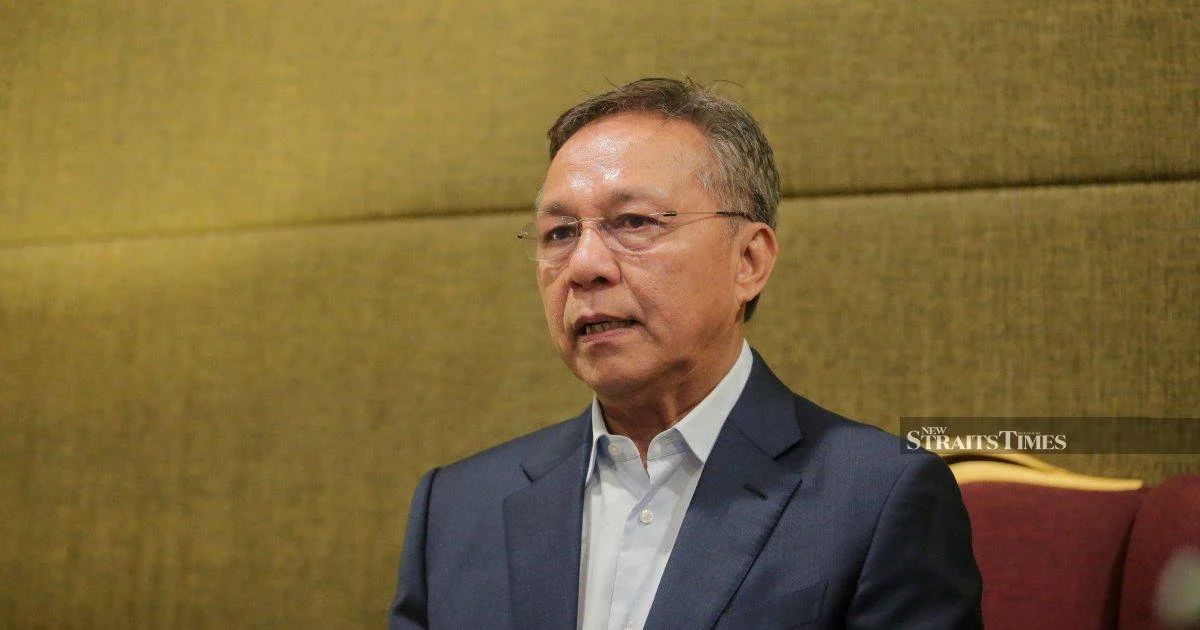
Former Johor menteri besar Datuk Seri Hasni Mohammad's exclusion from the Barisan Nasional candidate list for the upcoming state election has triggered considerable political intrigue across Malaysia's southern heartland. The removal of such a senior figure from what would normally be considered a straightforward party reselection has sent ripples through the organisation's upper echelons, and observers are now questioning what prompted the decision and what it signals about his future direction.
Hashni Mohammad's tenure as Johor's chief minister was marked by significant infrastructure and economic development projects aimed at repositioning the state as a regional financial hub. His removal from the state election slate represents a notable shift in Johor Barisan Nasional's political calculations, particularly given his long-standing influence within the coalition. The decision raises questions about leadership transitions within the party and the distribution of electoral seats among competing factions within Barisan Nasional's broader framework.
Political analysts suggest that his exclusion from the state contest does not necessarily signal a diminishment of his political capital. Instead, many are interpreting the move as potential repositioning—a strategic manoeuvre that could see him contest a parliamentary seat when the next general election is called. This interpretation gains credence from the established practice among senior politicians of consolidating power at the federal level when state-based positions no longer offer sufficient influence or longevity. For a figure of Hasni Mohammad's stature, a transition from state to federal politics represents a natural progression rather than a political retirement.
The timing of this announcement carries significance for Malaysian politics more broadly. The state election cycle and the impending general election create overlapping windows of political opportunity, and parties must carefully calibrate where to deploy their most valuable assets. By removing Hasni Mohammad from the state slate, Barisan Nasional may be conserving his candidacy for a parliamentary seat where his experience and established networks could prove more strategically valuable. Parliamentary seats often require different campaign dynamics than state constituencies, and senior figures may be preserved specifically for such contests.
Within Johor's political ecosystem, the decision also reflects ongoing internal negotiations over seat allocation and factional influence. Barisan Nasional comprises multiple component parties—the United Malays National Organisation, Malaysian Chinese Association, and Malaysian Indian Congress—each seeking to secure advantageous positions for their candidates. The removal of a prominent figure like Hasni Mohammad necessarily opens space for other aspirants, potentially signalling shifts in the balance of power among these coalition partners. Such internal reconfigurations are particularly significant in Johor, which has long been a crucial power base for Barisan Nasional nationally.
Hasni Mohammad's political journey reflects broader patterns within Malaysian politics regarding the navigation between state and federal spheres of influence. His previous role as menteri besar granted him substantial control over state resources and patronage networks—significant advantages in any political system. However, state-level politics in Malaysia increasingly takes second place to federal prerogatives, particularly regarding economic policy, development funding, and national governance. This structural reality means that even prominent state figures eventually gravitate towards federal positions where they can exercise influence over matters affecting the entire nation.
The exclusion also bears implications for Johor's political future and the state's relationship with the federal government. A chief minister with strong federal backing through a parliamentary position could potentially negotiate more effectively for resources and support. If Hasni Mohammad transitions to the federal legislature, his institutional knowledge of Johor's needs and capacities would position him as a bridge between state interests and federal policymaking. Such representation at the national level often proves more valuable to a state than local political dominance, particularly for economically significant states like Johor.
For Malaysian voters and political observers in other states, this development illustrates the complex calculus underlying electoral strategy within Malaysia's major political coalitions. The decision to remove a former chief minister from a state election slate sends contradictory signals that require careful interpretation. It simultaneously suggests both a diminishment of his immediate political position and a potential elevation to more influential national politics. Understanding these nuances matters for anyone tracking the evolving landscape of Malaysian politics.
The period leading up to the next general election will clarify whether Hasni Mohammad indeed emerges as a parliamentary candidate. If he does, his campaign will likely emphasise his administrative track record and ability to represent Johor's interests at the national level. His economic development background and experience managing a major state apparatus would constitute valuable credentials for federal office. Conversely, if he does not materialise as a candidate, the initial speculation will prove unfounded, and analysts will need to reassess what prompted Barisan Nasional's decision to exclude him from the state slate.
This development underscores the fluid nature of high-level Malaysian politics, where apparent setbacks often mask strategic repositioning. The next several months will reveal whether the exclusion represents the beginning of a transition to federal politics or whether other factors influenced the decision. Either way, Hasni Mohammad's political future remains a matter of significant interest to those tracking Barisan Nasional's internal dynamics and the coalition's broader electoral strategy heading towards the next general election.