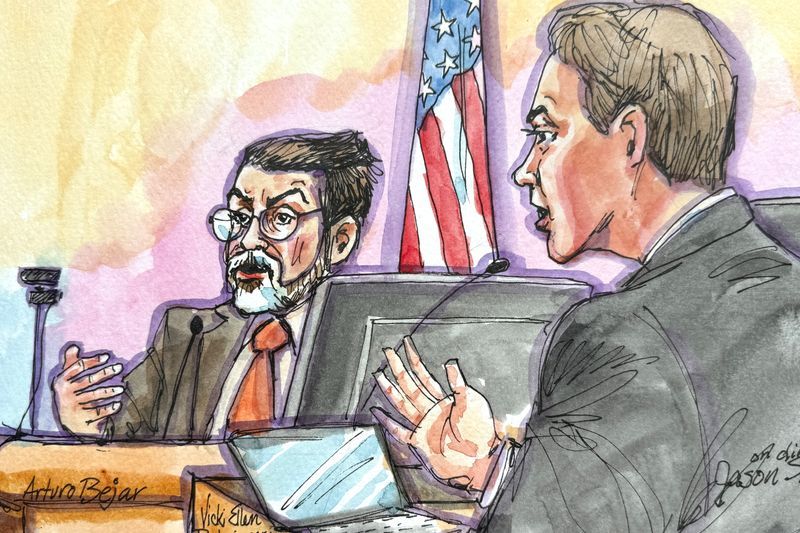
A former engineering director at Meta Platforms resumed his testimony in a landmark trial that could fundamentally reshape how Facebook and Instagram operate, continuing his account of how the company allegedly ignored internal research documenting harm to young users. Arturo Bejar, who spent parts of his career at Meta between 2009 and 2021, is the lead witness in what legal experts describe as the most significant courtroom examination yet of social media's effects on children and teenagers. The case, being heard in Oakland, California, represents a consolidation of state-level complaints against one of the world's largest technology companies and carries implications that extend far beyond Silicon Valley.
The trial involves accusations from California, Colorado, Kentucky and New Jersey that Meta deliberately engineered its platforms to create psychological dependence among young users while simultaneously deceiving the public about safety measures and the extent of internal knowledge about these risks. Additionally, 29 states are pressing claims that the company violated federal legislation by collecting and exploiting personal data belonging to children under thirteen without proper consent. The proceedings, scheduled to run for six weeks, pit regulatory bodies against a corporation worth hundreds of billions of dollars, making it a consequential moment for technology regulation in America.
Bejar's role as the opening witness carries particular weight given his dual perspective as both a former insider and persistent critic. During his tenure working on teen wellness initiatives across Instagram from 2019 to 2021, he conducted surveys and research into how young people experienced the platform. Rather than remaining silent, he elevated his findings to senior leadership, including communications with then-chief product officer Chris Cox, in which he documented what he characterised as a substantial disparity between the harms reported by young users and the company's own publicly reported metrics on policy violations.
The crux of Bejar's testimony centres on a methodological gap he identified in Meta's internal monitoring systems. The company, he argued, had structured its surveillance mechanisms to count instances of rule-breaking content without adequately measuring the actual psychological or emotional damage inflicted on vulnerable audiences. This distinction is crucial: a platform might identify and remove harmful material, but if that material reaches thousands of teenagers before removal, the aggregate damage remains significant regardless of enforcement rates. Bejar's statement to the court that "young people were experiencing harm at extraordinarily high rates" serves as a direct challenge to Meta's public representations about safety.
Meta has mounted a vigorous defence, denying all allegations and asserting that the company maintains robust protections for teenage users. The company has also challenged the relevance of Bejar's testimony, contending that his opinions extend beyond the legitimate scope of his professional responsibilities and thus should carry diminished weight with the jury. This legal manoeuvre reflects Meta's broader strategy: not necessarily disputing every detail Bejar presents, but rather attempting to position him as an outlier whose views do not represent institutional knowledge or consensus within the company.
Bejar's willingness to serve as a witness against his former employer distinguishes him in the technology sector, where employment agreements and professional relationships often create disincentives for public criticism. His 2023 testimony before the U.S. Senate, where he detailed harassment and other harms facing teenagers on Meta platforms, established him as a credible voice questioning corporate accountability in social media. That legislative appearance, combined with his academic and professional credentials, made him an obvious choice as lead witness for the coalition of states seeking to demonstrate that Meta possessed internal knowledge of problems it chose not to remedy.
The company attempted to undermine Bejar's credibility by seeking to exclude his testimony entirely, arguing that he had destroyed evidence by deleting communications with other former employees through the encrypted messaging application Signal. Meta framed this as a deliberate obstruction of discovery, suggesting bad faith conduct. However, U.S. District Judge Yvonne Gonzalez Rogers, presiding over the Oakland proceedings, rejected this argument decisively, characterising Meta's effort as a "long-shot bid" unlikely to succeed and insufficient grounds to eliminate such a significant witness from the trial record.
The broader litigation landscape surrounding Meta reveals the scale of reputational and financial exposure the company faces. Thousands of similar lawsuits are progressing through American courts, alleging harm to children and teenagers. In three cases that have already proceeded to trial, Bejar has testified, with particularly consequential results in New Mexico, where a jury awarded $942 million in damages and penalties while simultaneously mandating changes to how the platforms operate within that state. These precedents create momentum for subsequent cases and demonstrate that juries are willing to hold Meta accountable when presented with credible evidence of intentional misconduct.
For Malaysian and Southeast Asian readers, the trial's implications extend beyond American courtrooms. Meta's platforms—Facebook and Instagram—maintain enormous user bases throughout the region, including millions of teenagers and young adults. The regulatory and legal principles established in this trial could influence how Asian governments approach technology regulation, potentially informing future legislation governing data protection, youth safety, and algorithmic transparency. If Meta loses significantly or reaches substantial settlements, the company may implement changes affecting global users, not merely American ones.
Bejar's continued testimony represents a pivotal moment in the relationship between major technology companies and governmental oversight. His detailed account of internal research, his documented concerns raised with leadership, and his decision to participate publicly in litigation against his former employer all contribute to a narrative that challenges the technology industry's self-regulatory model. The trial asks a fundamental question: when companies possess internal evidence that their products harm vulnerable populations, what obligations do they bear to disclose that information and modify their business practices?
The six-week trial timeline suggests that extensive evidence and testimony will follow Bejar's account, potentially including expert witnesses on adolescent psychology, data scientists analysing algorithmic effects, and additional Meta employees or former employees willing to testify. As the proceedings advance, the combination of internal documents, research data, and eyewitness accounts could create a compelling record of how Meta allegedly prioritised user engagement and advertising revenue over youth welfare.
Meta's legal defence, while aggressive in challenging witness credibility and relevance, faces headwinds created by the company's own research. When internal data demonstrates awareness of harms, courts and juries typically view efforts to suppress or downplay that information as consciousness of guilt. Bejar's testimony, by making that internal awareness explicit and attaching human credibility to abstract corporate documents, transforms institutional knowledge into personal accountability. His continued presence in the witness box, despite Meta's efforts to exclude him, underscores the judiciary's recognition that his account directly addresses the states' core allegations.

