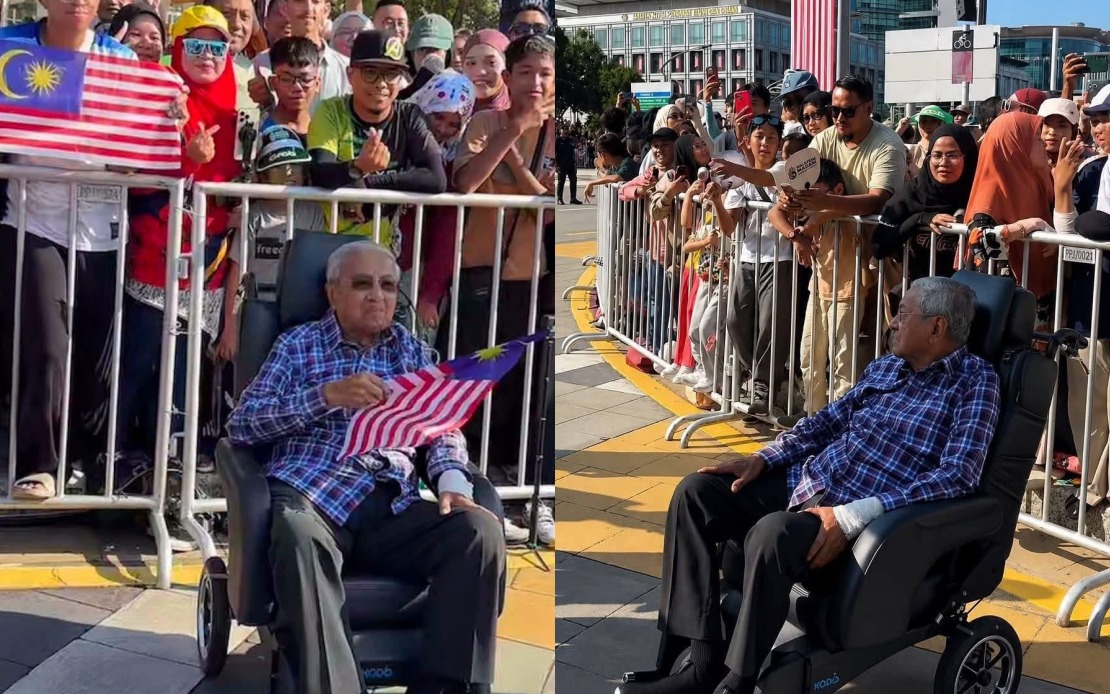
The Malaysian government has formally clarified the procedures governing former prime ministers' attendance at major national celebrations, establishing that invitations are no longer extended as a matter of course. The National Day Celebration 2026 Secretariat issued the statement on August 31 following public inquiries about former Prime Minister Tun Dr Mahathir Mohamad's presence at morning festivities held at Dataran Putrajaya, prompting officials to explain the framework currently in place.
According to Datuk Abdul Halim Hamzah, who chairs the 2026 National Day and Malaysia Day Celebration Working Committee and serves as Communications Ministry secretary-general, a substantive shift in protocol occurred eight years ago. The change reflected decisions made within the Prime Minister's Department's Protocol and International Conference Secretariat Division (BIUPA), the body responsible for managing invitations to significant federal government events. This institutional arrangement ensures consistency and clarity across different administrations regarding who attends which state occasions.
The 2018 practice represents a departure from what may have been earlier conventions, introducing discretion into a process that had previously operated with less flexibility. Rather than treating former prime ministers as automatically entitled to attend national commemorations, the new system requires interested former leaders to initiate contact through proper channels. This adjustment reflects evolving approaches to protocol management and the ceremonial dimensions of governmental transition in Malaysia's evolving political landscape.
Under current procedures, former prime ministers who wish to participate in National Day celebrations must submit formal applications following established administrative protocols. The secretariat emphasised that such attendance is neither prevented nor prohibited; rather, it operates within a framework requiring active engagement with protocol officials. This distinction between passive eligibility and active participation represents a meaningful recalibration of the relationship between incumbent administrations and their predecessors during major national events.
In the specific case of Dr Mahathir, the Prime Minister's Office had received a separate application relating to the Overseas Rest Facility, a provision available to former prime ministers. The application indicated that he was scheduled to be outside Malaysia from August 28 to August 31, 2026. Prime Minister Datuk Seri Anwar Ibrahim approved this request in accordance with the Remuneration of Former Prime Ministers provisions contained within the Members of Parliament (Remuneration) Act 1980, legislation that establishes various entitlements for those who have held the country's highest office.
The approval of Dr Mahathir's overseas facility application demonstrates how formal governmental procedures operate to accommodate the legitimate activities and movements of former leaders. Rather than simply appearing at celebrations as of right, former prime ministers now navigate a system where different aspects of their post-office status are managed through discrete administrative channels. The Overseas Rest Facility represents one component of broader remuneration and privilege arrangements established by parliament to support individuals who have served as prime minister.
This clarification carries implications for understanding Malaysia's institutional development and how governmental protocol has evolved. The shift toward discretionary invitation procedures reflects broader global trends where administrations seek to maintain clearer boundaries between official state occasions and participation by previous leaders. By making the invitation process explicit and applicant-driven rather than automatic, the system creates opportunities for political flexibility while maintaining procedural transparency and regularity.
The timing of this public clarification also suggests recognition within government communications circles that such protocols merit explanation to the broader public. Questions raised about former prime ministers' attendance at major celebrations reflect legitimate public interest in understanding how state occasions function and who participates in them. By articulating the rules explicitly, officials have attempted to move beyond speculation or assumption-based commentary toward factual description of actual procedures in operation.
For Malaysia's political culture, the arrangement underscores the distinction between holding high office and maintaining automatic privileges thereafter. While former prime ministers retain various entitlements through parliamentary legislation, their ceremonial role in national celebrations has been recalibrated to reflect contemporary governance perspectives. This approach allows administrations greater control over the composition and messaging of major state events while preserving pathways for former leaders to participate when both parties deem such participation appropriate.
The protocol framework also reflects practical considerations around event management, security coordination, and the ceremonial structure of major celebrations. By centralising invitation decisions within the Prime Minister's Department's protocol division, officials can maintain consistent standards and ensure that attendance aligns with broader governmental messaging and event objectives. This institutional arrangement has operated for nearly a decade, suggesting it has achieved sufficient acceptance across different political administrations to remain unchanged.
For Malaysian readers and regional observers, understanding these procedural details provides insight into how modern governance manages the transition between administrations and the position of former leaders within ongoing state functions. The clarification demonstrates that formal protocols exist to govern questions that might otherwise generate political controversy or uncertainty. As Malaysia continues developing its institutional frameworks around transitions of power, such explicit procedures contribute to governance stability and predictability.

