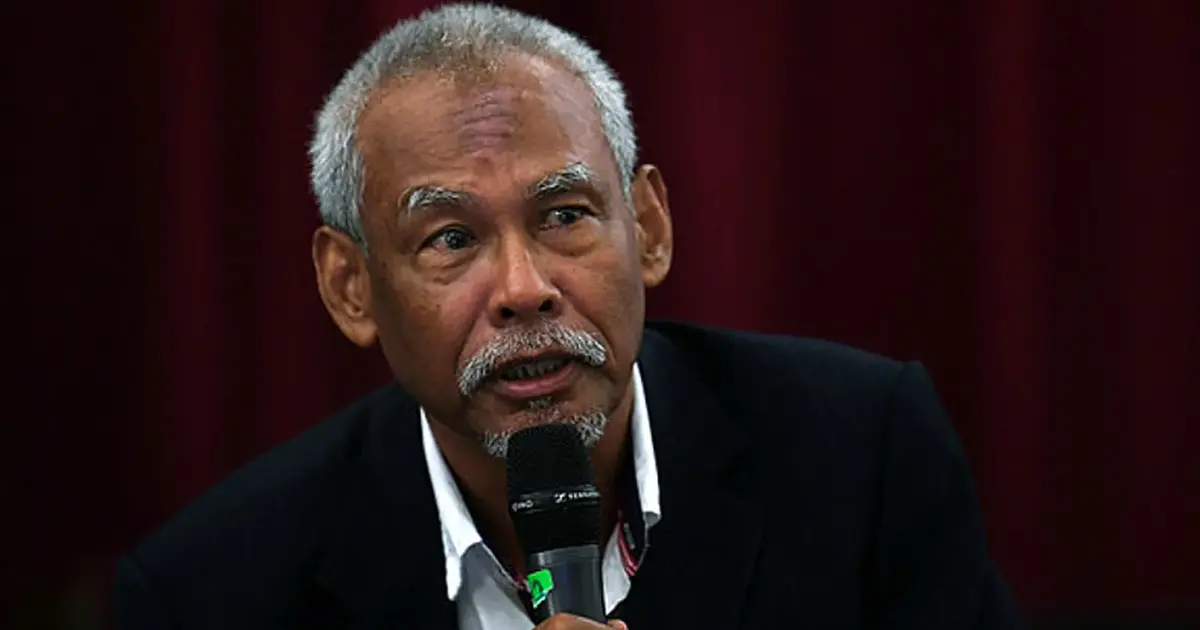
The Federal Court has shut the door on former Inspector-General of Police Musa Hassan's attempt to seek a review of a defamation lawsuit filed against him, determining that the legal arguments he presented lack sufficient merit to warrant judicial reconsideration. The apex court's decision represents a significant development in a contentious dispute that has raised fundamental questions about the legal vulnerabilities of high-ranking public servants and the boundaries of public discourse in Malaysia's increasingly polarised political environment.
Musa Hassan had submitted nine specific legal questions to the court, framing them as matters of constitutional importance that deserved careful examination through the review process. These questions centred on the extent to which public officers can pursue defamation claims, the limits of free speech protections in discussing matters of public interest, and how courts should balance individual reputation against democratic principles of open debate. By structuring his challenge around these broad constitutional themes, the former police chief sought to elevate the case beyond a simple dispute between two individuals into a test of fundamental legal doctrine.
The Federal Court, however, found these arguments unpersuasive and declined to reopen the matter. This rejection is particularly significant because it suggests the country's highest judicial body concluded that existing legal precedents already adequately address the issues Musa Hassan raised, or that the questions themselves do not truly concern constitutional principles requiring clarification at that rarified level of adjudication. The court's reasoning effectively closes off what many observers viewed as a potential pathway to have the entire defamation action dismissed on broader principle.
The case against Musa Hassan involves Hannah Yeoh, a prominent political figure, who brought defamation allegations stemming from public statements that she contended damaged her reputation and standing. The dispute encapsulates the tension between the rights of individuals to protect their good name through the courts and the corresponding right of citizens and commentators to engage in robust debate about public figures and matters touching on governance. For Malaysian jurisprudence, it exemplifies the difficulty courts face in calibrating protections for both individual dignity and freedom of expression in an age of amplified public communication.
Musa Hassan's reliance on constitutional arguments reflects a strategic approach taken by defendants facing defamation claims—attempting to reframe the dispute as a test case with implications extending far beyond the particular facts. By losing this gambit, the former IGP has exhausted one significant avenue for avoiding or substantially delaying the substantive proceedings. The case will now progress on the merits, with courts examining the factual and legal specifics of whether the statements in question were defamatory and whether any defences available under Malaysian law apply.
For public officials and former government servants, the decision carries troubling implications regarding their exposure to defamation suits. Unlike some jurisdictions that have developed robust protections for criticism of the government and public office holders, Malaysian courts have traditionally afforded public servants the same legal remedies available to private citizens. This outcome suggests the courts are unlikely to establish heightened thresholds for defamation claims brought by those who held high office, even after they have left government service. The ruling implies that public servants remain entitled to sue for reputational harm in much the same manner as anyone else.
The implications for freedom of speech in Malaysia warrant careful consideration. While the court's decision does not directly restrict anyone's right to speak, it signals that those commenting on public officials—whether serving or retired—must exercise caution to ensure their remarks are substantiable. The fear of costly litigation and the burden of defending a defamation claim, even if ultimately successful, can have a chilling effect on public discourse. Political commentators, civil society activists, and journalists analysing the actions of government figures must weigh the risks of legal exposure against the social benefit of their commentary.
The rejection of Musa Hassan's review application also reflects the Federal Court's current jurisprudential stance toward its own review jurisdiction. This court mechanism is deliberately restrictive, intended for cases involving questions of profound constitutional or legal importance. By declining to grant the review, the court signalled that while the issues touched on important principles, they did not constitute matters requiring the apex court to revisit established legal frameworks. This approach maintains the distinction between ordinary appellate review and the more rarefied review jurisdiction.
Looking forward, the substantive defamation proceedings will proceed through lower courts, likely examining whether the statements attributed to Musa Hassan were factually accurate, whether they were presented as statements of fact rather than opinion, and whether any statutory or common law defences available under Malaysian law might apply. These include potentially the defence of fair comment on matters of public interest or statements made on occasions of qualified privilege. The eventual outcome will depend heavily on the specific language used and the context in which the statements were made.
For Southeast Asia's broader legal landscape, Malaysia's defamation jurisprudence continues to reflect a traditionally plaintiff-friendly approach compared to some other democracies. Countries including Australia, Canada, and the United States have progressively elevated the threshold for public figure defamation claims, requiring higher standards of proof regarding malice or recklessness. Malaysia's courts have not adopted comparable doctrines, keeping public servants in a relatively advantaged position when pursuing litigation over reputation. This case will not alter that fundamental orientation but will provide further clarification of how Malaysian courts navigate the competing interests involved.
The decision also carries implications for the broader political culture surrounding accountability and public discourse. As Malaysia's political sphere has grown more contentious, with former senior officials increasingly becoming subjects of intense scrutiny and criticism, the boundaries of permissible commentary remain unsettled. The courts must balance legitimate accountability mechanisms against the protection of individual rights, a balance that this decision leaves largely to traditional defamation doctrine without developing new constitutional protections for politically relevant speech.

