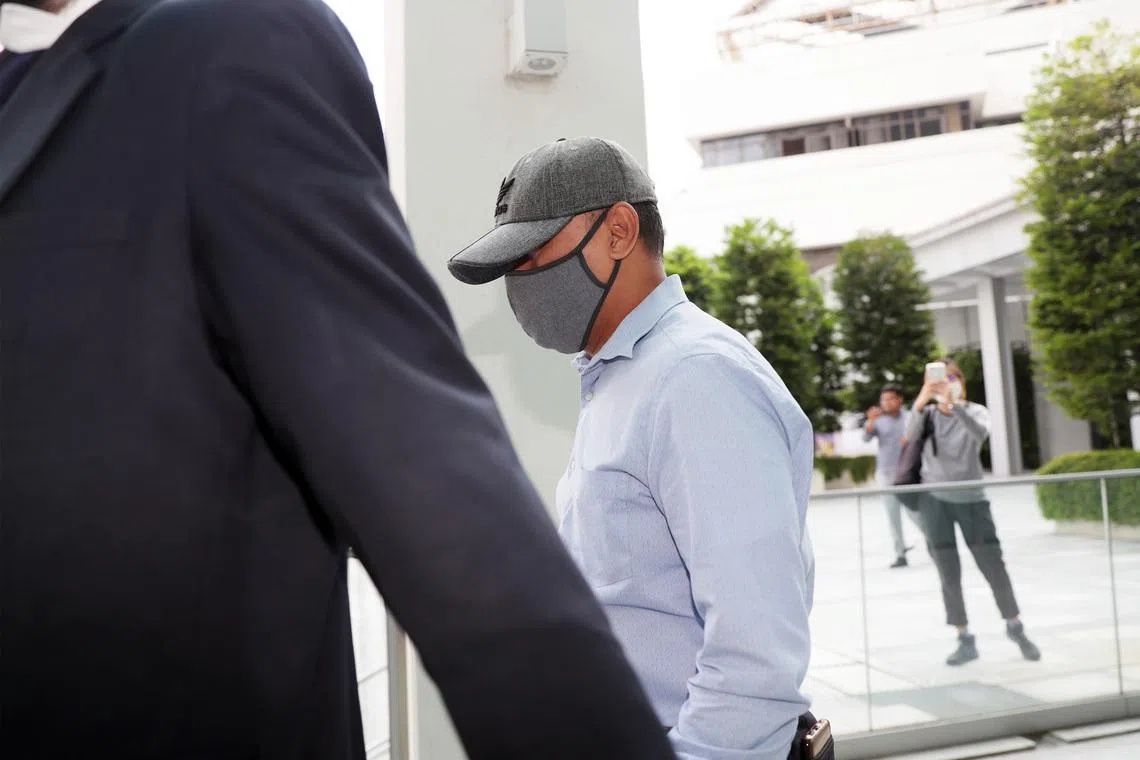
Abdul Rahim Mawasi, who previously led the management boards of Darul Aman Mosque and Sallim Mattar Mosque in Singapore, received a 14-month jail sentence on Friday, June 26, for orchestrating a corruption scheme that undermined competitive tendering processes at religious institutions. The 59-year-old's conviction follows a trial and represents a serious breach of trust by a senior officer within Singapore's Islamic Religious Council (MUIS), the statutory body overseeing mosque administration.
The scheme centred on Abdul Rahim's abuse of his position to provide confidential price guidance to Mohd Mustaqim Kam, a director of construction firm Zeal-Con Engineering. The two men, who had known each other for over a decade, entered into an undisclosed arrangement in 2018 whereby Abdul Rahim would help secure construction contracts for Zeal-Con at the mosques in exchange for shares in a travel company venture they would jointly establish. Crucially, Abdul Rahim agreed to invest no capital upfront, with profits from mosque contracts intended to fund his stake in the business. This financial arrangement created a direct monetary incentive for Abdul Rahim to favour Zeal-Con's bids.
The manipulation became evident through Zeal-Con's submissions to Darul Aman Mosque. The company initially quoted S$128,600 for yard construction works in August 2018, but after extensive consultations with Abdul Rahim regarding competing bids, Zeal-Con lowered its quote to S$118,000 in September. This revised figure undercut the next closest tender of S$125,500, allowing Zeal-Con to secure the contract despite the mosque's management board remaining entirely unaware of Abdul Rahim's behind-the-scenes negotiations with Kam. The Deputy Public Prosecutor emphasised that Abdul Rahim had provided "crucial price indications" that directly enabled Zeal-Con to calibrate its bid competitively.
A similar pattern emerged at Sallim Mattar Mosque, where Zeal-Con initially quoted S$115,700 for renovation work on the roof and reception areas in September 2018. Following Abdul Rahim's intervention, the company submitted a revised quote of S$105,000 six months later, which the mosque subsequently accepted. The evidence demonstrated that Abdul Rahim had explicitly advised Kam to reduce Zeal-Con's quote to secure contract awards, indicating his direct involvement in the pricing strategy rather than mere coincidental alignment.
To obscure the corrupt arrangement, Abdul Rahim orchestrated a deliberate concealment strategy. In November 2019, Kam converted an existing shell company into Amal Travel and Tour (ATT) with 100,000 shares. Rather than receiving shares directly in his own name, which would have triggered disclosure obligations within MUIS, Abdul Rahim arranged for his son to hold 25,000 shares valued at S$1 each. This shell company structure was designed to prevent detection by regulatory authorities and to circumvent MUIS's conflict-of-interest disclosures that Abdul Rahim was required to maintain as a senior officer. During his trial, Abdul Rahim denied any involvement with ATT and claimed he held no shares—a position consistent with the technical structure he had constructed, though the underlying arrangement remained evident from the chronology and communications.
Abdul Rahim's abuse of authority proved particularly egregious given his institutional position. Since joining MUIS in 2005, he had been seconded to both mosques where he chaired their management boards, placing him at the apex of decision-making authority for procurement. His status as a senior government officer bound by public sector ethics standards made his corruption a breach of public trust extending beyond the individual mosques. The total value of contracts steered to Zeal-Con—approximately S$223,000—represented substantial sums for religious institutions that depend on community resources and charitable contributions.
Kam, Abdul Rahim's co-conspirator, received a lighter sentence of six months' imprisonment in February 2025, reflecting his secondary role in the scheme. While Kam initiated the business proposal and benefited financially from the corrupted contracts, Abdul Rahim held the institutional leverage necessary to manipulate procurement processes. The differentiation in sentencing acknowledges that public sector actors occupy positions of heightened responsibility and that corruption by government officers damages institutional integrity more fundamentally than private sector participation.
Notably, the prosecution confirmed that Zeal-Con completed the contracted works satisfactorily, and there was no evidence of substantial financial losses sustained by either mosque. This absence of direct loss did not mitigate Abdul Rahim's culpability. Rather, the Deputy Public Prosecutor stressed that the offence represented "serious public sector corruption for financial gain," emphasising that the harm extends beyond quantifiable losses to encompass the systemic erosion of competitive tendering integrity and the compromised judgment inherent in biased procurement. When public officials manipulate processes to benefit personal associates, the reputational and institutional costs transcend individual transactions.
Abdul Rahim's legal representation argued for clemency, seeking a sentence not exceeding six months and highlighting his lack of prior convictions. However, the court determined that the deliberate concealment strategy, the abuse of high office, and the calculated nature of the scheme warranted a substantially longer custodial term. The 14-month sentence reflects judicial recognition that senior government officers must face meaningful consequences for corruption to deter similar breaches within the public service.
For Malaysian readers and broader Southeast Asian observers, this case underscores vulnerabilities within religious institution governance structures. Mosques and other faith-based organisations often rely on volunteer or seconded management personnel whose oversight may be less rigorous than commercial entities. The case demonstrates how senior officials can exploit informational asymmetries in procurement, particularly when religious organisations have limited resources for independent audit or compliance oversight. It also highlights the importance of mandatory disclosure requirements, competitive tendering transparency, and external validation of procurement decisions within institutions managing community resources.
Abdul Rahim was granted bail of S$30,000 and is scheduled to commence his sentence on July 10. His conviction represents Singapore's continued vigilance in prosecuting public sector corruption, a commitment that neighbouring jurisdictions including Malaysia continue to emphasise through their own anti-corruption frameworks. The case also reflects the reality that corruption schemes often involve calculated concealment through corporate structures and family arrangements, requiring prosecutorial sophistication to unravel layered deception and establish direct culpability beyond surface transactions.

