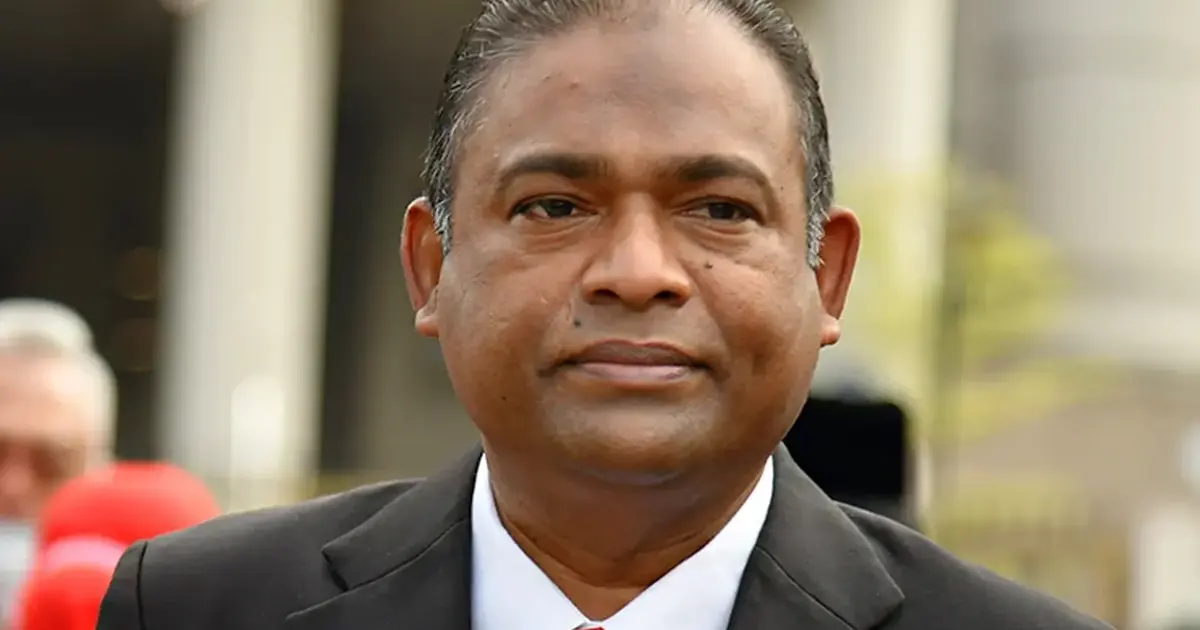
Rumours circulating on social media platforms since Tuesday night claiming that Abdul Azeez Abdul Rahim, the former chairman of Tabung Haji, had been detained have been refuted by his family. The son of the ex-Baling MP released a statement to address what he characterised as baseless speculation that had gained traction online, seeking to put to rest concerns about his father's legal status with the Malaysian Anti-Corruption Commission (MACC).
The swift emergence of these unverified claims across various social media channels highlights the persistent challenge of misinformation in Malaysian political discourse. In an era where allegations and assumptions can spread rapidly without verification, the importance of official clarification from those directly affected cannot be overstated. The family's decision to publicly address the matter underscores how quickly unfounded narratives can gain momentum online, particularly when they involve public figures with a history in government-linked institutions.
Abdul Azeez Abdul Rahim, who previously served as the Member of Parliament for Baling and held the chairmanship of Tabung Haji, one of Malaysia's most prominent pilgrimage savings institutions, has been a subject of public interest given his proximity to significant religious and financial portfolios. His tenure at Tabung Haji placed him at the helm of an organisation with considerable assets and responsibility for managing the savings of millions of Malaysian Muslims preparing for their Hajj pilgrimage. The prominence of such positions naturally invites scrutiny, and any allegations surrounding former holders of these roles attract immediate attention from both the public and media observers.
The family's clarification represents a necessary intervention in the information ecosystem, where distinguishing between verified reports and unfounded conjecture has become increasingly difficult for the general public. By directly countering the claims, Abdul Azeez Abdul Rahim's son has attempted to establish a factual baseline that contradicts what had become an entrenched narrative in certain online circles. This proactive approach to managing misinformation offers a template for other public figures seeking to address spurious allegations without allowing them to calcify into accepted falsehoods.
The incident also reflects broader concerns about the role of social media in shaping public perception of Malaysia's anti-corruption efforts. The MACC, as the primary agency responsible for investigating corruption allegations, carries significant institutional responsibility, yet its investigative actions and outcomes are frequently subject to speculation and rumour when details remain undisclosed. This gap between public information and investigative reality can create fertile ground for unverified claims to flourish, complicating the public's understanding of genuine enforcement actions.
Tabung Haji itself has been the subject of considerable scrutiny in recent years, with questions raised about its management, financial performance, and governance structures. The institution's importance to Malaysian Muslims and the scale of public funds entrusted to it means that any leadership or accountability matters invite heightened public attention. The former chairman's potential involvement in any investigation would naturally carry symbolic weight beyond the individual circumstances, reflecting on institutional trust and governance standards.
For observers of Malaysian politics and public administration, the episode serves as a cautionary reminder about the validation and consumption of unverified information. The ease with which allegations can proliferate online, particularly those involving government officials or former office holders, creates pressure on both the alleged subjects and their families to respond, even when no formal action has occurred. This dynamic can distort public discourse and detract from substantive discussions about accountability and institutional reform.
The clarification by Abdul Azeez Abdul Rahim's family also demonstrates the importance of direct communication channels between public figures and the public they served. Rather than allowing speculation to define the narrative, the family took responsibility for providing a clear statement about their relative's status. This approach stands in contrast to silence, which can inadvertently lend credence to rumours by creating a vacuum that speculation rushes to fill.
Moving forward, this incident underscores the critical role that media literacy and verification practices must play in Malaysian civic life. As citizens increasingly rely on social media for news and information, the responsibility to pause, question, and verify claims before amplifying them becomes ever more important. The speed at which misinformation spreads online is matched only by the difficulty in correcting it once it has taken root in public consciousness.
For stakeholders in Malaysian public administration, including the MACC, government institutions, and the media, the challenge of maintaining public confidence while investigating serious allegations remains unresolved. The family's statement may settle the immediate question of detention, but broader questions about institutional accountability, transparency in anti-corruption work, and the health of Malaysia's information ecosystem persist and demand sustained attention from policymakers and civil society actors alike.

