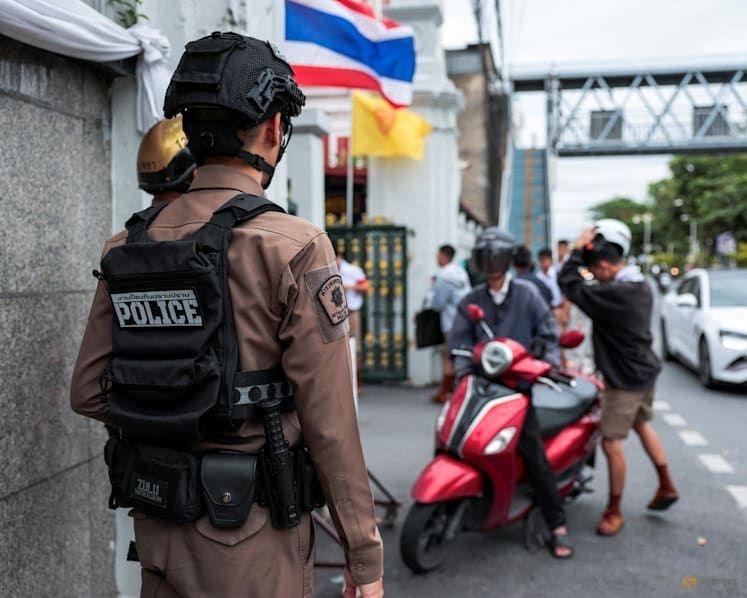
A former member of Thailand's parliament was taken into police custody on Monday following allegations that he fired on a local government official and his driver in Nonthaburi province, just north of Bangkok. The arrest of Chalong Riewrang marks an escalation in violence within the province and arrives at a moment of heightened national concern over firearms regulations after a tragic school shooting claimed multiple lives in the same area just days earlier.
Nonthaburi police chief Dejrapee Kongdee confirmed the arrest and indicated that investigators are working to establish the motive behind the alleged attack. According to initial police statements, both victims sustained injuries and were transported to hospital for treatment. The chairman of the Nonthaburi local government administration suffered what authorities described as serious injuries, while the second victim, identified as the official's driver, was also shot but police provided no detailed assessment of the severity of his condition at the time of the announcement.
Chelong, who previously held a parliamentary seat representing the ruling coalition party led by Prime Minister Anutin Charnvirakul, now faces investigation for the alleged shooting. The circumstances surrounding the alleged incident remain under scrutiny as officers attempt to determine what provoked the violence. Thai media outlets have suggested that a private dispute between Chalong and the victims may have triggered the shooting, though law enforcement authorities have so far avoided confirming or elaborating on this line of inquiry.
The shooting in Nonthaburi occurs within a troubling context of gun violence that has gripped Thailand in recent days. Just three days prior, on Friday, a 14-year-old youth opened fire at his school in the same province after first shooting dead the elderly grandparents who had raised him. That rampage resulted in six additional casualties among school staff or students before the young perpetrator turned the weapon on himself, ending the attack. The sequence of shooting incidents has cast a stark spotlight on Thailand's approach to firearm regulation and public safety protocols.
Thailand maintains one of the highest rates of gun ownership throughout the Southeast Asian region, with official estimates placing approximately 10 million firearms in civilian hands. This figure translates to roughly one registered or unregistered weapon for every seven people in the nation, a proportion that significantly exceeds most other countries in Asia and reflects decades of permissive firearms policies. The prevalence of guns in Thai society, combined with relatively lenient requirements for ownership verification and storage, has created conditions that critics argue facilitate periodic outbursts of armed violence.
The back-to-back shooting incidents have prompted government officials to announce renewed commitments to tightening gun laws and implementing more rigorous controls over firearm ownership and distribution. However, such pledges carry diminished credibility given Thailand's historical pattern of announcing stricter regulations following high-profile shooting deaths, only to see implementation falter or legislative proposals fail to advance through parliament. The gap between official rhetoric and substantive policy change has enabled the pattern of sporadic mass shootings to persist across multiple decades.
For Malaysian observers, the situation in Thailand presents both cautionary lessons and comparative perspective on regional gun violence dynamics. Malaysia maintains substantially lower rates of gun ownership and implements more restrictive licensing frameworks, yet still contends with occasional firearms-related incidents. The Thai case illustrates how liberal access to weapons, combined with systemic vulnerabilities in mental health support and conflict resolution mechanisms, can create conditions for periodic tragedies even in ostensibly stable democracies.
The arrest of Chalong underscores how gun violence in Thailand frequently intersects with personal disputes and domestic grievances rather than stemming exclusively from organized crime or political violence. This pattern distinguishes Thai shooting incidents from violence dynamics in certain other regional contexts, yet the proliferation of firearms ensures that individual conflicts can easily escalate to fatal outcomes. The involvement of a former political figure also highlights how Thailand's political landscape, marked by cycles of democratic governance and military intervention, has produced numerous individuals outside government structures who retain connections to weapons and capacity for violence.
As police continue investigating both the Nonthaburi shooting and the underlying circumstances that prompted Chalong's alleged action, Thailand faces mounting pressure to demonstrate concrete movement toward meaningful firearms regulation. The credibility of government institutions depends partly on their capacity to follow through on public commitments made in response to tragic events. Without substantive legislative changes and improved enforcement mechanisms, Thailand appears positioned to experience continued sporadic outbursts of armed violence that claim innocent lives and destabilize communities.

