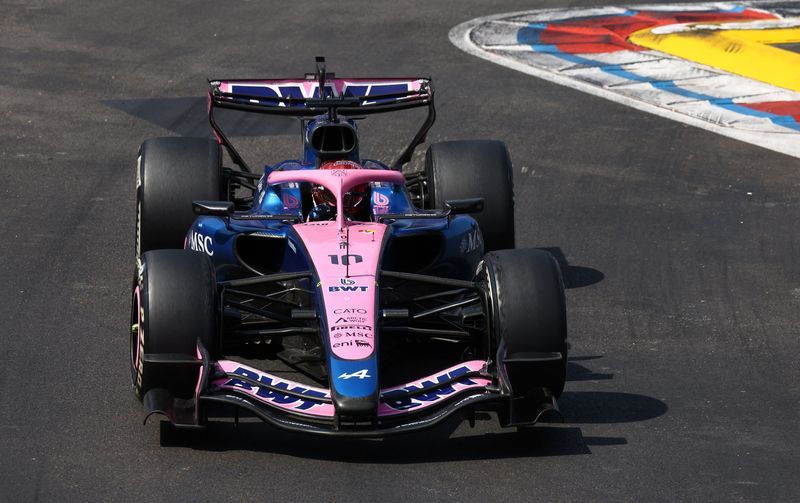
The sport of Formula One faces a pivotal moment as its international court of appeal prepares to render a definitive judgment on one of this season's most contentious stewards' decisions. Scheduled for Tuesday at FIA headquarters in Paris, the hearing will finally determine whether Alpine driver Pierre Gasly legitimately earned the third-place trophy at the Monaco Grand Prix held on June 7, or whether the podium position belongs to Red Bull's Isack Hadjar. What began as a straightforward race result has spiralled into a protracted dispute that has raised fundamental questions about the consistency and fairness of Formula One's penalty system.
Gasly's contested podium finish has undergone multiple transformations since the Monaco event concluded. Initially crossing the line in third position, the Alpine driver was stripped of his podium when race stewards imposed two five-second penalties for pit-lane speeding violations. These penalties pushed Gasly down to seventh place, allowing Hadjar to claim the trophy and the accompanying ceremonial champagne spray. However, within days of this stewards' decision, Alpine presented compelling evidence that a timekeeping error had occurred, prompting stewards to reverse their ruling entirely. The penalties were removed, the result was restored, and Hadjar performed the ceremonious return of his borrowed trophy to Gasly.
This reversal, rather than providing closure, triggered alarm bells throughout the Formula One paddock. The series' governing body's willingness to overturn a completed penalty decision sent shockwaves through the sport's competitive structure, with various teams questioning the implications for future rulings and the precedent being established. McLaren and Red Bull, sensing potential injustice within the original stewards' decision-making process, filed appeals to the international court on June 16, ensuring that what appeared settled would be reopened for comprehensive examination.
McLaren's grievance extends beyond mere solidarity with a rival team facing penalties. Oscar Piastri, the McLaren driver, had originally finished fourth but dropped to fifth after Gasly's reinstatement. Critically, Piastri had served pit-lane speeding penalties during the race itself, accepting the punishment and losing valuable time while racing. Unlike Gasly, who avoided serving his penalties during competition and could have time deducted post-race, Piastri had no mechanism to recover his lost position once the incident occurred. The Australian driver's penalty was executed and irreversible, creating a two-tier system where identical violations received fundamentally different treatment depending on procedural timing and administrative circumstance.
The disparity in how identical offences were managed highlights a structural vulnerability in Formula One's penalty administration. Piastri had no grounds to appeal his in-race penalty, even though his violation derived from the same timekeeping error that later exonerated Gasly. While Gasly benefited from post-race evidence review and penalty removal, Piastri bore permanent consequences from an error beyond his control. This inequality troubled team principal Andrea Stella sufficiently that he elevated the matter beyond McLaren's parochial championship interests, framing the appeal as a matter of sporting integrity.
Stella articulated this dual perspective when addressing the controversy at the subsequent Dutch Grand Prix, won by McLaren's Lando Norris. The Italian team boss emphasised that McLaren's appeal served two distinct purposes, neither purely self-interested. First, the procedural reversal in Monaco established a troubling precedent that potentially compromised the sport's fairness and credibility. Allowing penalties to be unilaterally removed after completion, particularly when underpinned by administrative errors rather than driver culpability, creates uncertainty about what constitutes a final decision and whether any ruling should be considered definitive.
Second, Stella acknowledged McLaren's material interests in the championship standings. The team sustained a tangible sporting disadvantage when Piastri served an irreversible penalty while a competitor benefited from post-race exoneration for the identical infraction. Points accumulated or lost at Monaco directly influence championship calculations that unfold throughout the season. In a sport where championships can be decided by minimal point margins, decisions made in Monaco reverberate through multiple circuits and ultimately determine which teams compete for glory in the season finale.
The FIA has structured this appeal hearing with deliberate confidentiality, excluding media and public observation from the proceedings at its Paris headquarters. While the governing body has committed to publishing its decision promptly following the hearing, the closed-door nature of these proceedings reflects the sensitive political dimensions underlying the case. Formula One's major teams maintain significant influence within the sport's governance structures, and public proceedings could amplify perceptions of favouritism or bias depending on how the court rules.
This Monaco controversy resonates particularly within the Southeast Asian context where Formula One has become increasingly prominent through races in neighbouring Singapore and expansion of digital audiences. Malaysian and regional fans have witnessed how European teams exercise considerable influence over the sport's decision-making architecture, and this appeal exemplifies the tension between principled fairness and practical expedience that frequently characterises international sporting governance. The case demonstrates how administrative decisions made within elite motorsport competitions can prompt broader questions about competitive justice.
The appeal court's decision will establish important precedent regarding when and how penalties can be reconsidered, whether post-race evidence can invalidate in-race sporting consequences, and how the sport should treat administrative errors that disproportionately affect different competitors. Should the court reinstate Hadjar's podium finish, it validates the original stewards' decision and rejects the timekeeping evidence that prompted the reversal. Conversely, confirming Gasly's position would endorse the premise that administrative errors can justify complete penalty removal, potentially encouraging future challenges to stewards' rulings when procedural irregularities are claimed.
The broader implications transcend this single race result. Formula One's appeal court decision will signal whether the sport prioritises procedural consistency or substantive fairness, whether administrative errors justify remedial action, and whether penalties constitute reversible rulings or irreversible sporting consequences. For teams competing across the calendar, understanding these principles influences how they respond to future penalty decisions and what remedies they can reasonably pursue through the appeal process. The Monaco controversy, while ostensibly resolved through the original stewards' reversal, now awaits genuinely final determination from the sport's highest tribunal.

