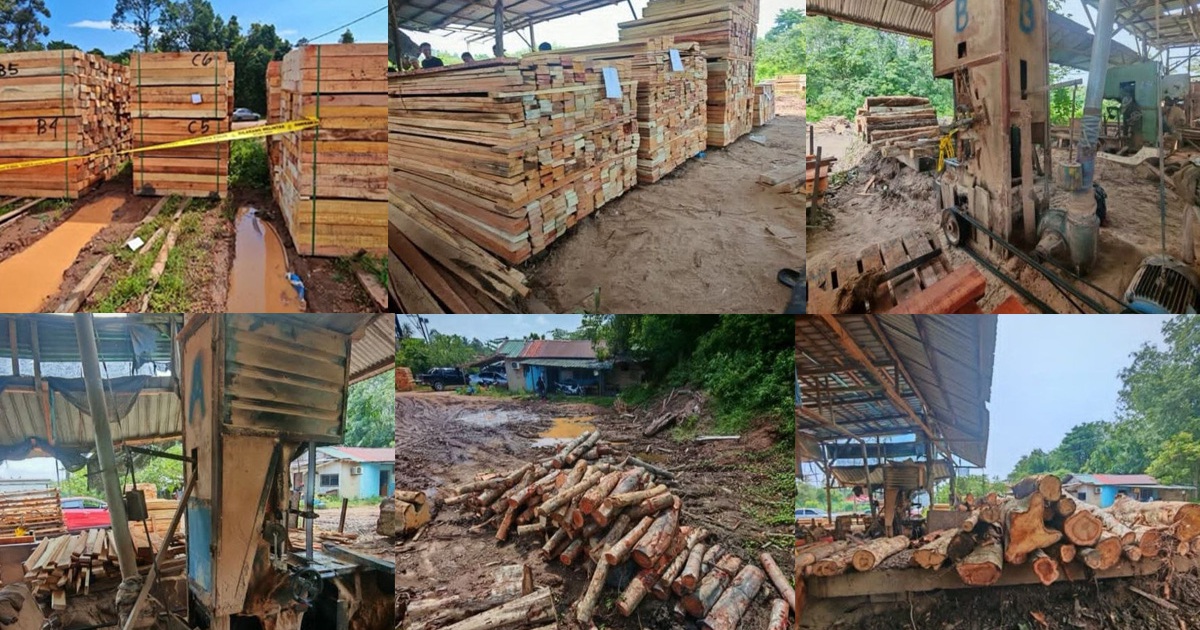
Authorities have moved decisively against unlicensed timber processing activities in Kelantan, conducting a coordinated enforcement operation in Kampung Bukit Kechik that has resulted in four arrests and the seizure of substantial quantities of illegal timber and equipment. The detained individuals include the sawmill operator and three workers who were present at the unlicensed premises when enforcement teams conducted the raid. The action reflects ongoing vigilance by regulatory bodies in combating illegal forestry practices that continue to plague timber-producing regions across Malaysia.
The value of materials and machinery recovered during the operation totals RM600,000, according to enforcement officials. This figure encompasses both processed and unprocessed timber stocks discovered at the facility, as well as operational equipment used in the sawmilling process. The seizure represents a significant disruption to what authorities believe was an established illegal operation, though the precise timeline of the facility's unlicensed activities remains under investigation. The sheer volume of recovered materials suggests the operation may have been processing timber over an extended period without proper permits or regulatory oversight.
Enforcement actions targeting unlicensed timber processing are a critical component of Malaysia's broader efforts to manage forest resources sustainably and prevent the exploitation of protected timber. Kampung Bukit Kechik, located within the administrative boundary of Tanah Merah district in Kelantan, falls within a region where forestry regulations have historically been challenging to enforce due to remote access and the prevalence of small-scale informal operations. The concentration of activity in this rural area underscores how illegal timber processing often establishes itself in locations where surveillance and regulatory presence are less intensive.
The four individuals arrested will now face investigation under relevant forestry and environmental legislation, with authorities likely examining the source of the timber, the extent of their unlicensed operations, and potential environmental violations. For a sawmill operator to conduct processing activities without proper licensing represents a fundamental breach of Kelantan's forestry statutes, which require explicit permits for any commercial timber handling. The involvement of three workers raises questions about the scale of the operation and whether management was deliberately circumventing regulations to reduce overhead costs and avoid taxation obligations.
Unlicensed timber operations present multifaceted challenges to Malaysian authorities beyond simple regulatory violations. These facilities typically operate without environmental safeguards, creating risks to water quality, soil stability, and air quality in surrounding communities. Workers employed at such premises often lack the safety protections mandated by law, exposing them to occupational hazards from machinery and heavy materials. Additionally, the sale of illegally processed timber can undercut legitimate milling operations that invest in compliance, creating unfair market distortions and reducing government revenue from forestry fees and taxes.
The Kelantan timber sector has long grappled with enforcement challenges stemming from the sheer number of small-scale operations distributed across remote areas and the limited resources available to regulatory bodies. Previous crackdowns have yielded mixed results, with some illegal operators simply relocating or establishing new facilities elsewhere. The persistence of unlicensed processing suggests that demand for cheaper, untaxed timber remains robust, incentivising operators to accept the risks associated with illegal activity. Market dynamics that favour processed timber from informal sources continue to fuel an underground economy that regulatory agencies struggle to contain.
The seizure of RM600,000 in assets represents a meaningful enforcement victory, yet industry observers note that such individual actions, while important, require sustained coordination across multiple agencies to achieve lasting impact. Effective disruption of unlicensed timber operations demands not only reactive enforcement but also enhanced monitoring infrastructure, stronger coordination between state and federal authorities, and measures targeting demand for illegally produced timber at the consumer and wholesale levels. Malaysian authorities have periodically intensified crackdowns in timber-producing states, but these efforts often wax and wane in response to budgetary and personnel constraints.
The implications of this Kelantan raid extend beyond the immediate locality. Illegal timber processing contributes to broader deforestation pressures across Southeast Asia, a region already confronting accelerating forest loss driven by agricultural expansion and development. Malaysia's efforts to demonstrate environmental stewardship through enforcement actions carry significance for international perceptions of the country's commitment to sustainable resource management. Trade partners and environmental monitoring organisations increasingly scrutinise the prevalence of illegal timber in export supply chains, making domestic enforcement increasingly consequential for Malaysia's international standing.
For legitimate timber operators and stakeholders in Kelantan's forestry sector, enforcement actions validate investments in compliance and proper licensing. Mills that maintain lawful operations incur substantial costs for permits, environmental compliance, worker safety standards, and tax obligations—costs that unlicensed competitors avoid. When authorities successfully dismantle illegal operations, they protect the competitive position of compliant businesses and ensure that market pricing more accurately reflects the true environmental and social costs of timber production. This dynamic creates incentives for industry consolidation around licensed operators.
The investigation into the four detained individuals will likely illumine broader patterns regarding timber sourcing, distribution networks, and buyer relationships connected to this particular facility. Intelligence gathered during such operations frequently reveals links to other unlicensed premises and commercial networks that authorities might subsequently target. The dismantling of one sawmill operation can therefore trigger cascading enforcement actions if investigators successfully trace material flows and business connections emanating from the initial facility. Authorities have indicated their commitment to pursuing comprehensive investigations that extend beyond the immediate arrestees.

