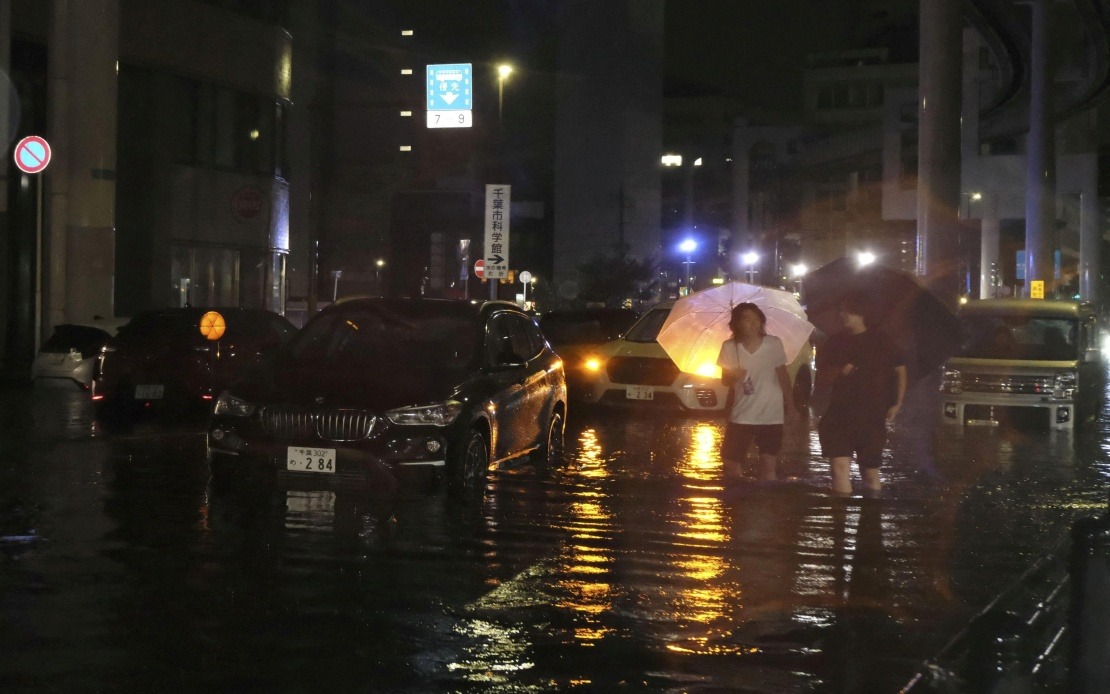
The Chiba Prefecture, situated immediately east of Tokyo, faced unprecedented rainfall on Thursday and into Friday morning that triggered the Japan Meteorological Agency's most severe weather alert. Four people lost their lives in the deluge, while another remained unresponsive, as the agency issued Level 5 precipitation warnings—its highest classification—across more than one-third of municipalities within the prefecture. The catastrophic weather system brought the region to a standstill, with authorities scrambling to coordinate rescue operations and manage mass evacuations across the affected area.
The meteorological conditions that unleashed this disaster resulted from a collision of warm, moisture-laden air masses flowing into eastern Japan colliding with colder atmospheric layers overhead, creating dangerously unstable conditions. The Fire and Disaster Management Agency reported that at the peak of the emergency, evacuation orders encompassed more than 400,000 residents across both Chiba and the neighbouring Ibaraki prefectures. By Friday morning, as the warnings were progressively downgraded, roughly 126,000 people remained under mandatory evacuation orders, indicating both the scale of the initial threat and the ongoing dangers posed by residual water accumulation and terrain instability.
Urban centres within the prefecture bore the brunt of the inundation. In Chiba city, one of the region's major population centres, water surged from underground drainage access points, while residents waded through knee-deep water attempting to return to their homes. The city of Ichikawa and numerous other municipalities issued urgent directives to inhabitants to implement immediate protective measures. The prefectural government building was converted into emergency shelter space, accommodating approximately 1,800 stranded commuters who found themselves unable to proceed with their journeys as transport networks became impassable.
The intensity of precipitation recorded in certain locations underscored the exceptional nature of this weather event. In Chuo Ward within Chiba city, hourly rainfall reached 115 millimetres during Thursday night—a volume equivalent to what the district typically experiences across an entire month of August in ordinary years. Such concentrated precipitation within a short timeframe renders drainage infrastructure ineffective, inevitably resulting in surface flooding and ground saturation that triggers secondary hazards such as landslides and structural collapses.
Recognising the elevated risk of terrain instability, the Japan Meteorological Agency simultaneously issued Level 5 landslide warnings for several municipalities, including Chiba city and the adjacent Ichihara city. These warnings indicated that saturated soil conditions had reached critical thresholds where slope failures became imminent across the affected zones. The combination of extreme precipitation warnings alongside landslide alerts demonstrated the multifaceted nature of the disaster, as authorities confronted not only urban flooding but also hazards threatening both populated and rural landscapes.
Emergency response infrastructure expanded rapidly across the broader region to accommodate displaced persons. The Cabinet Office coordinated the establishment of over 200 evacuation centres distributed across Chiba, Ibaraki, Saitama, and Gunma prefectures, creating a network of refuge points for evacuees who could not remain in their residences or locate alternative shelter. This geographical distribution reflected the extensive territorial scope of the disaster's impact, extending well beyond the immediately flooded zones to encompass areas where authorities deemed evacuation prudent as a precautionary measure.
Infrastructure disruptions compounded the difficulties faced by residents and emergency responders. A subsidiary of Tokyo Electric Power Company Holdings Inc. reported that electrical outages affected approximately 45,000 households across Chiba Prefecture at the crisis's height, plunging entire neighbourhoods into darkness during the night of heaviest rainfall. The combination of flooding, power loss, and ongoing precipitation created hazardous conditions that impeded rescue operations and left many residents isolated without communication capability or visibility to assess damage to their properties.
The weather system's persistence through Friday morning meant that precipitation continued in Chiba and neighbouring areas throughout the daylight hours, preventing saturation levels from declining and complicating efforts to assess damage or restore services. The gradual downgrading of alerts by Friday indicated that the most dangerous conditions had passed, yet the accumulated water and compromised terrain presented ongoing challenges for recovery operations. Infrastructure damage assessment could not meaningfully commence until water levels receded and remaining precipitation ceased entirely.
For Malaysia and Southeast Asia, this disaster carries particular relevance given the region's vulnerability to monsoon-driven extreme precipitation events and the increasing frequency of weather anomalies linked to broader climatic shifts. The Japanese response—with its sophisticated meteorological forecasting, coordinated evacuation protocols, and emergency shelter systems—offers instructive lessons in disaster preparedness, though it also underscores how even developed nations with advanced infrastructure struggle when atmospheric instability produces rainfall intensities exceeding historical norms. The incident highlights the escalating challenge posed by precipitation concentration, whereby climate patterns deliver monthly rainfall quantities within hours, overwhelming drainage systems designed for conventional seasonal distribution. Regional governments should examine both the warning mechanisms employed by Japan's meteorological agency and the evacuation coordination frameworks that limited fatalities despite the extraordinary scale of the event.

