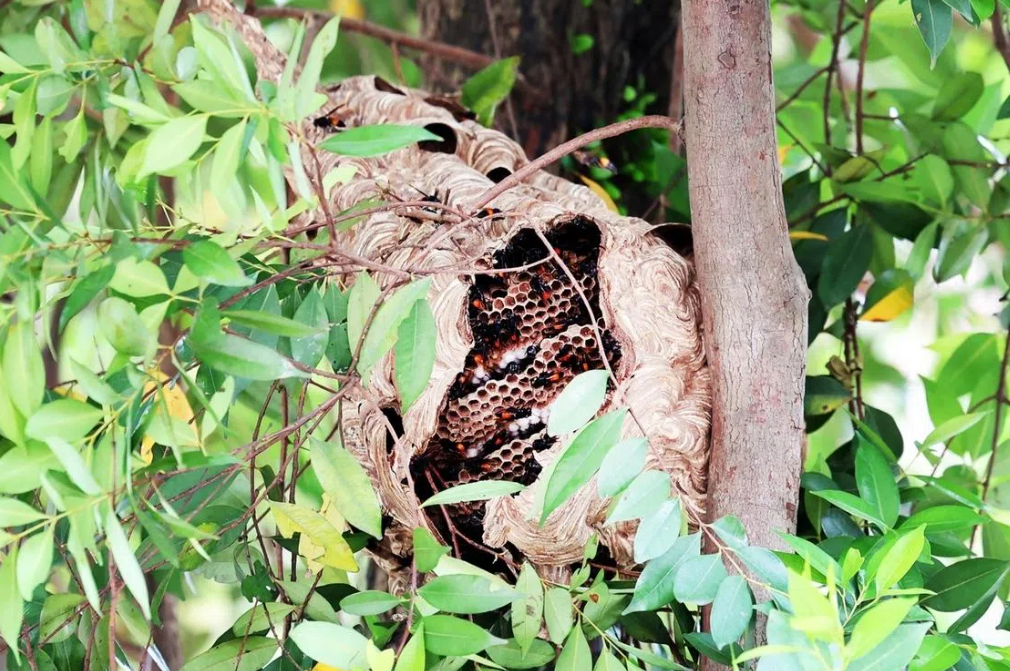
Four residents required hospital treatment after encountering an aggressive hornet swarm near Redhill Market in Singapore's Tanjong Pagar constituency on the afternoon of July 10. The Singapore Civil Defence Force and Tanjong Pagar Town Council responded to an alert shortly after 1pm, discovering a substantial nest lodged in a tree along the footpath between Block 78 Redhill Lane and a nearby Shell petrol station. The incident underscores the persistent wildlife management challenges facing urban Singapore, where residential proximity to green spaces occasionally creates dangerous encounters between humans and stinging insects.
Accounts from those present at the market that afternoon paint a picture of sudden, chaotic panic. A witness identified as Chen reported observing an elderly man being chased and attacked as other market visitors realised the danger unfolding above them. The assault continued with particular ferocity against at least one female victim in her 70s, who subsequently sought refuge in a nearby toilet. Another eyewitness, Mei Zhen, discovered this woman in visible distress, her ears severely swollen and bleeding, while she complained of headaches and dizziness. Zhen's account suggests the attack was sustained and intensive, with more than a dozen hornets maintaining an aggressive assault on their target, some penetrating her hair while others scattered across nearby surfaces.
The Tanjong Pagar Town Council demonstrated rapid response protocols, immediately cordoning off the affected zone and dispatching contracted pest control specialists to neutralise the threat. Officials confirmed that the nest was successfully extracted and the area subsequently restored to safe conditions for public access. This swift intervention likely prevented additional casualties, as lingering nests in populated areas present ongoing risk of further attacks, particularly during peak activity periods when insects defend their hives most aggressively.
Hornet venom represents a significant medical hazard due to its complex biochemical composition. Medical literature from the National University Hospital identifies multiple toxic compounds within hornet venom that distinguish these insects from common bees or smaller wasps. Histamine triggers acute allergic inflammatory responses throughout the body, while melittin produces the characteristic burning pain associated with stings. Additional proteins including phospholipase and hyaluronidase actively damage human tissue and can cause systemic reactions far more severe than simple localised swelling.
In pronounced cases, hornet envenomation can precipitate life-threatening complications including severe hypotension, inadequate perfusion of essential organs, and potentially fatal airway obstruction. Multiple stings compound these risks exponentially, as victims receive substantially larger cumulative venom doses than from isolated insect encounters. This explains why the victims in the Redhill Lane incident required immediate hospitalisation, with medical teams monitoring for delayed complications that might emerge hours after the initial attack.
The July 10 incident represents the latest in a troubling pattern of hornet-related injuries across Singapore. In 2024 alone, authorities documented multiple serious incidents, including a Sungei Buloh attack that hospitalised five individuals. More tragically, a cyclist suffered fatal injuries after being attacked by hornets while traversing Sembawang Park Connector during the same year. These cumulative incidents suggest that hornet populations may be flourishing in Singapore's urban environment, or that human activity increasingly intersects with established nesting sites.
Local authorities have issued clear guidance for residents encountering hornets or their nests. The paramount directive is maintaining composure and creating distance from the affected area rather than engaging in defensive behaviour. Citizens discovering active nests should immediately withdraw to sheltered indoor spaces and absolutely refrain from attempting amateur removal, which inevitably provokes more aggressive responses. These protocols reflect hard-won understanding of hornet behaviour, as the insects possess sophisticated threat-assessment capabilities and communicate danger signals through their colony, triggering coordinated defensive attacks.
For individuals who sustain stings despite precautions, immediate area evacuation remains essential. The emergency services number 995 should be contacted without hesitation if any severe symptoms develop, including difficulty breathing, rapid pulse, dizziness, or swelling affecting the face and throat. Even stings that initially appear minor can deteriorate into serious reactions, particularly among elderly individuals or those with pre-existing allergic sensitivities. Prompt medical intervention significantly improves outcomes and prevents progression toward anaphylactic shock.
For Malaysian readers observing developments in Singapore, the Redhill Market incident carries particular relevance given Malaysia's tropical climate and abundant hornets throughout the peninsula. Similar nesting patterns occur in Malaysian urban and suburban environments, where construction projects, tree management, and green space development can inadvertently concentrate hornet populations near residential areas. The Singapore authorities' response provides instructive lessons in rapid emergency protocol implementation and professional pest management coordination that Malaysian municipal councils increasingly adopt.
The broader implications extend beyond individual incidents toward systemic urban ecology management across Southeast Asia. As cities expand and green corridors become integrated within densely populated precincts, wildlife management becomes increasingly sophisticated. Hornets fill important ecological niches controlling agricultural pests and contributing to food webs, yet their proximity to human populations creates manageable but genuine public health concerns. Coordinated approaches combining public education, professional pest management, and swift emergency response appear most effective in balancing ecological preservation with community safety across the region.

