Jeram Padang has emerged as the focal point of electoral complexity in the Jempol state constituency, distinguishing itself as the only seat contested by four candidates in the 16th Negeri Sembilan State Election. After the nomination filing process concluded on July 18 at the Jempol District and Land Office Hall, returning officer Amino Agos Suyub confirmed the competitive field that will test voters in this critical battleground when polls open on August 1.
The quadrangular contest reflects the increasingly fragmented political landscape within Negeri Sembilan, where traditional two-coalition politics no longer dominates every contest. Pakatan Harapan candidate G. Manivannan will challenge incumbent Datuk Mohd Zaidy Abdul Kadir, who represents the Barisan Nasional coalition and seeks to retain his seat. The race has been further complicated by the entry of R. Sri Sanjeevan from Parti Pribumi Bersatu Malaysia, adding another opposition voice into the mix. Most notably, Dayana Dal of Parti Orang Asli Malaysia brings Indigenous representation into the contest, marking a significant inclusion of Orang Asli political participation in mainstream electoral competition.
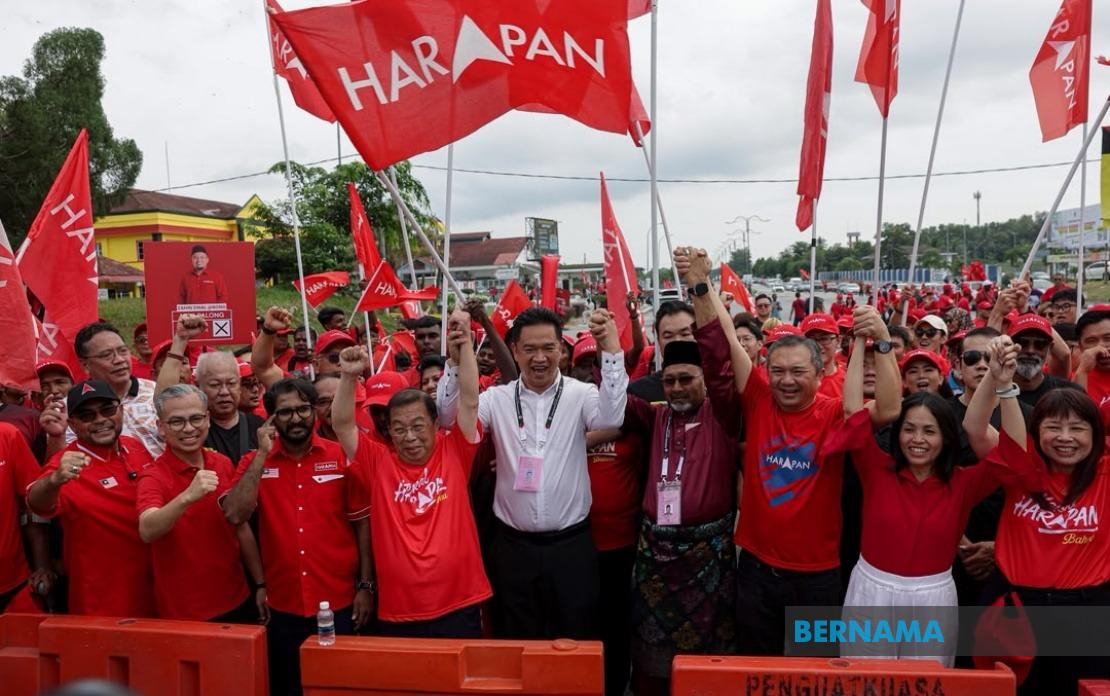
The nomination filing sequence provided insight into the candidates' respective campaigns. Sri Sanjeevan and Dayana Dal arrived first, submitting papers at 9.09 am and 9.12 am respectively, indicating preparedness and organisational readiness. Manivannan followed at 9.17 am, accompanied by Pakatan Harapan Communications Director Datuk Seri Fahmi Fadzil, signalling the coalition's strategic focus on this particular seat. The incumbent Mohd Zaidy filed last at 9.20 am, rounding out the nomination process with all candidates successfully registered.
Whilst Jeram Padang dominates attention as the sole four-way battleground in Jempol, the neighbouring seats reflect more traditional political alignments. Serting appears destined for a three-cornered fight between Yaacob Mahmood of Pakatan Harapan, incumbent Mohd Fairuz Mohd Isa representing Perikatan Nasional, and Muhammad Noraffendy Mohd Salleh of Bersatu. This configuration reveals the continued fractionalisation within the opposition camp, with both Bersatu and PH running separate candidates rather than presenting a unified front against the sitting representative.
Parlong similarly showcases three-way competition, where incumbent Datuk Mustapha Nagoor of Barisan Nasional confronts Muhammad Zahin Zinal Abidin from Pakatan Harapan and Rebin Birham of Bersatu. This seat underscores how Bersatu's strategic positioning across multiple constituencies has become a consistent feature of Negeri Sembilan's electoral mathematics. The party's presence across these contests suggests a deliberate effort to establish itself as a credible alternative within the state's political sphere.
In stark contrast, Bahau presents the simplest electoral arrangement within Jempol, featuring a direct contest between incumbent Teo Kok Seong of the Democratic Action Party, competing as part of Pakatan Harapan's coalition structure, and Chong Fui Ming of the Malaysian Chinese Association, the Barisan Nasional standard-bearer. This straight fight indicates either clear local political consolidation or insufficient support for additional candidates in an urbanised constituency where traditional demographic blocs may maintain stronger influence.
The electoral calendar provides candidates with a concentrated campaign period. The Election Commission has scheduled July 28 for early voting, affording civil servants, essential workers, and other eligible voters the opportunity to cast ballots before the main polling date. The August 1 general polling day will determine the outcome across all four Jempol seats simultaneously, though Jeram Padang's four-candidate field guarantees heightened uncertainty compared to the more straightforward contests in adjacent constituencies.
Jeram Padang's four-cornered configuration carries particular significance for understanding voter behaviour in semi-urban Malaysian constituencies. The presence of an Orang Asli candidate introduces an often-overlooked political dimension to mainstream state elections, potentially mobilising indigenous communities who traditionally demonstrate lower electoral participation. Whether Dayana Dal's candidacy translates into substantive engagement from Orang Asli voters or functions primarily as symbolic representation remains to be determined through actual voting patterns.
For Pakatan Harapan, defending its ground in Jeram Padang against both incumbent Barisan Nasional and the emerging Bersatu challenge represents a critical test of coalition cohesion and grassroots mobilisation. The decision to position Manivannan as the coalition's standard-bearer reflects confidence in his candidacy, whilst the senior accompaniment by Fahmi Fadzil indicates that party leadership views this seat as strategically important within the broader state election narrative.
The fragmentation evident across Jempol's constituencies mirrors broader patterns within Malaysian state-level politics, where national political realignments have produced fluid local configurations. Bersatu's positioning as a separate force rather than firmly aligned within any single coalition structure has fundamentally altered electoral mathematics across multiple states. In Negeri Sembilan, this flexibility allows the party to compete independently whilst retaining the option to negotiate post-election alignment based on electoral outcomes.
The Jeram Padang contest will ultimately reveal whether Malaysian voters in semi-urban constituencies prioritise traditional coalition politics or demonstrate willingness to embrace additional political alternatives. The four-candidate field provides genuine voter choice, though it simultaneously fragments the anti-incumbent vote should opposition supporters fail to converge around a single challenger. How Manivannan, Sri Sanjeevan, and Dayana Dal carve out their respective support bases will determine whether the contest becomes genuinely competitive or devolves into a two-person race with others operating at periphery.
As voting approaches, Jeram Padang's unique position as Jempol's only four-way contest ensures it will attract disproportionate campaign attention from all competing parties. The seat's outcome will carry symbolic weight beyond its individual significance, potentially influencing how political analysts assess voter sentiment within Negeri Sembilan and providing early indicators of broader electoral trends that may manifest during future national contests. The August 1 results will conclusively demonstrate whether Malaysian voters have fundamentally altered their electoral preferences or whether established political patterns retain their traditional resilience.

