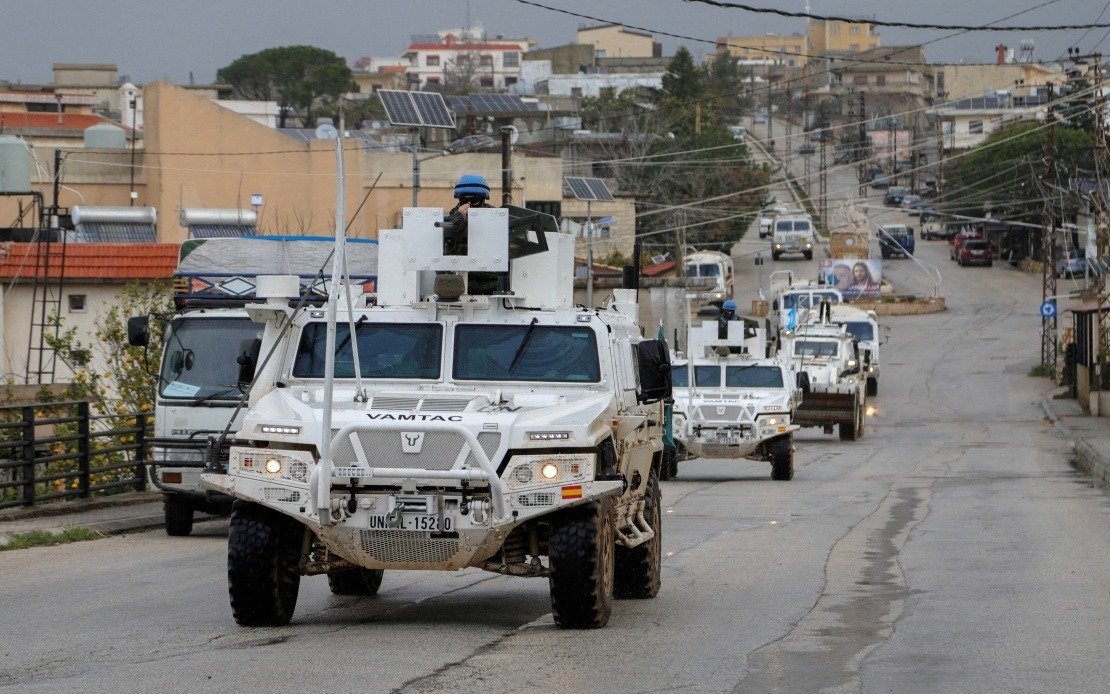
France and Italy are moving to establish an international coalition aimed at stabilising Lebanon following the scheduled withdrawal of the United Nations Interim Force in Lebanon (UNIFIL) by the end of December. French President Emmanuel Macron disclosed the bilateral agreement at a press conference in Antibes while hosting Italian Prime Minister Giorgia Meloni, signalling a coordinated European approach to one of the Middle East's most fragile states.
The initiative reflects serious concern about the consequences of UNIFIL's departure. Under Security Council Resolution 2790, the peacekeeping mission will formally cease operations on December 31, with complete personnel withdrawal scheduled within twelve months thereafter. This timeline creates an immediate governance challenge: how to ensure Lebanon's security infrastructure remains intact and functional once international peacekeepers depart, particularly given the country's history of sectarian tensions and the presence of armed groups.
Macron framed the coalition as essential to reinforcing Lebanese sovereignty and strengthening the nation's armed forces during a critical transition period. The proposal emphasises coordination with both the European Union and the United Nations, suggesting an effort to create a framework that operates with international legitimacy rather than appearing as unilateral intervention. This multilateral approach carries particular weight in a region where external powers face historical suspicion, and where military presence without clear mandates can exacerbate rather than resolve conflicts.
For Malaysian readers and Southeast Asian policymakers observing Middle Eastern affairs, the French-Italian initiative exemplifies how wealthy democracies balance strategic interests with diplomatic constraints. Lebanon's weakness creates a potential power vacuum that regional actors—particularly Iran and its proxies—could exploit. The coalition appears designed to maintain enough international presence and pressure to deter escalation without deploying traditional peacekeeping forces, which have become increasingly controversial globally.
Meloni's contribution to the announcement underscored the security vacuum problem that authorities fear most. She warned that without international engagement, Lebanon faces an "extremely dangerous" period where the absence of external stabilising mechanisms could invite instability or allow non-state actors greater operational freedom. Italy's participation reflects both historical ties to Mediterranean stability and the broader European concern that Middle Eastern crises inevitably generate migration pressures affecting southern European nations.
The coalition concept differs from UNIFIL's traditional peacekeeping mandate. Rather than armed troops stationed along Lebanon's borders, the proposed arrangement likely envisions diplomatic coordination, military training and advisorships, intelligence sharing, and political support for Lebanese institutions. This lighter-footprint approach addresses the reality that traditional peacekeeping missions face mounting criticism for their effectiveness and their substantial financial costs—UNIFIL alone has operated for decades with mixed success in preventing cross-border incidents.
Lebanon's internal challenges complicate any external stabilisation strategy. The nation remains fractured along sectarian lines, with Hezbollah wielding substantial military and political power, the government struggling with legitimacy, and economic collapse creating desperation among civilians. Any multinational coalition must navigate these internal divisions carefully, appearing neutral enough to maintain legitimacy while remaining firm against actors that might use UNIFIL's departure as opportunity for territorial expansion or proxy warfare.
The timing of this announcement carries strategic implications. With UNIFIL's mandate expiring within months, establishing coalition frameworks now allows countries to prepare institutional mechanisms and secure political commitments before the transition occurs. Delay would risk a genuinely chaotic gap period where Lebanese security forces operate without international oversight or support, potentially inviting intervention by other regional powers.
For Southeast Asian nations, this European approach to Middle Eastern stability offers instructive lessons about burden-sharing in crisis management. Like ASEAN states observing South China Sea security challenges, countries involved in the Lebanese coalition must balance legitimate concerns about regional stability against the costs and risks of sustained engagement. The French-Italian model suggests that sustained, coordinated multilateral effort—even without direct military deployment—can maintain diplomatic presence and influence.
The coalition framework also reflects evolving international consensus about peacekeeping's future. Traditional deployed forces increasingly face criticism as ineffective or even counterproductive, yet sudden international disengagement creates vacuums. The post-UNIFIL arrangement proposes a middle path: maintained international commitment and coordination without the expensive, sometimes contentious presence of armed contingents from multiple nations.
Success will depend partly on whether other regional and international actors respect this coalition's mandate. The United States, which maintains military presence throughout the Middle East, will likely coordinate with European efforts. Arab states, particularly Gulf monarchies, face their own calculations about Lebanon's future and may either support or undermine European initiatives depending on how they perceive effects on their own security interests.
For Malaysian observers, the initiative demonstrates how traditional powers respond to withdrawal deadlines in strategic regions. Rather than simply leaving once mandates expire, sophisticated foreign policy involves creating successor frameworks that maintain influence and stabilising effect. Whether the French-Italian coalition ultimately succeeds remains uncertain, but the concept itself represents a measured, internationally-coordinated approach to one of the world's most intractable regional conflicts.

