The quarter-final showdown between France and Morocco on Thursday carries the weight of history that extends far beyond the football pitch. These two nations, separated by the Mediterranean yet bound by over a century of political, economic, and cultural entanglement, meet again in a fixture that encapsulates the complex legacies of colonialism while celebrating the transcendent power of sport. The match, staged in Boston rather than a French or Moroccan city, may paradoxically create space for the genuine affection and mutual recognition that characterises this relationship, stripping away some of the nationalist fervour that typically accompanies such encounters.
Morocco's decades as a French protectorate—from 1912 until independence in 1956—fundamentally shaped the trajectories of both nations. Though formal colonial rule ended over six decades ago, the two countries remain inextricably linked through education networks, business partnerships, and perhaps most visibly, sustained patterns of migration. Countless Moroccans have sought opportunity and built lives in France, establishing communities that maintain linguistic, cultural, and familial connections to their homeland. This phenomenon has created a unique sporting reality: Morocco's national football team now includes players whose very existence as international representatives demonstrates the porousness of borders and identities in the modern world.
The composition of Morocco's World Cup squad reflects this transnational character with striking clarity. Six squad members were born on French soil, having arrived as children of migrant families or been born to Moroccan parents already established in France. Beyond those directly born in France, numerous other players developed their craft in French academies, competed in Ligue 1, or progressed through the French youth system before ultimately choosing to represent Morocco internationally. This pattern is not accidental but rather a carefully cultivated national strategy, whereby Morocco's football federation has systematically connected homegrown development with the talent pool raised across Europe, converting diaspora networks into competitive advantage.
Ayyoub Bouaddi exemplifies this footballing duality perfectly. The teenager was born in France, honed his skills at Lille, and earned recognition through France's youth development system before electing to represent Morocco at senior level. His journey mirrors thousands of similar paths that have created an overlapping identity within North African and European football. These players carry multiple allegiances, linguistic fluencies, and cultural references that their predecessors would have found impossible to navigate. Their presence on the pitch speaks to how thoroughly globalisation has reshaped international sport and national identity itself.
The personal relationships forged between individual players add another dimension to this fixture. Kylian Mbappe and Achraf Hakimi developed a close friendship during their shared time at Paris St Germain, a bond that transcends national boundaries even as they prepare to face each other competitively. Such connections multiply across both squads, creating networks of mutual respect and understanding that may ameliorate the traditional antagonism of international competition. These friendships remind observers that footballers, regardless of which national colours they wear, operate within a genuinely interconnected professional ecosystem where French and Moroccan clubs regularly exchange players and coaching talent.
France arrives at this encounter as the defending world champions, having claimed the 2018 title and possessing the tournament experience, depth of talent, and attacking sophistication expected of a traditional football superpower. Their squad continues to exemplify the multicultural character that has defined French football for decades, with players from diverse ethnic and immigrant backgrounds reflecting the nation's evolving demographic reality. However, France must contend with an opponent that has fundamentally altered the terms of engagement through its own unexpected success.
Morocco's trajectory represents one of world football's most compelling recent narratives. Four years ago, the team became the first African nation ever to reach a World Cup semi-final, capturing imaginations far beyond Morocco itself and demonstrating that traditional hierarchies within the sport could be disrupted through organisation, player development, and collective ambition. That 2022 quarter-final meeting with France, won 2-0 by the eventual runners-up, carried immense emotional charge yet was marked simultaneously by a striking sense of mutual recognition between the teams and their supporters.
The rematch in Boston occurs against a transformed backdrop. Morocco no longer carries the pure underdog narrative of 2022 but rather possesses the credentials and confidence of a genuinely dangerous opponent. Their 3-0 demolition of Canada demonstrated the pace, tactical discipline, and attacking precision that have carried them back to the quarter-finals. The Moroccan federation's investment in player development, coupled with the wealth of European experience within the squad, has created a side capable of challenging the sport's traditional powers on equal terms.
Boston provides a fascinating venue for this encounter precisely because the Moroccan community there, while smaller and less visible than in major French cities, is sufficiently established to create genuine pockets of diaspora presence. Morocco-born residents and their descendants have constructed networks of families, students, professionals, and business operators throughout the metropolitan area. For these communities, the fixture does not necessarily represent a clean division between opposing camps but rather an opportunity to celebrate connection, shared identity, and the beautiful game itself.
Mohammed Saadi, a 57-year-old taxi driver, captures this distinctive atmosphere perfectly. French and Moroccan residents share apartment buildings, patronise the same businesses, and maintain friendships that transcend national loyalty. The quarter-final will be watched communally, with handshakes exchanged at the conclusion regardless of outcome. This Boston reality contrasts sharply with the heavy security presence expected in France, where post-colonial anxieties, immigration debates, and national pride create more fraught conditions for such encounters.
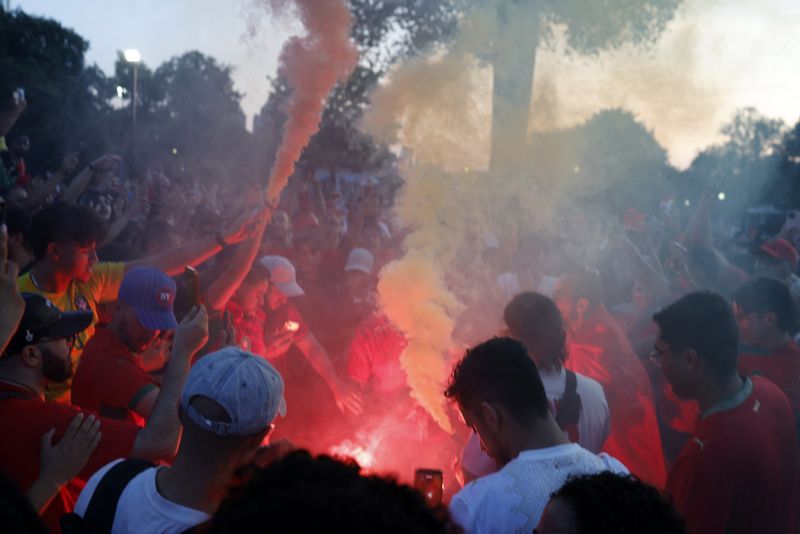
The fan gathering in Boston Common, where over 1,000 supporters assembled to sing Dima l-Maghrib (Always Morocco) and wave flags in peaceful celebration, illustrated the emotional investment that extends far beyond the immediate region. Youssef Bennani, a software engineer who travelled from Finland to attend Morocco's matches, represents a global diaspora of supporters for whom the team embodies something beyond conventional national pride. These supporters have tracked Morocco's journey throughout the tournament, celebrating victories as personal triumphs.
For Malaysian and Southeast Asian observers, this fixture offers instructive lessons about how sport intersects with post-colonial legacies, diaspora networks, and evolving national identities. Many nations in the region carry similar historical legacies and maintain substantial diaspora communities abroad, where second and third-generation descendants must navigate questions of belonging and representation. Morocco's strategic deployment of diaspora talent in sport demonstrates a sophisticated approach to converting global networks into competitive advantage, a model with applicability across multiple contexts and sporting disciplines.
As Thursday's match approaches, the encounter between France and Morocco transcends conventional international football rivalry. It represents a meeting between nations whose histories remain inseparable, whose footballers and supporters are connected through migration, language, family bonds, and genuine friendship, and whose footballing traditions have become thoroughly intermeshed. The Boston setting, with its smaller but established Moroccan community, promises an atmosphere characterised more by familial warmth than nationalist antagonism, allowing the beautiful game to express the complex, interconnected realities of the modern world.

