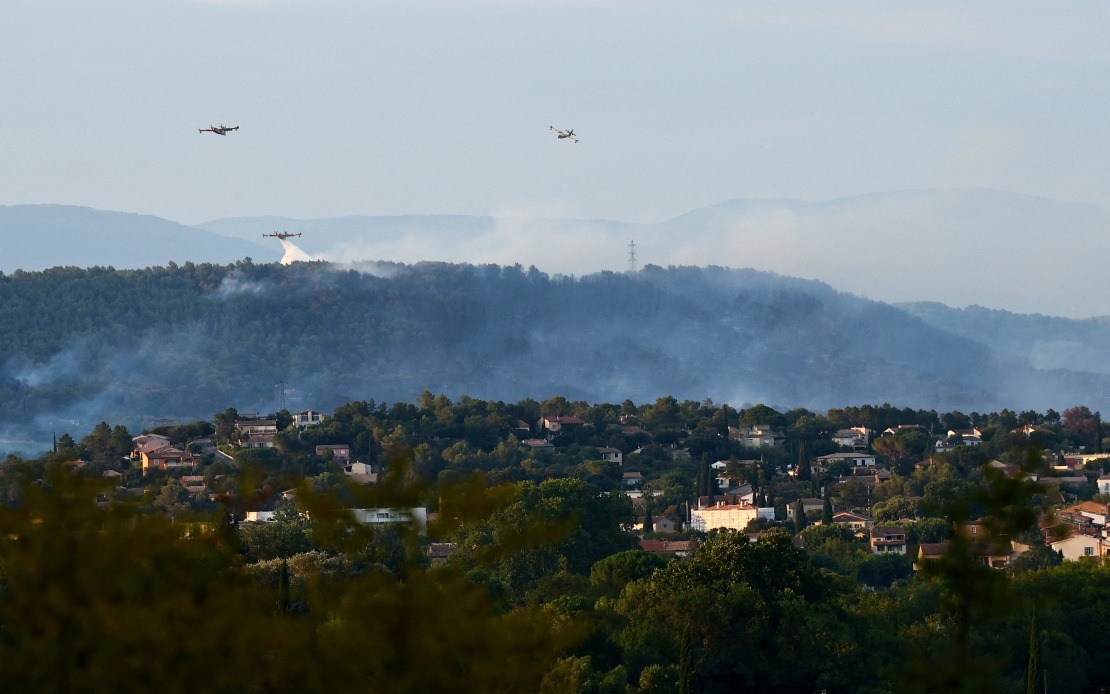
France is grappling with an unprecedented wildfire catastrophe this year, with Interior Minister Laurent Nunez confirming that almost 40,000 hectares of forests and vegetation have burned since January. The scale of destruction represents a dramatic escalation compared to the previous twelve months, signalling a crisis of exceptional severity that has drawn national alarm at the highest levels of government.
The relentless pace of fire outbreaks underscores the acute nature of the challenge facing French authorities. Rather than witnessing isolated incidents, officials are contending with a pattern of continuous ignition as new blazes erupt daily across vulnerable regions. This sustained pattern reflects not merely isolated weather events but rather systemic conditions creating perfect combustion scenarios. The frequency and simultaneity of fires have stretched firefighting resources and coordination mechanisms to their operational limits.
President Emmanuel Macron characterised the situation in mid-July as the most severe wildfire season France has experienced since the conclusion of World War II more than eighty years ago. This historical perspective contextualises the current crisis within France's modern experience, signalling that contemporary climate conditions have created environmental circumstances outside the nation's recent collective memory. The presidential acknowledgement carries significant weight in framing this not as a temporary anomaly but as evidence of potentially enduring climatic shifts affecting European territories.
Extreme temperatures have become the primary driver accelerating the wildfire emergency across French territories. Meteorological measurements have recorded temperatures approaching and frequently exceeding 40 degrees Celsius, with numerous locations experiencing even higher readings. This exceptional heat, persisting across multiple weeks, has desiccated vegetation and soil moisture levels to dangerous thresholds, transforming forests and grasslands into tinderboxes requiring minimal ignition sources to combust explosively.
The geographical extent of the heat crisis became evident through the meteorological service's unprecedented alert system. By late June, authorities had issued weather warnings covering 72 of France's 96 administrative departments. This nationwide distribution of formal cautions represented the highest concentration ever documented, indicating that dangerous heat conditions were not confined to particular regions but rather represented a systemic, country-wide phenomenon affecting diverse climatic zones simultaneously.
For Malaysian and Southeast Asian observers, the French experience carries instructive implications regarding climate volatility and environmental management. Southeast Asia, already vulnerable to monsoon-related extreme weather and periodic drought conditions, faces analogous risks from climate intensification. The French scenario demonstrates how heat waves can rapidly transform managed landscapes into uncontrollable fire zones, relevant to Indonesia, Malaysia, and neighbouring countries where annual haze crises already impose substantial economic and health costs.
The mechanisms triggering France's crisis operate within different geographical and ecological parameters than Southeast Asian contexts, yet the underlying dynamic remains consistent: rising temperatures expanding the window for dangerous fire conditions. Malaysia's experience with transboundary haze originating from Indonesian peatland and agricultural fires illustrates how regional fire emergencies can transcend national boundaries and create multinational environmental crises. The French example emphasises the acceleration potential when climatic conditions shift beyond historical experience.
The economic implications of such massive burnt area extend beyond immediate suppression costs. Forest loss disrupts carbon sequestration capacity, damages timber resources, and compromises biodiversity. French agricultural regions, tourism infrastructure, and rural communities face recovery timelines potentially spanning years. Insurance sectors face unprecedented claim volumes while risk reassessment forces premium adjustments that ripple through broader economies.
Climate scientists identify heat wave intensification as increasingly characteristic of broader warming trends affecting mid-latitude regions. The frequency and intensity of European heat waves have escalated noticeably over recent decades, with multiple concurrent events within single seasons becoming less anomalous. This trajectory suggests France may need to fundamentally revise fire preparedness frameworks, resource allocation, and land management strategies to accommodate climatic baselines substantially different from twentieth-century experience.
For regional policymakers in Southeast Asia, the French precedent underscores urgency in strengthening transboundary cooperation mechanisms and early warning systems. Indonesia's successful reduction in forest fire frequency during certain periods demonstrates that coordinated management and international support can mitigate climate-driven risks. Malaysia's participation in regional haze monitoring and suppression arrangements provides institutional foundation for expanding climate-adaptive frameworks encompassing multiple environmental hazards.
The French government now faces consequential decisions regarding landscape adaptation, fire management protocols, and infrastructure resilience. Urban planning in fire-prone zones, water resource allocation for fire suppression, and vegetation management strategies will require recalibration based on contemporary rather than historical climate parameters. These adjustments demand sustained political commitment and substantial budget reallocation.
The wildfire crisis also intersects with European energy security discussions, as forest loss and agricultural disruption affect biomass availability for renewable energy targets and food security considerations. Supply chain disruptions from French agricultural damage may reverberate through interconnected European markets, affecting commodity pricing and availability regionally.
As global temperatures continue their upward trajectory, France's 2026 wildfire season may represent a preview of normalised summer conditions rather than an exceptional anomaly. This sobering prospect compels reassessment of how nations—whether European, Southeast Asian, or elsewhere—construct resilience frameworks adequate to emerging climatic realities fundamentally altered from historical experience.

