France is actively exploring Syria as a strategic alternative for transporting oil and energy resources, according to Foreign Minister Jean-Noel Barrot, who outlined the proposal during an interview in Berlin on Thursday. The move reflects mounting concerns about the reliability of traditional shipping corridors, particularly the Strait of Hormuz, where escalating tensions between the United States and Iran have created persistent disruption risks to global energy supplies. By developing diversified energy corridors through Syria, France believes it can help stabilize international markets and reduce the geopolitical leverage held by regional powers capable of choking conventional trade routes.
Barrot's comments came during a visit to the German capital and followed a diplomatic mission he accompanied President Emmanuel Macron on to Damascus earlier in the week. The French government has been positioning itself as an advocate for Syria's reintegration into the international community following the overthrow of Bashar al-Assad approximately 18 months ago. This diplomatic engagement represents a significant shift in Western policy toward the country, which faced international isolation under Assad's authoritarian regime. The timing of France's interest in Syrian energy infrastructure suggests that Paris views the country's political transformation as creating genuine opportunities for regional cooperation and economic integration.
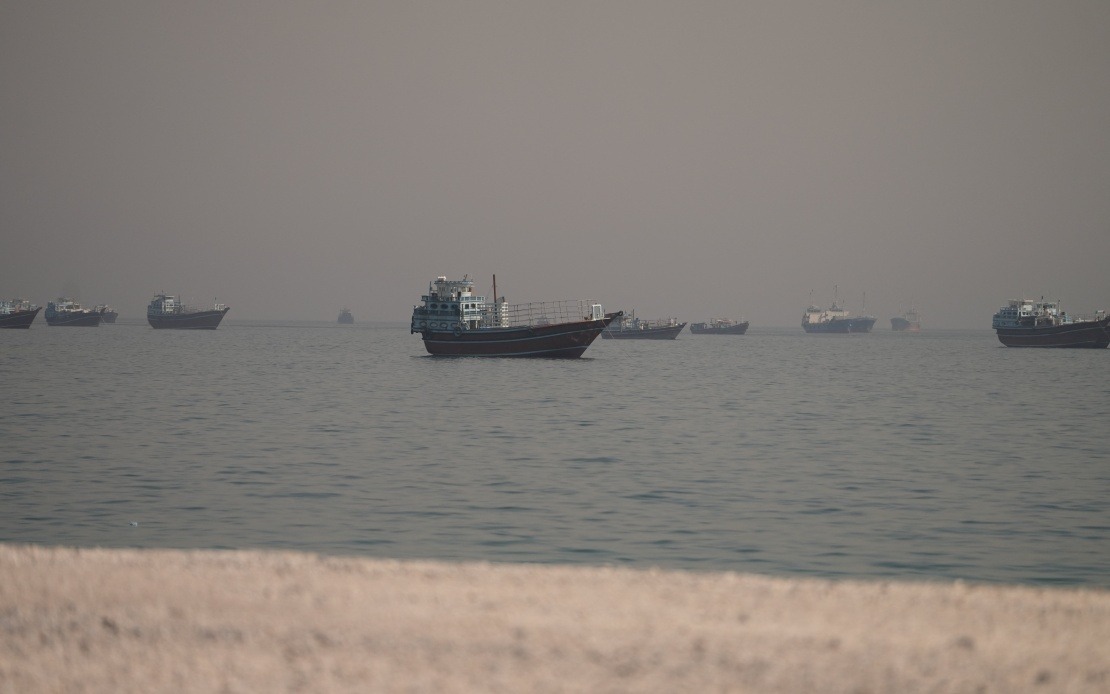
The Strait of Hormuz has long represented a critical chokepoint for global energy security, with roughly one-third of all maritime petroleum trade passing through its narrow waters. Recent frictions between Washington and Tehran have heightened concerns among European powers that disruptions could escalate, potentially triggering supply shocks and price volatility that would reverberate through developed and developing economies alike. Southeast Asian nations including Malaysia, which relies substantially on Middle Eastern oil imports, face particular vulnerability to such instability. By establishing alternative transit routes through the Levantine region, European powers like France could theoretically reduce the strategic importance of the Hormuz passage and create competing pathways that enhance overall supply security.
Syria's geographic position offers distinct advantages for such a strategy. Located at the crossroads between energy-producing regions and European markets, the country could serve as a transit hub for oil pipelines and maritime routes that bypass conventional chokepoints. Barrot emphasized that Syria, which is "now reunifying and strengthening," possesses the potential to evolve into a significant regional economic center. This characterization reflects optimism among some Western observers that post-Assad Syria could gradually normalize relations with international institutions and become a more predictable partner for energy cooperation.
However, transforming this vision into concrete infrastructure requires substantial investment and political stability. Syria's recovery remains in early stages, with ongoing reconstruction needs and questions about governance structures. The country faces significant technical and financial barriers to developing modern energy infrastructure, including pipeline systems and port facilities capable of handling large-scale petroleum shipments. France's willingness to engage economically with Damascus suggests Paris may be prepared to contribute technical expertise and investment toward realizing these objectives, though such commitments would likely depend on demonstrable progress toward inclusive governance and adherence to international norms.
Barrot's statements also signaled France's broader commitment to deepening ties with the newly reconfigured Syrian state. During the Damascus visit, Macron reaffirmed France's support for a unified and sovereign Syria, language that reflected attempts to position Paris as a reliable partner willing to invest in Syria's rehabilitation. This diplomatic positioning carries implications for France's regional standing and its ability to influence outcomes in the Eastern Mediterranean and Levantine spheres. For French policymakers, early engagement with post-Assad Syria offers potential advantages in shaping the country's development trajectory and securing French commercial interests as reconstruction accelerates.
The proposed energy corridor concept extends beyond oil to encompass broader economic and trade cooperation. Barrot indicated that France seeks to expand collaboration with Damascus across multiple sectors, reflecting recognition that durable geopolitical influence typically rests on diversified economic relationships rather than single-sector dependencies. This multifaceted approach could include investments in infrastructure, technical training, and institutional capacity-building that would assist Syria's reintegration into global markets. Such engagement might also provide France with soft power advantages in a region where competing international actors including Russia, China, and various Gulf states maintain significant interests.
For Southeast Asia, France's strategic pivot toward Syria carries indirect implications. The region's heavy dependence on Hormuz transit means that any successful diversification of Middle Eastern energy exports through alternative corridors would benefit economies across Asia by reducing supply concentration and dampening price volatility. Malaysia, as both an energy consumer and a major maritime trader, has vested interests in maintaining multiple viable trade routes. Greater European investment in Syrian energy infrastructure could theoretically create additional options for Asian importers, though such benefits would materialize only if the infrastructure achieves operational maturity and political conditions stabilize sufficiently to guarantee reliable transit.
The broader geopolitical context reveals tensions between European and broader Western strategic interests. While the United States has maintained economic sanctions against Syria under various justifications, France appears willing to move beyond such restrictions and engage economically with Damascus. This divergence reflects European calculations that constructive engagement and economic interdependence offer more effective paths toward stability than isolation and sanctions regimes. Whether this approach ultimately succeeds depends partly on factors beyond France's control, including developments in Syrian internal politics and regional dynamics involving Turkey, Israel, and Gulf states.
Barrot's remarks also highlight growing recognition among policymakers that energy security requires strategic thinking beyond immediate market dynamics. The concentration of crude supplies in politically volatile regions creates systemic risks that advanced economies seek to mitigate through infrastructure diversification and alternative partnerships. Syria's emergence as a potential energy transit hub reflects this broader imperative, though significant obstacles remain before such plans could be implemented at meaningful scale. For Malaysian observers, the French initiative underscores the importance of international efforts to stabilize energy supplies and reduce the leverage that regional conflicts or blockades can exert on global markets.

