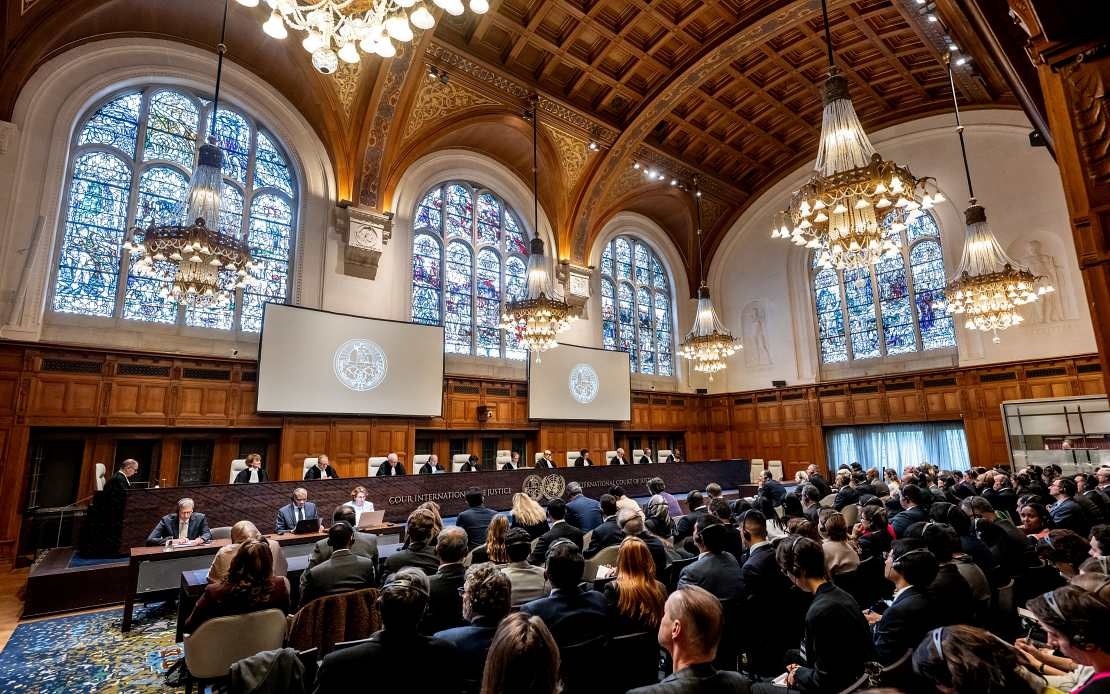
France has doubled down on its backing for the International Criminal Court, making clear that Paris will not be swayed by mounting American pressure against the institution. Speaking through Foreign Ministry spokesman Pascal Confavreux on Thursday, the French government rejected characterisations by the United States that the ICC represents a threat to national sovereignty or state independence. The statement underscores a deepening diplomatic divide between Washington and European allies over the role and legitimacy of the world's premier international judicial body.
Confavreux articulated France's core position: that the ICC prosecutes individuals, not governments, and therefore poses no inherent threat to the state authority that Washington claims to fear. By targeting alleged perpetrators of genocide, war crimes and crimes against humanity rather than state institutions, the court operates within a mandate that respects national governance structures even as it holds individuals accountable for the gravest offences. This distinction has become increasingly important as the US escalates its campaign against the tribunal, seeking to undermine its reach and influence across the international system.
The French position also encompasses a broader philosophical commitment to international justice mechanisms. Confavreux explicitly reaffirmed France's support for the ICC's institutional resilience and its central mission to combat impunity for the world's most egregious crimes. This framing positions France not merely as a passive supporter but as an active defender of multilateral institutions that many democracies regard as essential to maintaining rules-based international order. For France and other European nations that have long championed international law, the ICC represents a cornerstone of their foreign policy vision.
A significant dimension of France's statement addresses physical and political threats directed against ICC personnel and officials. Confavreux characterised attacks on court staff as unacceptable, signalling awareness that the institution faces mounting hostility not only from the US government but potentially from other quarters seeking to obstruct its work. This concern reflects genuine risks to judicial independence when powerful states mobilise against an international body. The implicit message is that France recognises the ICC's vulnerability and intends to support its institutional security.
The French reaffirmation arrives directly in response to escalating American opposition led by US Secretary of State Marco Rubio. Rubio has publicly declared that the ICC threatens American sovereignty and announced that Washington would actively encourage other nations to withdraw from the court's jurisdiction. This represents a marked intensification of long-standing US scepticism toward the tribunal. The State Department has already launched a formal initiative designed to circumscribe what American officials view as the court's overreach into spheres they consider matters of national prerogative.
The ICC's institutional history provides crucial context for understanding the current dispute. Established in 2002 and headquartered in The Hague, the court was created precisely to address the legal vacuum left by the inability or unwillingness of individual states to prosecute individuals responsible for the gravest international crimes. Its mandate encompasses genocide, war crimes, crimes against humanity and the crime of aggression. Over two decades, the court has attempted to function as a forum of last resort when national justice systems prove inadequate or compromised.
A paradox underlies the current tensions: the United States, despite its self-presentation as a champion of democracy and international order, has never joined the ICC. American non-membership reflects historical concerns about surrendering any dimension of judicial sovereignty and exposing American citizens, particularly military personnel, to international prosecution. This outsider status shapes Washington's posture toward the institution. The US simultaneously insists it should not be bound by the court's jurisdiction while working to constrain the court's authority over others.
France's position as an ICC member states stands in sharp contrast to American reluctance. By explicitly reaffirming support, Paris signals solidarity with the broader coalition of democracies and developing nations that view the court as an indispensable component of international governance. European backing for the ICC has remained relatively consistent despite various controversies surrounding specific investigations or warrants issued by the court's prosecutor. This consistency matters diplomatically, as it demonstrates that Washington cannot easily fracture the coalition supporting the institution.
The practical implications of American efforts to undermine the ICC extend across Southeast Asia and the broader Global South. If Washington succeeds in convincing other nations to withdraw from the Rome Statute that established the court, the institution's legitimacy and reach would diminish substantially. For developing nations particularly vulnerable to internal conflict or state fragility, the ICC represents a potential avenue for accountability when domestic institutions fail. Conversely, powerful states fearful of prosecution campaigns have strong incentives to weaken the court, creating a fundamental tension between powerful and weaker nations over international justice architecture.
France's statement also reflects European anxiety about American unilateralism under the current administration. The French government appears determined to maintain institutional support for multilateral frameworks even as Washington withdraws from or attacks them. By explicitly rejecting American claims about sovereignty threats, Paris essentially denies the premise that underpins the US campaign. From the French perspective, national sovereignty and international justice mechanisms are compatible rather than contradictory, a view that resonates with many European and developing nation capitals.
Looking ahead, the battle over the ICC's future will likely intensify. The American campaign represents one of the most serious challenges to the institution's legitimacy since its inception. France and allied nations must decide how robustly to resist American pressure and whether to strengthen the ICC's institutional capacities and political support. The outcome will shape global governance structures and the prospects for accountability in future conflicts. For Malaysia and other Southeast Asian nations, these developments carry implications for how international justice mechanisms might address regional disputes or internal atrocities.

