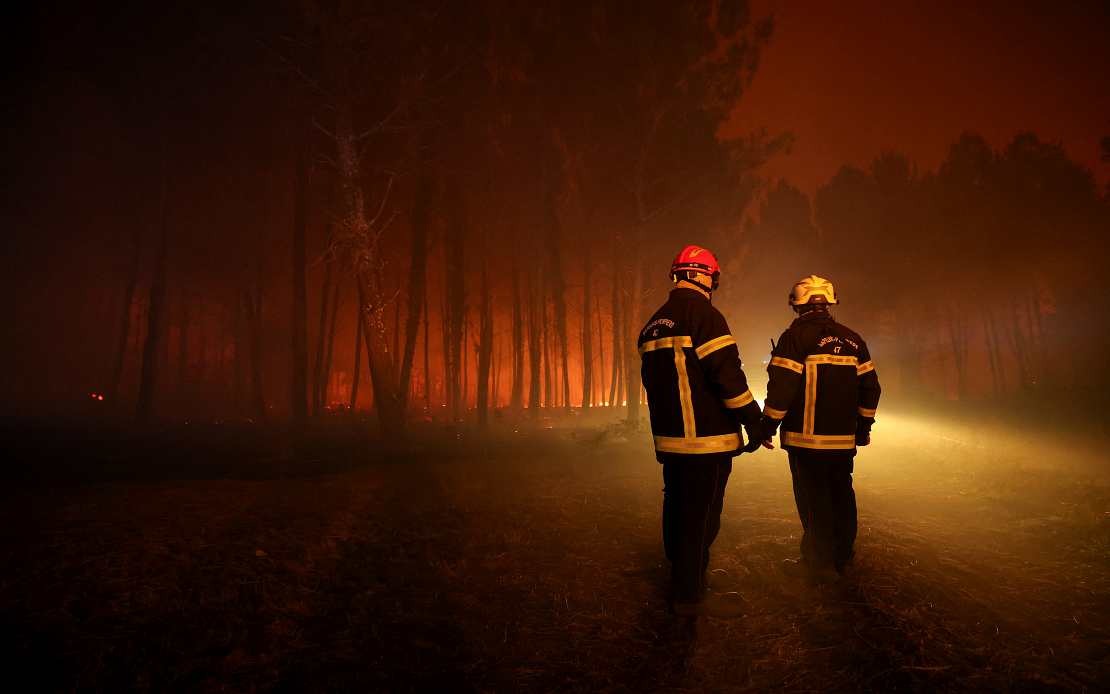
A 15-year-old boy faced formal charges in a French court on Thursday over a catastrophic fire near Bordeaux airport that claimed the lives of two firefighters last month. The teenager was presented before a judge, formally charged with his alleged role in the Merignac incident, and subsequently remanded to a closed educational centre pending further proceedings. His arrest and appearance mark the culmination of an intensive investigation that has centred on determining how the fire began and establishing criminal responsibility for the deaths.
The adolescent and his 22-year-old brother had both been detained for questioning following the incident. However, the older brother was released Wednesday after the teenager assumed full responsibility for initiating the blaze, effectively eliminating suspicion against the adult sibling. This development significantly narrowed the investigation's focus and allowed authorities to proceed with formal charges against the younger of the two.
According to French media reports, the fire is believed to have been sparked by a discarded cigarette butt. The two brothers had stopped in the Merignac area and were smoking when circumstances escalated dramatically. While the older brother properly extinguished his cigarette in the parking lot, the 15-year-old allegedly tossed his cigarette stub onto nearby grass, where it ignited dried vegetation and triggered a rapidly spreading fire.
The consequences of this negligent action proved devastating. On July 21, two firefighters lost their lives while responding to and battling a structural fire that erupted from the grass fire. Their emergency vehicle became engulfed and trapped by the advancing flames, leaving them unable to escape. The incident represents one of the more tragic outcomes in recent French firefighting operations and underscores the genuine dangers that emergency responders face even during seemingly routine callouts.
The Bordeaux prosecutor's office launched a comprehensive investigation immediately following the deaths. Authorities worked systematically to establish the fire's origins, trace the sequence of events, and identify those responsible. The investigation progressed from initial questioning of both brothers through to formal charges against the teenager, demonstrating how thorough forensic analysis and witness testimony can reconstruct the chain of causation in such emergencies.
For Malaysia and other Southeast Asian nations, this case carries important implications regarding public awareness of fire safety. Many countries across the region experience significantly higher wildfire risks due to tropical climates and seasonal dry conditions. Careless disposal of smoking materials remains a leading cause of uncontrolled fires in both urban and rural environments. The tragedy in Merignac illustrates how individual negligence, even by a teenager who may not fully appreciate the consequences, can escalate catastrophically and claim professional lives.
The incident also raises questions about youth responsibility and accountability in judicial systems. At 15 years old, the defendant sits at an age where culpability and sentencing considerations differ markedly from adult proceedings in most Western legal systems. French law provides for juvenile justice frameworks that balance accountability with rehabilitation, a tension that will likely feature prominently in how authorities proceed with this case.
Moreover, the incident underscores the persistent hazards faced by firefighting personnel across all nations. Emergency responders routinely enter dangerous situations with incomplete information about how fires will behave or spread. Vehicle entrapment during fire operations represents one of the most catastrophic scenarios in firefighting, where rapid fire advancement and changing wind conditions can isolate and overwhelm response teams. The deaths of these two professionals serve as a sobering reminder of occupational risks that societies often take for granted.
The closure of the older brother's involvement should not obscure the broader investigative work completed by French authorities. Establishing that the teenager bore primary responsibility required careful examination of the scene, analysis of how the fire propagated, and reconstruction of the brothers' movements and actions. This methodical approach mirrors investigations conducted by fire services and law enforcement agencies throughout Europe and beyond.
As proceedings against the 15-year-old continue through the French judicial system, the case will likely generate considerable discussion about youth education regarding fire safety, the legal consequences of negligent acts that result in death, and the systemic vulnerabilities that can transform minor infractions into catastrophic outcomes. Educational initiatives across Europe and Southeast Asia increasingly emphasise that seemingly trivial decisions—such as how one disposes of a cigarette—carry potential for grave consequences that extend far beyond the individual.

