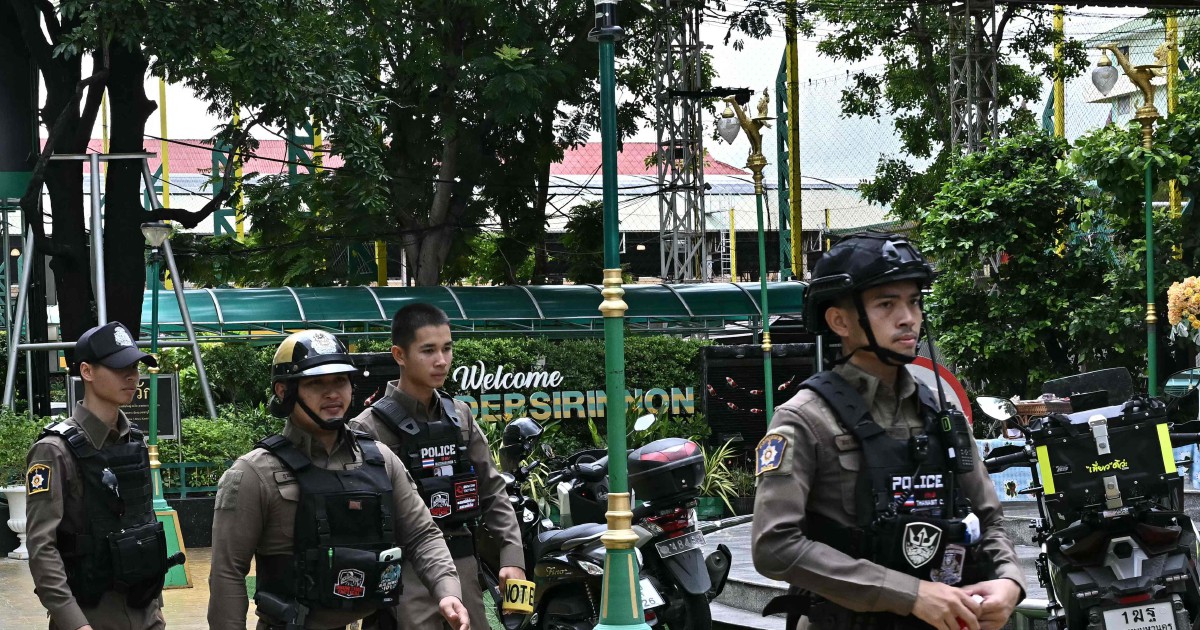
Thai law enforcement agencies have been holding a minimum of eleven French nationals in custody since the beginning of the summer season following their arrest on drug trafficking charges, according to details disclosed to the French news agency AFP by a police representative on Tuesday. The detainees were apprehended with multiple kilograms of cannabis discovered amongst their luggage, indicating what investigators believe may be a coordinated smuggling operation.
The pattern of arrests points to a troubling phenomenon affecting Southeast Asia's tourism industry: the weaponisation of travel packages as vehicles for illicit substance transportation. Rather than representing independent criminal actions, the convergence of arrests involving French citizens suggests the involvement of organised networks that exploit the promise of cut-price holidays to recruit unsuspecting participants willing to carry contraband across international borders.
Thailand has consistently maintained a stringent approach toward narcotics enforcement, with legislation that imposes severe penalties for possession with intent to distribute. The kingdom's drug laws carry sentences ranging from extended imprisonment to capital punishment in cases involving trafficking of large quantities. For European nationals unaccustomed to Thailand's legal severity, the consequences of drug involvement represent an exponential escalation from penalties typical in their home jurisdictions.
The timing of these arrests—concentrated during the summer travel season—reflects when tourism volumes reach their zenith across Thailand and broader Southeast Asia. During these months, airports and border checkpoints process exponentially higher passenger volumes, potentially creating operational blind spots that sophisticated smuggling networks exploit. The pattern of French nationals specifically being targeted suggests these criminal groups have refined methodologies for identifying and recruiting individuals from particular European countries.
For Malaysian readers and Southeast Asian communities, this development carries significant implications. The region's interconnected travel networks mean that drug trafficking operations rarely remain confined to single jurisdictions. Smugglers apprehended in Thailand frequently have established distribution connections throughout Malaysia, Singapore, and other neighbouring territories. The infrastructure that moves contraband across land borders and maritime routes represents a shared security challenge requiring coordinated regional response.
Investigators examining these cases likely focus on identifying the organisers operating behind the recruitment phase. The mechanics of such schemes typically involve local operatives identifying vulnerable targets through online platforms, offering dramatically discounted travel packages that obscure the true agenda. Participants often remain unaware of what they are transporting until confronted by customs officials, a deliberate insulation strategy that shields higher-level organisers from direct complicity charges.
The French government's engagement with these arrests reflects broader European concerns about citizen welfare abroad. Diplomatic channels between Paris and Bangkok will likely intensify as authorities work toward securing fair legal treatment and, potentially, repatriation options for detained nationals. Such cases frequently become flashpoints in bilateral relations, particularly when sentencing decisions approach maximum severity.
Thailand's position as a major tourist destination creates inherent tension between revenue generation and law enforcement obligations. The country welcomes millions of international visitors annually, yet maintains among Asia's most uncompromising drug enforcement policies. This dichotomy means that casual tourists risk catastrophic legal consequences from actions that might incur administrative penalties elsewhere. The messaging around these risks, however, often fails to penetrate travel marketing materials that emphasise leisure and affordability.
For Southeast Asian nations, the implications extend beyond immediate law enforcement concerns. The emergence of organised networks specifically targeting Europeans for drug smuggling indicates the sophistication and adaptability of transnational criminal enterprises. These groups constantly refine recruitment methodologies, exploit regulatory gaps, and identify new trafficking corridors. Malaysia and other regional economies must remain vigilant against similar recruitment schemes operating within their own borders and airports.
The broader context involves understanding how illicit drug markets have evolved across the Asia-Pacific region. Demand in European markets drives supply chains that extend through Thailand and neighbouring states. The human trafficking element—using tourists as unwitting couriers—represents a particularly exploitative variant that compounds the violence and destabilisation associated with drug trafficking generally.
These arrests serve as a cautionary reminder of the intersection between tourism vulnerability and criminal opportunity. Individuals attracted by offers dramatically below market rates for holidays warrant heightened scrutiny regarding the actual terms and conditions of such arrangements. The consequences of involvement, however peripheral, with drug trafficking in Thailand extend far beyond temporary inconvenience or financial loss.
Regional cooperation mechanisms, including intelligence sharing between Thai, Malaysian, and other Southeast Asian police forces, remain essential for dismantling networks operating across multiple jurisdictions. Understanding the recruitment, transportation, and distribution phases of these operations allows authorities to intervene at vulnerability points where organised structures depend on coordination between geographically dispersed actors.
As tourism in Southeast Asia continues expanding, protecting both visitors and communities from exploitation by criminal networks represents an increasingly critical challenge. The detention of eleven French nationals crystallises the human costs of drug trafficking operations and the necessity for sustained, collaborative enforcement across borders and between nations.

