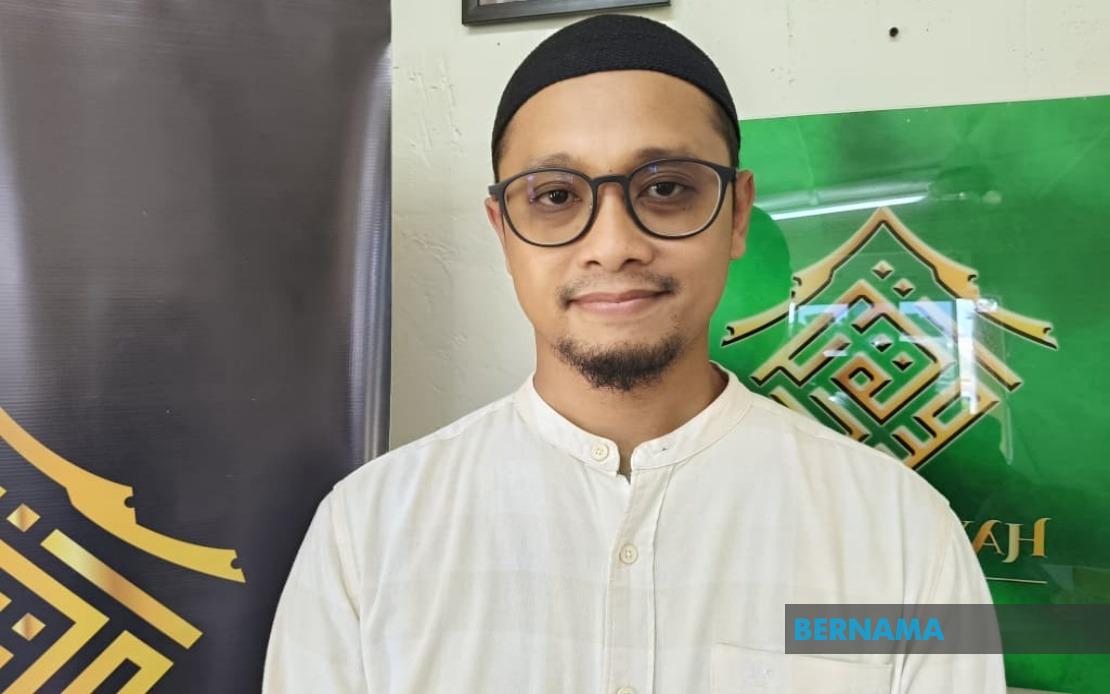
Mohd Rasli Hassan's journey from addiction to professional recovery coaching represents a significant personal transformation that underscores the potential for rehabilitation when support systems and opportunity converge. The 52-year-old Kelantan native, whose battle with substance abuse began when he was merely 11 years old, has emerged from decades of struggle to now work as a rehabilitation coach at Rumah Rakan Islah in Setiu, Terengganu. His accomplishment came after successfully completing the Academy in Industry (ADI) programme, earning him a Professional Diploma in Drug Addiction Recovery Coaching—a milestone that carries profound implications for how Malaysia approaches drug rehabilitation and social reintegration.
Mohd Rasli's early descent into drug abuse went undetected by his family for years until police intervention at age 19 forced the issue into the open. He subsequently underwent formal treatment at the Kuala Terengganu National Anti-Drug Agency (AADK) facility, where a seven-month intensive programme provided the initial foundation for his recovery. Rather than vanishing into the shadows as many former addicts do, he remained engaged with rehabilitation services, serving as a peer support counsellor at Rumah Rakan Islah from 2017 onwards. This seven-year period of consistent engagement with the centre created the conditions for his subsequent professional development, demonstrating that sustained involvement in recovery ecosystems opens pathways not readily available to those who isolate themselves post-treatment.
The ADI programme itself represents an innovative approach to vocational rehabilitation in Malaysia's drug recovery sector. Conducted through a collaboration between Rumah Rakan Islah and the Malaysia Productivity Corporation (MPC), the one-year curriculum integrates practical industry skills with psychological and therapeutic training. Unlike traditional rehabilitation programmes focused solely on abstinence and basic counselling, the ADI initiative equips participants with concrete employment-ready competencies while simultaneously rebuilding their self-confidence and reshaping their psychological relationship with their future. For Mohd Rasli, the programme provided not only technical knowledge in agriculture and other practical domains but also validated his lived experience as a recovery asset rather than merely a liability.
According to Muhammad Anas Mohd Nasar, the academic director and manager of Rumah Rakan Islah, participant selection for the ADI programme follows rigorous criteria designed to maximise success. Candidates must demonstrate a minimum of five years continuous sobriety, commit to active participation in both classroom and vocational training modules, and demonstrate genuine motivation toward employment. These standards ensure that participants possess sufficient psychological stability and motivation to benefit from advanced training. The centre has seen 10 participants successfully complete the programme to date, with each receiving a diploma upon meeting assessment requirements across six structured modules covering rehabilitation methodologies, therapeutic approaches, and industry-specific skills.
What distinguishes the ADI framework is its deliberate systematisation of recovery principles previously embedded in informal practice. Rumah Rakan Islah had long incorporated agricultural training and various therapeutic interventions into its daily operations, but these existed largely as experiential knowledge rather than documented curriculum. The ADI programme formalised this accumulated wisdom into a structured syllabus with clear learning outcomes, assessment criteria, and competency frameworks. This transition from implicit to explicit knowledge transforms what was essentially institutional practice into transferable professional expertise. Participants not only learn from direct experience but do so within a pedagogical structure that clarifies principles and accelerates skill acquisition.
For Mohd Rasli personally, this formal recognition carries symbolic weight beyond the diploma itself. After beginning drug use at age 11 in Pasir Mas and suffering nearly three decades of addiction and its consequences, he now holds credentials that position him as a knowledge practitioner within the rehabilitation field. His role as a rehabilitation coach represents genuine professional status—not charitable employment or token inclusion, but genuine expertise born from both personal lived experience and formal technical training. This transformation addresses a persistent gap in Malaysia's rehabilitation workforce, as few recovery coaches bring authentic addict-to-professional trajectories that lend credibility with current patients struggling through similar journeys.
The ADI programme's emphasis on agricultural training and practical skills reflects a deeper understanding of what successful reintegration requires. Substance abuse thrives in conditions of idleness, hopelessness, and economic dependency. By coupling psychological recovery with genuine employment skills, the programme addresses the material foundations of relapse risk. Participants emerge not only with psychological insights about their addiction but with capabilities applicable to genuinely available employment sectors. For a region like Terengganu with agrarian heritage, agricultural training carries particular relevance in creating pathways toward sustainable self-sufficiency rather than artificial make-work placements.
The collaboration between Rumah Rakan Islah and institutions including the Malaysian Substance Abuse Council (MASAC), Universiti Sains Islam Malaysia (USIM), and Universiti Putra Malaysia (UPM) signals institutional recognition that drug rehabilitation operates as a legitimate field of academic and professional inquiry. By partnering with universities and national research bodies, the centre positions itself within broader ecosystems of knowledge production rather than remaining isolated as a service provider. This integration enhances both research capacity—allowing systematic study of what rehabilitation approaches prove most effective—and professional credibility through association with recognized academic institutions.
Mohd Rasli's narrative carries particular resonance across Southeast Asia, where drug abuse remains a persistent policy challenge and rehabilitation infrastructure remains fragmented. Malaysia's experience, particularly in centres like Rumah Rakan Islah, demonstrates that recovery constitutes a viable long-term outcome rather than merely temporary abstinence. The progression from decades-long addiction through formal treatment to ultimately working within rehabilitation systems shows that individuals who might otherwise remain economically and socially marginalised can become productive contributors when provided appropriate combination of treatment, skills development, and structured pathway toward employment. This reframes addiction not as permanent disqualification from meaningful economic and social participation but as a reversible condition amenable to comprehensive intervention.
The implications for Malaysian policy extend beyond individual rehabilitation outcomes toward systemic capacity-building. By developing frameworks that convert peer experience into professional credentials, Malaysia builds its rehabilitation workforce from internal capacity rather than depending solely on external expertise. Recovering addicts like Mohd Rasli who transition into professional roles model recovery possibilities that motivate current patients while simultaneously addressing chronic staffing challenges in rehabilitation centres. The ADI model, if scaled beyond Rumah Rakan Islah, could transform how the nation thinks about workforce development in the social services sector more broadly, particularly in domains serving vulnerable populations.
Looking forward, the challenge lies in replicating and scaling the ADI model while maintaining its focus on meaningful skill development and genuine employment placement. Without strong linkages to actual employment opportunities in agriculture, hospitality, manufacturing, or other sectors, the programme risks becoming another credentialing exercise disconnected from economic reality. Equally important is ensuring that graduates like Mohd Rasli receive ongoing professional development, peer support systems, and career advancement pathways rather than remaining static in entry-level positions. The durability of recovery gains partly depends on continued forward momentum and social integration beyond the point of initial treatment completion.

