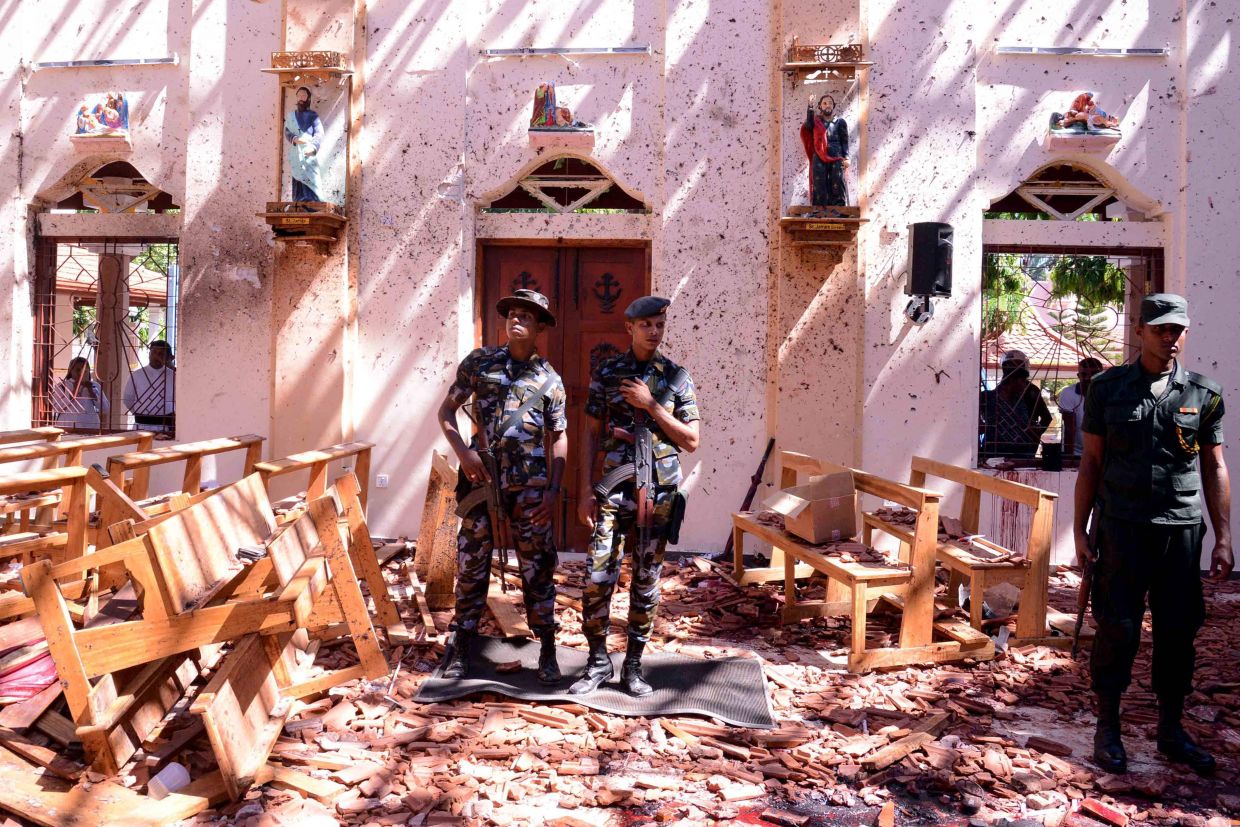
In a stunning reversal that reads like a spy thriller, Sri Lanka has arrested Suresh Sallay, a retired major general and counterterrorism specialist who once addressed the Pentagon and the United Nations on combating extremism. Sallay was apprehended in February under anti-terrorism laws and now faces accusations that he masterminded the deadliest attack on civilians in Sri Lankan history. The government claims the former spy chief "strategically directed" the Easter bombings of April 21, 2019, which claimed 279 lives and injured more than 500 others. Despite these grave allegations, Sallay has not been formally charged and maintains his innocence, with court proceedings continuing as recently as July 2024.
The shift in official narratives surrounding the 2019 Easter bombings reflects the murky and contested nature of Sri Lanka's security landscape. Initially, authorities attributed the coordinated attacks on three luxury hotels and three churches to seven Sunni Muslim suicide bombers inspired by the Islamic State group. The death toll included 45 foreigners—tourists and business visitors from Australia, Britain, China, Denmark, the Netherlands, Japan, and the United States—making it a significant international incident. However, as investigators delved deeper, they uncovered a far more complicated picture involving potential deep state actors, allegations of deliberate intelligence failures, and suggestions that powerful political figures may have permitted or even orchestrated the attacks to advance their own agendas.
Public Security Minister Ananda Wijepala made the startling accusation in parliament in June, identifying Sallay as the "mastermind" who "conspired with and strategically directed Islamic extremists until they carried out the attacks." According to Wijepala's claims, Sallay met with Muslim men just three weeks before the bombings to gather intelligence on target locations. These allegations gained traction after government inquiries exposed connections between the bombers and at least two state intelligence agencies. Such discoveries fuelled speculation that the attacks were not merely a failure of intelligence systems, but rather the result of deliberate operational planning at the highest levels of the security establishment.
The suspicions surrounding Sallay's role must be understood within the broader context of Sri Lanka's political landscape and the dominance of the Rajapaksa family. Critics argue that the attack was deliberately facilitated to create a security crisis that would propel Gotabaya Rajapaksa to power on a strongman platform promising to crush Islamist extremism. Channel 4's 2023 investigation presented allegations from a whistleblower suggesting that the bombing was permitted to benefit Rajapaksa's 2019 presidential campaign. Investigators have told the court that the alleged conspiracy aimed to generate chaos and instability, positioning Rajapaksa as the decisive leader capable of restoring order—much as he had claimed to do against Tamil separatists during the 1983-2009 civil war.
This theory connects to a troubling historical precedent in Sri Lanka's counterinsurgency operations. Rajapaksa administrations have acknowledged that the state previously funded jihadist networks to gather intelligence on Tamil rebels during the civil war, a practice that blurred the lines between asset management and enabling extremism. The defence establishments' claim is that these militants subsequently betrayed their handlers and independently executed the Easter attacks. However, the pattern of state involvement with militant groups, combined with the convenient timing of the bombings relative to the presidential election, has prompted serious questions about institutional accountability and the vulnerability of Sri Lankan society to manipulation by its own security apparatus.
Sallay's background and career trajectory reveal a figure of considerable sophistication and international standing. A Muslim with a Buddhist spouse—his Catholic mother has even appealed to Pope Francis for his release—Sallay embodied the religious pluralism that characterises modern Sri Lanka, where Buddhists comprise nearly 70 per cent of the 22 million population, with Hindus at 12 per cent, Sunni Muslims at 10 per cent, and Christians at seven per cent. His professional credentials were impeccable: he served in Sri Lanka's diplomatic missions in France and Malaysia, completed studies at New Delhi's prestigious National Defence College, attended India's Madras University, and obtained qualifications from the University of Bradford in the United Kingdom. These international connections and academic achievements made him a figure of considerable credibility within both regional and global security circles.
Prior to his arrest, Sallay had cultivated a reputation as a leading voice on counterterrorism and the dangers posed by digital radicalisation. The Colombo Institute of National Security Studies, a defence ministry–linked think tank, records that he delivered a 2003 address to the Pentagon titled "Suicide Terrorism and its Impact," establishing his credentials as an expert on militant tactics and ideology. As recently as 2023, Sallay spoke at the United Nations headquarters, warning that terrorism represented "one of the greatest challenges" to international security and specifically highlighting how "social media and digital platforms" had amplified radicalisation and extremism. His UN remarks on the "horrific acts of violence that affect innocent lives and communities" carry a tragic irony given the accusations now levelled against him.
Sallay's rise within Sri Lanka's security apparatus accelerated following the Rajapaksa family's return to power. After Gotabaya Rajapaksa's 2019 election victory, Sallay was appointed to lead the State Intelligence Service, becoming the first military officer to hold this traditionally civilian position. This elevation reflected his perceived loyalty to the Rajapaksa political project and his reputation for effectiveness in counterterrorism operations. Yet this same appointment may have positioned him as a convenient scapegoat once the Rajapaksas' political fortunes reversed. The family's grip on power fractured following Sri Lanka's devastating 2022 economic crisis, which forced the resignation of Gotabaya Rajapaksa and fundamentally altered the island's political dynamics.
During his tenure at the intelligence agency, Sallay authorised the arrest of Hejaaz Hizbullah, a prominent Muslim human rights lawyer, in 2020. Hizbullah was accused of being an "mastermind" of the Easter bombings, charges that proved entirely baseless. After 22 months in detention, authorities released Hizbullah without producing credible evidence to support the accusations. This earlier episode raises critical questions about the reliability of security establishment claims and the potential weaponisation of counterterrorism laws against political opponents and minorities. The pattern—arrest without substantive evidence, prolonged detention, eventual release—suggests a system in which security allegations can be deployed strategically without robust accountability mechanisms.
The current investigation into Sallay's alleged involvement represents a curious reversal of fortune within Sri Lanka's elite security circles. What began as an inquiry into militant networks has evolved into an examination of state institutions themselves. The case underscores the fundamental instability of Sri Lankan politics, where intelligence agencies and security apparatus have become instruments of inter-elite competition rather than protectors of national security. For Malaysia and other Southeast Asian nations observing these developments, the Sri Lankan experience offers sobering lessons about the risks posed by concentrated executive power, the militarisation of intelligence services, and the absence of robust institutional checks on security operations. The allegations against Sallay—whether ultimately proven true or false—expose the vulnerability of democratic institutions when security and political power become dangerously intertwined.
As Sallay awaits his next court hearing, Sri Lanka remains trapped within a cycle of contestation over the fundamental facts of the 2019 bombings. The government's current allegations contradict its own earlier public narrative, fuelling suspicions that political interests rather than evidentiary concerns drive the investigation. International observers, particularly those in neighbouring countries with similar challenges balancing security imperatives against democratic accountability, are watching closely. The case will likely determine not only Sallay's personal fate but also the broader trajectory of post-Rajapaksa Sri Lanka's willingness to conduct genuine institutional reform. Without credible answers to questions about the Easter bombings' origins and the state's role in them, Sri Lanka risks remaining a nation divided between competing and irreconcilable versions of its own recent history.

