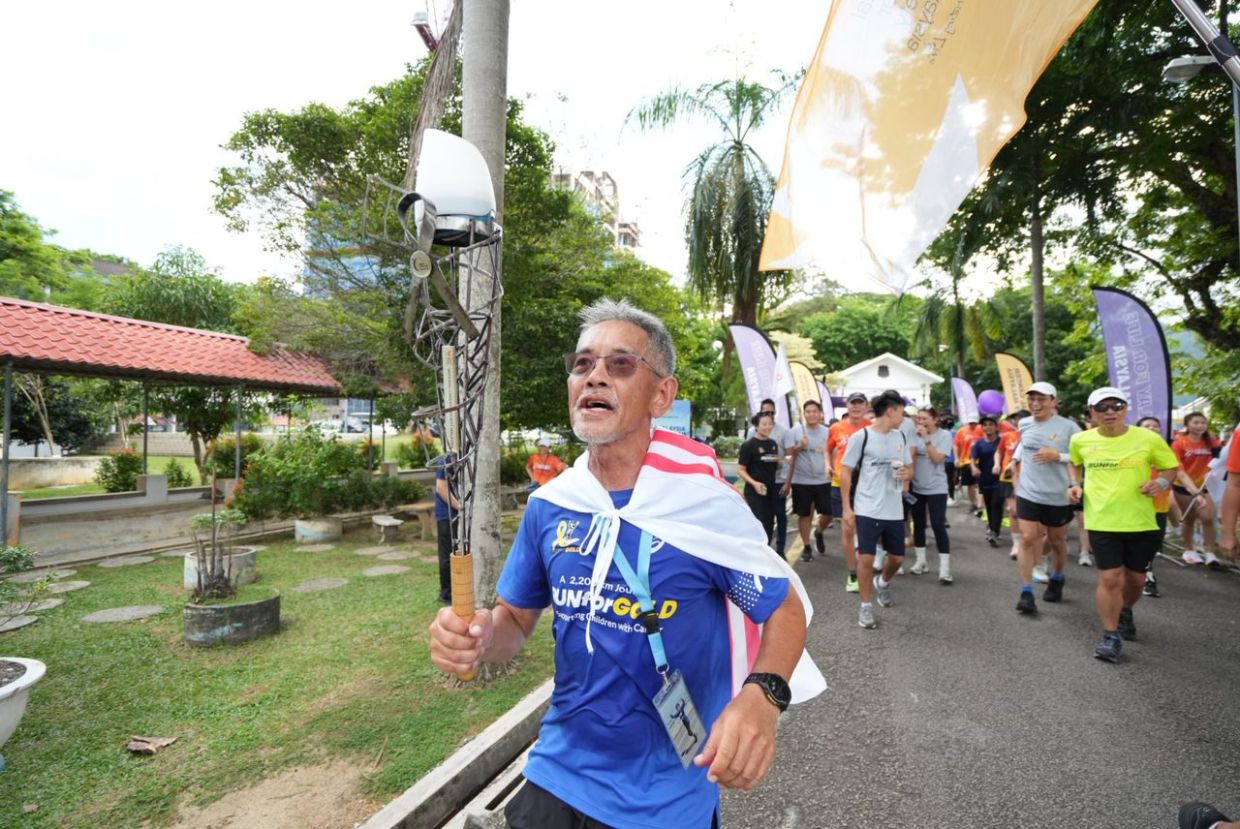
When Goh Joo Lee succumbed to cancer in 2024 at 63, her husband of decades faced the disorienting emptiness that retirement had not prepared him for. SG Lim, a 66-year-old retired civil engineer and recreational runner from Penang, suddenly found himself navigating life in fragmented ways—spending months with his two children in Australia, then returning to Malaysia to be near his mother and siblings, seeking refuge in Hong Kong for solitude. The shock of losing someone so integral to his daily existence forced Lim to confront a question many face after major loss: how do you move forward when the person you spent decades building a life with is gone?
What distinguished Goh in Lim's memory were not grand gestures but the quiet constancy of her compassion. Even hospitalised and battling cancer herself, she remained preoccupied with the wellbeing of others around her. Lim recalls watching his wife ask him to purchase flowers for a stranger in the ward opposite hers—a woman suffering from the same illness—simply because she wanted to brighten someone else's day. That act of kindness, extended from her sickbed to an unknown person, captured the essence of who she was. Beyond her caring nature, Goh possessed a creative spirit that found expression through art; her social media remained populated with pop-up creations and paintings, tangible artifacts of a life that inspired those who knew her.
Grief, however, proved to be a catalyst rather than merely a weight. Months into his bereavement, Lim encountered a book that would redirect his anguish toward purposeful action. After reading Laurence Carter's work, he became convinced that channelling his energy into an ambitious physical undertaking might honour his wife's memory while serving a larger cause. He reached out to Carter for guidance, eventually resolving to embark on a running journey that would traverse Peninsular Malaysia's 11 states and federal territories. This was more than personal catharsis; it was an idea that gained institutional backing when the National Cancer Society Malaysia (NCSM) partnered with his vision, christening the initiative "Run For Gold" with the explicit aim of raising both awareness and financial resources for children diagnosed with cancer.
The logistical preparation was formidable. Having completed the Sydney Marathon the previous August, Lim methodically expanded his running capacity, training under Malaysia's unforgiving midday heat and conditioning himself to rise at 5am for pre-dawn starts. He incorporated strength training, mastered video editing to document his expedition on social media, and mentally prepared himself for the solitary challenge of covering 2,200 kilometres. The physical training was merely the framework; the emotional preparation—consciously choosing to run toward rather than away from his grief—remained the harder undertaking.
What Lim encountered during his journey fundamentally validated his sacrifice. His first visit to a children's oncology ward organised by NCSM struck him with unexpected force. Observing small bodies weakened by illness, witnessing parents rendered nearly helpless by circumstances beyond their control, he crystallised the true purpose of his endeavour. This was not about personal redemption alone; it was about tangible intervention in the lives of children whose suffering might be alleviated through the resources his run would generate. That realisation transformed the physical ordeal from a personal pilgrimage into something with measurable consequence.
Perhaps equally moving were the strangers whose own stories intertwined with his journey. In Pekan, Pahang, Lim encountered a retired schoolteacher and his wife who, despite financial constraints, chose to support the cause through their presence and advocacy. The couple became his companions across multiple stages, running alongside him through Johor, Melaka, and eventually Penang, while the wife provided support from the roadside. Their devotion to each other—evident in small gestures and constant presence—stirred in Lim a poignant longing for his own wife. These encounters demonstrated that his loss, while deeply personal, resonated across generations and backgrounds; others recognised in Run For Gold a pursuit worthy of their own sacrifice and time.
After nearly three months on the road, covering approximately 2,200 kilometres, Lim crossed the finish line in George Town, Penang. Yet the culminating moment transcended the physical achievement. Standing at that threshold, the first words that escaped were not celebration of his own endurance but an invocation to his absent wife: "Darling, we made it!" In addressing her directly, Lim revealed that the journey had never truly been solitary. His wife's values—her compassion, her refusal to accept suffering as an excuse for apathy, her commitment to alleviating others' pain—had been his invisible companion across every kilometre. The finish line was therefore not an ending but a conversation, a final affirmation that her influence persisted in his actions.
The welcome that greeted Lim upon completion underscored how profoundly the journey had resonated. Family members, childhood friends, former classmates, and complete strangers gathered to celebrate his arrival. What had begun as one man's grief channelled into running had become a movement touching lives across Malaysia. The funds raised through Run For Gold would directly support children navigating their own battles against cancer, while the awareness generated might prompt earlier detection and better resource allocation. More intangibly, Lim's visible determination conveyed a message to grieving individuals everywhere: that sorrow need not calcify into despair, that loss can be transformed into purposeful action, and that memory can become a force for good in the world.
Lim's story carries particular resonance in Malaysia's context, where cancer remains among the leading causes of death and where many families lack adequate financial and psychological support during treatment. By mobilising his personal tragedy toward institutional advocacy, he has modelled an approach to bereavement that transcends individual suffering. His transformation from retired engineer to ultramarathon fundraiser demonstrates that the later stages of life need not be diminished; they can instead become platforms for legacy-building and social contribution. For other Malaysians processing loss, Lim's journey offers both inspiration and a practical template: that grief, when properly channelled, possesses the power to heal not only the bereaved but also those whom they serve.

