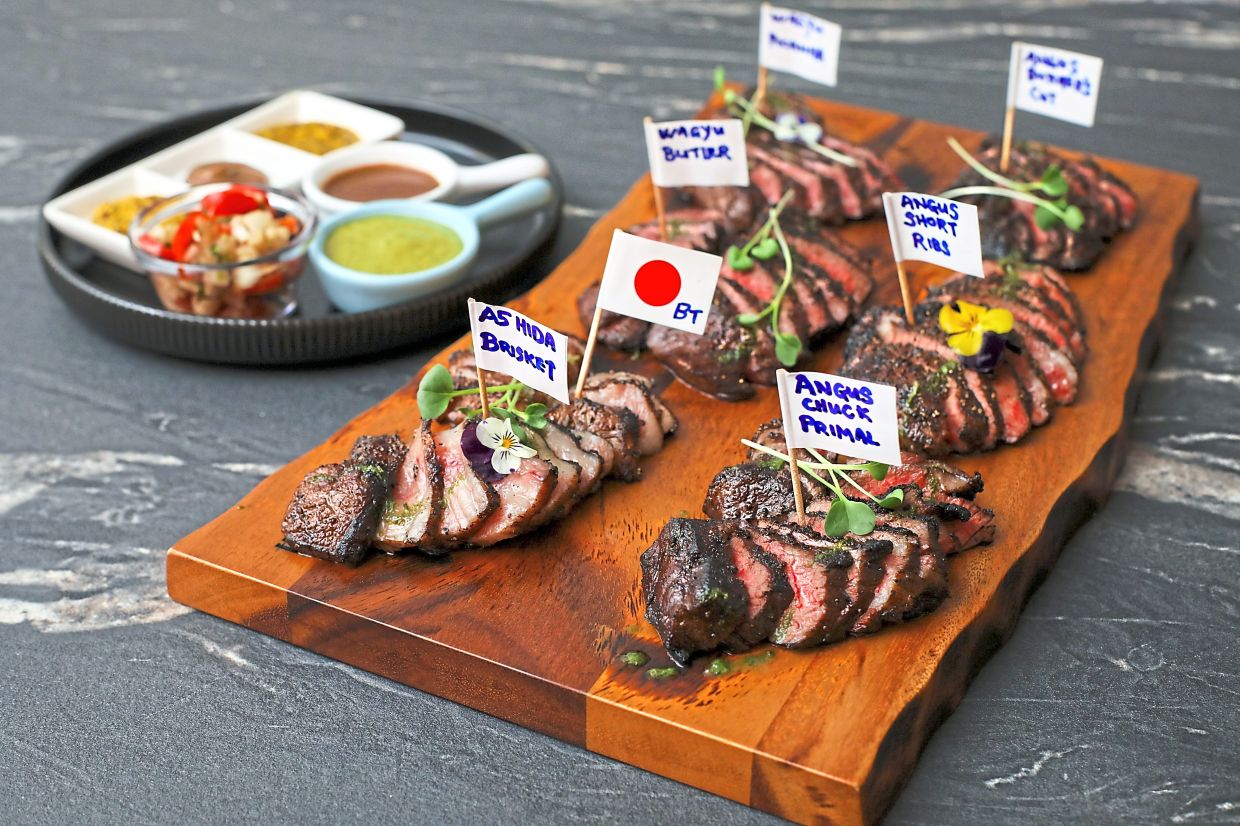
At Meat Feds in Petaling Jaya, chef Yenni Law guides her blade through layers of sinew, fat and connective tissue with surgical precision. Her focus is absolute—distinguishing the silvery sheen of silver skin from creamy fat requires years of accumulated knowledge. This meticulous work represents a quiet revolution unfolding across Malaysian dining establishments, where beef cuts long dismissed as secondary ingredients are claiming spaces previously reserved for premium steaks and tenderloin.
Law and co-founder Shelly Saw achieved recognition earlier this year through the Malaysia Book of Records for featuring the most secondary cuts of beef on a single restaurant menu, with 20 distinct varieties. Yet beyond this singular accolade lies a broader transformation in how chefs and diners perceive beef's full potential. While secondary cuts have long existed as an inevitable consequence of butchering whole animals—comprising roughly 80 to 90 percent of a carcass—they have traditionally disappeared into burger patties, sausages and minced meat products, their flavours and textures unknown to most consumers.
Malaysia's position as Southeast Asia's largest beef consumer might suggest advanced engagement with the entire animal, but culinary practice has concentrated almost exclusively on a narrow tier of cuts. The "holy trinity" of striploin, tenderloin and ribeye has dominated steakhouse menus and fine dining establishments, commanding premium prices justified by their relative tenderness and predictable performance. These prime cuts represent merely 8 to 10 percent of usable beef, leaving vast quantities of secondary material—flat iron from the shoulder, flank from the abdominal region, hanging tender from the diaphragm, picanha from the top rump, and chuck primal from the shoulder and neck—destined for lower-value applications.
The shift towards secondary cuts in Malaysia's restaurant ecosystem, particularly visible in the Klang Valley's mid-range and upscale establishments over the past year, reflects neither accident nor organic consumer demand. Rather, it stems from deliberate educational interventions. Meat & Livestock Australia, the regulatory body overseeing meat standards for Australian and international markets, alongside distributors such as Lucky Frozen Sdn Bhd, have organised seminars, workshops and demonstration events designed to reposition secondary cuts as worthy protagonists rather than supporting characters. At these gatherings, chefs encounter master butchers who demystify trimming techniques and showcase the versatility these cuts offer when treated with appropriate respect and methodology.
This marketing strategy mirrors proven approaches elsewhere. Norway's fisheries ministry executed a similar campaign in 1980s Japan, where salmon was initially scorned by Japanese chefs who deemed it unsuitable for sushi and kaiseki traditions. Through persistent education and targeted promotion, Norwegian salmon eventually became Japan's most popular sushi topping—a transformation occurring within two decades. Malaysia's secondary beef initiative operates through comparable mechanisms: education dispels prejudice, exposure builds familiarity, and success stories encourage wider adoption.
Chef Law emphasises the practical value of these educational programmes. She regularly attends events organised by Meat & Livestock Australia, bringing her entire kitchen team to learn proper trimming methods and processing techniques from specialists. These sessions function as quality checkpoints, allowing her to validate her own butchering approaches and refine efficiency. The knowledge transfer proves invaluable because secondary cuts present genuine technical challenges that prime cuts do not. Distinguishing fat from sinew, removing silver skin without excessive meat loss, and understanding grain direction and connective tissue placement requires systematic learning and deliberate practice. Valeska V, Meat & Livestock Australia's regional manager for Southeast Asia, notes that chefs often simply disregard unfamiliar cuts through ignorance rather than intentional rejection. Once they understand the potential and acquire processing skills, resistance evaporates.
Economic pressures have accelerated this transition considerably. Secondary cuts typically sell for 20 to 60 percent less than prime equivalents—representing savings of hundreds of ringgit per serving. This price advantage becomes increasingly attractive as global supply constraints have elevated prime cut costs by approximately 30 percent over recent periods, while secondary cuts have experienced increases of only 10 percent. The worldwide beef shortage and oil crisis-induced inflation have forced restaurateurs to recalculate their sourcing strategies. Desmond Chong, head chef at woodfire grill restaurant Ignis KL, has incorporated three to four secondary beef varieties specifically because rising prime cut expenses necessitate menu diversification. James See, business development director at Lucky Frozen Sdn Bhd, characterises this shift as essential resilience-building: utilising the entire carcass reduces vulnerability to inflation targeting specific premium cuts and creates revenue opportunities across broader product ranges.
Beyond economics lies genuine culinary merit. Secondary cuts deliver distinctive textural and flavour profiles that expand rather than diminish the beef experience. At Law's restaurant, platters showcase butcher's cut, chuck primal, brisket, picanha and short rib, each presenting different intensities of bovine flavour and varying degrees of bite, chew, bounce and tenderness. At Ignis, charcoal-fired short ribs and flat iron steaks develop beautifully caramelised exteriors while maintaining silken interior texture, creating sensory experiences that rival prime cuts in sophistication without the opulence that can overwhelm delicate palates. This diversity proves particularly valuable in a maturing dining culture where consumers increasingly appreciate complexity and subtlety over straightforward tenderness.
Nevertheless, widespread adoption faces legitimate barriers. Secondary cuts present steep learning curves that prime cuts—relatively simple to prepare and inherently forgiving—do not demand. Chefs must invest time developing processing expertise, understanding which cuts suit particular cooking methods, and calibrating temperature and timing protocols specific to each cut's collagen and fat composition. This investment proves worthwhile for dedicated establishments like Meat Feds and Ignis, where menu philosophy embraces the full spectrum of bovine potential. However, many restaurants lack either the culinary ambition or operational capacity for such specialisation.
The broader significance of this movement extends beyond individual restaurants or Malaysian borders. Across Southeast Asia, where beef consumption patterns mirror Malaysia's preference for premium cuts, a similar opportunity exists to rebuild supply chain efficiency and expand gastronomic horizons. The educational model pioneered by Meat & Livestock Australia and local distributors offers a replicable framework for other regions grappling with supply constraints and price volatility. As global beef availability tightens and consumers demand more sustainable, comprehensive use of resources, embracing secondary cuts represents both practical necessity and culinary awakening.
Law's comment that secondary cuts possess "main star energy" encapsulates this transformation. What emerges is not merely a pragmatic response to economic pressure, though that provided the initial catalyst. Instead, a genuine reappraisal of beef's full potential is occurring—one where skill, knowledge and creative courage elevate overlooked cuts into positions of honour. Malaysian chefs are pioneering this recalibration, proving that excellence need not restrict itself to narrow categories of premium ingredients. The revolution unfolding quietly in Petaling Jaya and across the Klang Valley suggests that Malaysia's beef culture stands poised for substantial evolution, enriching both menus and the resilience of the industry itself.

