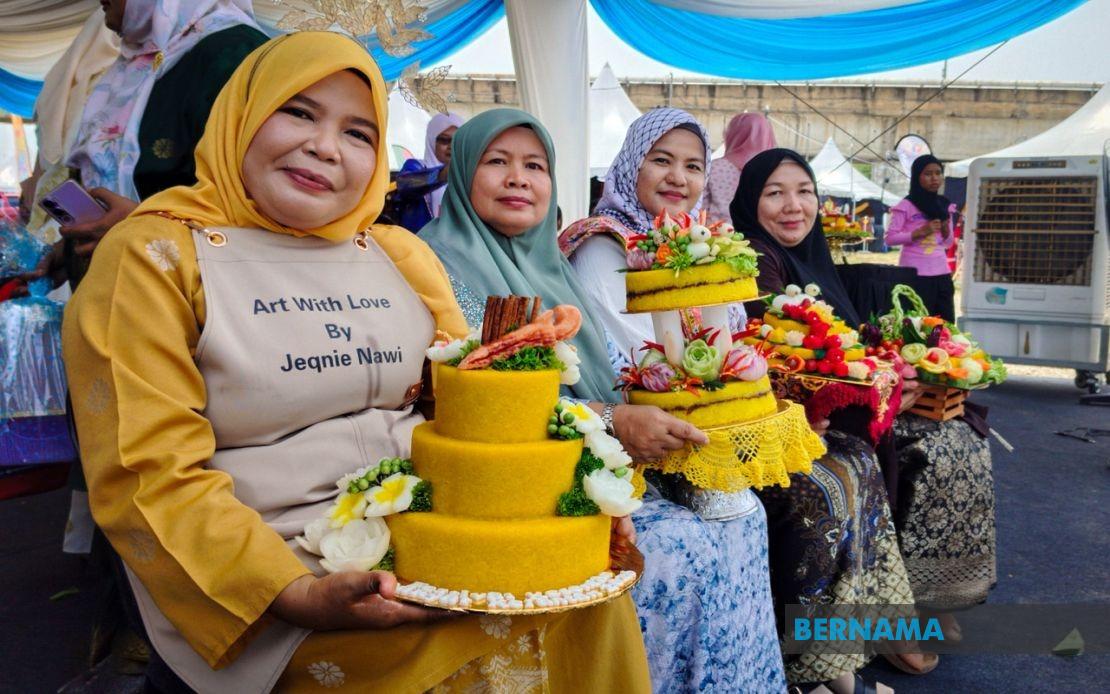
Nortiny Nawi's journey from corporate employment to artisanal food entrepreneur reflects a broader trend across Malaysia of skilled workers discovering alternative livelihoods in the creative economy. After spending four years in the resort marketing sector, the 46-year-old based in Kampung Gong Cokoh, Pasir Puteh, has built a profitable operation around her decorative pulut kuning arrangements, with earnings now exceeding what she earned in her previous role. Her success highlights the potential for traditional Malaysian food crafts to sustain modern families when combined with business acumen and consistent quality.
The transformation did not happen overnight. Nortiny's culinary curiosity developed during her teenage years, but professional opportunity came only when she left her hospitality job and committed fully to the craft. Her time observing kitchen operations at the resort proved invaluable, providing insights into ingredient selection, timing, and presentation that directly informed her later entrepreneurial efforts. This crossover between formal employment and informal skill-building demonstrates how transitions between sectors can accumulate practical knowledge unavailable through conventional training channels.
Today, her decorative pulut kuning has become a sought-after element at major social occasions throughout Kelantan. Customers range from private individuals marking personal milestones to educational institutions and government agencies seeking culturally appropriate catering solutions. The price structure, ranging from RM100 to RM280 per arrangement depending on complexity and portion size, reflects both the labour intensity of the work and the premium customers assign to bespoke, handcrafted presentations. This pricing demonstrates that there exists genuine market demand for elevated versions of traditional dishes, particularly when presentation elevates them beyond everyday consumption.
The physical demands of the work cannot be understated. Unlike prepared desserts that benefit from refrigeration and advance preparation, pulut kuning requires fresh, same-day completion to maintain texture and freshness. Nortiny begins work as early as 3 am, steaming glutinous rice before the kneading, cooling, and shaping process begins. Her willingness to maintain this demanding schedule, often accommodating up to six orders daily, reflects both entrepreneurial dedication and deep personal investment in her craft. The rigorous routine would prove unsustainable without genuine passion for the work itself.
Recognition came through competition at the Kelantan Folk Arts Festival, where her eight-kilogramme arrangement garnished with intricately carved white radish flowers earned the top prize. Such accolades serve multiple functions beyond prestige: they validate the quality of her work for potential customers, enhance her professional credibility, and provide marketing advantages in a competitive landscape where word-of-mouth recommendations drive business growth. Festival participation has become an important visibility mechanism for artisanal food producers seeking to expand their customer base beyond existing networks.
The business model itself reveals important characteristics of successful home-based enterprises in Malaysia. Operating from residential premises in Kampung Gong Cokoh minimizes overhead costs while allowing operational flexibility around personal and family commitments. The relatively low startup capital required—primarily ingredients, basic kitchen equipment, and carving tools—has democratized entry into this market compared to formal commercial catering. However, this accessibility also means that success depends entirely on individual skill development, customer service, and consistent quality maintenance rather than institutional resources.
Geographic location provides additional context for Nortiny's enterprise. Kelantan maintains stronger traditional food culture awareness compared to more urbanized regions, and pulut kuning holds particular cultural significance in the state's ceremonial practices. Customer demand reflects not merely novelty but deep-rooted cultural preferences for traditional presentations at significant life events. This regional advantage represents social and cultural capital that cannot be replicated in settings where traditional cuisine occupies less prominent positions in contemporary celebration practices.
Nortiny's expressed aspiration to relocate to larger premises reflects natural business expansion thinking, yet also points toward potential challenges in scaling artisanal operations. Expansion requires balancing growth against the handcrafted quality that currently distinguishes her product. Commercial kitchen facilities would improve operational efficiency and capacity, potentially enabling her to accept more orders. However, the personal touch and bespoke customization that currently define her brand might become diluted with institutional expansion. Successfully navigating this growth trajectory will require maintaining quality standards while increasing volume.
The gendered dimension of this entrepreneurship warrants recognition. Women dominate informal food preparation sectors across Southeast Asia, often building income-generating activities around domestic skills and family roles. Nortiny's transition from corporate employment to food craft represents a different trajectory than many women entrepreneurs who begin from household necessity rather than deliberate career change. Her professional background likely provided advantages in business management, customer communication, and financial planning that entrepreneurs without formal sector experience might lack.
Looking ahead, Nortiny's success suggests viable pathways for other Malaysians seeking to monetize traditional culinary knowledge. As consumers increasingly value authentic, locally-produced, culturally-grounded food experiences, there exist genuine economic opportunities in specialized traditional preparations. Her near-daily order volume indicates that demand substantially exceeds supply for quality artisanal work in this category. However, replicating her success requires not merely passion but sustained commitment to the physical demands, continuous quality improvement, and customer relationship management that characterize successful small enterprises.
The broader implications for Malaysia's economy deserve consideration. Entrepreneurs like Nortiny demonstrate that the transition toward creative and experience-based economy segments need not depend solely on urban centers or technology platforms. Traditional cultural products, when presented with contemporary quality standards and business professionalism, retain genuine market value. Supporting such enterprises through skills training, business mentorship, and cultural promotion could strengthen rural economies while preserving culinary heritage that faces gradual erosion in increasingly globalized food systems. Nortiny's journey from marketing officer to pulut kuning artisan ultimately illustrates how personal passion, sustained effort, and commitment to traditional excellence can generate sustainable livelihoods within Malaysia's diversifying economic landscape.

