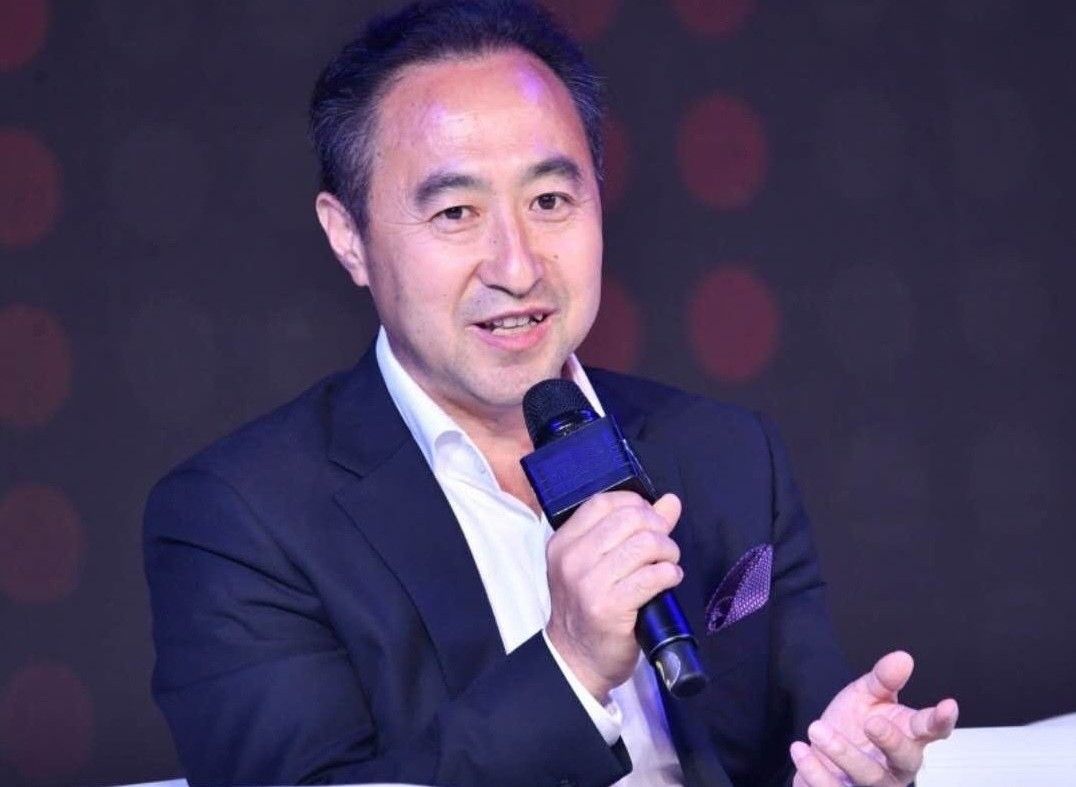
CJ Wang's journey from provincial schoolteacher to billionaire entrepreneur represents a distinctly modern Chinese success story—one built on solving everyday problems with engineering ingenuity. The 55-year-old founder of Joyoung and chairman of SharkNinja has accumulated a $10.4 billion fortune by reimagining the humble domestic kitchen, transforming appliances from mere utility items into digitally-savvy consumer products capable of capturing the imagination of global audiences, particularly younger demographics on social media platforms.
Wang was born in 1969 in Yantai, a bustling port city on China's eastern Shandong coast. Soy milk was woven into the fabric of his childhood—a staple breakfast beverage that required hours of grinding and preparation. His formative years included assisting with household labour, notably the physically demanding chore of operating his uncle's traditional stone mill to produce fresh soy milk each morning. These memories would eventually crystallise into entrepreneurial motivation, though not immediately. Following the conventional path expected of his family, Wang pursued electrical engineering at Beijing Jiaotong University before transitioning into the teaching profession, mirroring his parents' career choices.
However, Wang harboured ambitions that transcended the classroom. In a recent interview with Time magazine—his first engagement with international media—he reflected on his early career restlessness, describing how he naturally drifted into teaching because "it was what my family did" but simultaneously recognised an unshakeable desire to "do something bigger and carve my own path." This tension between familial expectation and personal aspiration resolved in 1994 when Wang made the pivotal decision to resign from his teaching position and pursue his engineering passion full-time.
His departure from education was motivated by a deceptively simple observation: soy milk and fried dough sticks would remain fundamental components of Chinese breakfast culture for generations to come. Rather than viewing this as inevitable tradition, Wang recognised it as an opportunity for mechanisation. He dedicated himself to inventing an electric machine capable of automating soy milk production—a device that would eliminate the laborious manual grinding process that had characterised his childhood. The initial prototype was imperfect, but it represented a genuine technological breakthrough. That same year, Wang founded Joyoung, establishing the foundation for what would become China's leading domestic appliance manufacturer.
The company's trajectory was remarkable. By 2004, merely a decade after its inception, Joyoung had sold more than one million soy milk makers across China. The brand subsequently expanded its portfolio to encompass an extensive range of affordable, reliable kitchen appliances—blenders, rice cookers, and complementary products—establishing itself as a household name throughout the Chinese market. The company's subsequent listing on the Shenzhen Stock Exchange further consolidated its position as a major player in the domestic appliance sector, though international recognition remained limited throughout the 2000s and early 2010s.
Wang's strategic pivot occurred in the late 2010s when he began contemplating international expansion. Rather than constructing Joyoung's presence in Western markets from inception, which would have demanded substantial capital investment and brand-building efforts, Wang pursued an acquisition strategy. He identified SharkNinja, an American home appliance manufacturer already establishing consumer recognition through televised infomercials featuring innovative vacuum cleaners and kitchen gadgets. Wang was particularly impressed by the company's product quality, growth potential, and crucially, its leadership team under CEO Mark Barrocas, whom he persuaded to remain following the acquisition.
Yet Wang's assessment extended beyond praise. He identified significant structural inefficiencies within SharkNinja's operations: an insufficiently diversified product catalogue constrained by dependence on traditional television advertising while lacking robust social media engagement and broader retail distribution networks; and manufacturing vulnerability stemming from over-reliance on a limited supplier base concentrated in China. These constraints, he recognised, could be systematically addressed through the expertise and operational frameworks Joyoung had developed over two decades of scaling within the Chinese market.
Wang's private equity vehicle acquired majority control of SharkNinja in 2017, subsequently placing it within JS Global Lifestyle Co., his Hong Kong-listed holding company established in 2019. The new ownership structure enabled comprehensive operational transformation. Wang championed product line expansion, supply chain optimisation, and modernised sales strategies that leveraged digital marketing and social media platforms—particularly TikTok—where younger consumers congregate. Investment in proprietary research and development capabilities accelerated innovation cycles, enabling the company to develop products specifically engineered for viral marketability.
The results exceeded projections. Under joint stewardship from Wang and Barrocas, SharkNinja evolved into a multibillion-dollar corporation spanning two distinct brand architectures: Shark, positioned in the vacuum cleaner and beauty products segments, and Ninja, dominating the kitchen appliance category. The company achieved sufficient scale and market prominence to warrant separation from its parent holding company. In 2023, SharkNinja completed a direct listing on the New York Stock Exchange, establishing independent public market presence and enabling Wang to realise substantial valuation gains.
As of May 2026, Wang maintained approximately 35 percent ownership in SharkNinja alongside a 52 percent stake in JS Global Lifestyle, according to the Bloomberg Billionaires Index. His aggregate wealth reached $10.4 billion as of August 2026. Beyond shareholdings, Wang earned recognition as Hong Kong's second-highest-compensated corporate director in 2024, receiving total remuneration exceeding HK$520 million (US$66.3 million), reflecting his active management involvement and strategic importance to multiple listed entities.
Despite his prominence, Wang maintains a decidedly low public profile. Time magazine described him as soft-spoken and characteristically private, with leisure interests including golf and Macallan whisky consumption. However, mounting US-China trade tensions and increased scrutiny of Chinese capital investments in American enterprises prompted Wang to break his customary reticence. In his first comprehensive international media engagement, he articulated a strategic motivation: proactively narrating his entrepreneurial biography to forestall speculation regarding his background and business interests during a period of heightened geopolitical sensitivity.
Wang's emergence from obscurity carries implications extending beyond his personal narrative. His trajectory demonstrates how domestic expertise and operational excellence can translate into global competitive advantages when coupled with astute acquisition strategy. For Malaysian entrepreneurs and regional appliance manufacturers, Wang's model—developing dominant domestic market position before leveraging that expertise toward international expansion through strategic acquisitions—offers a potentially instructive template. His success simultaneously illustrates how Chinese capital continues reshaping global consumer markets despite political headwinds, particularly within the home appliance and kitchen technology sectors where Chinese manufacturers increasingly dominate innovation and pricing.

